
Common Commissioning Delays in Renewable Energy Projects and How to Avoid Them
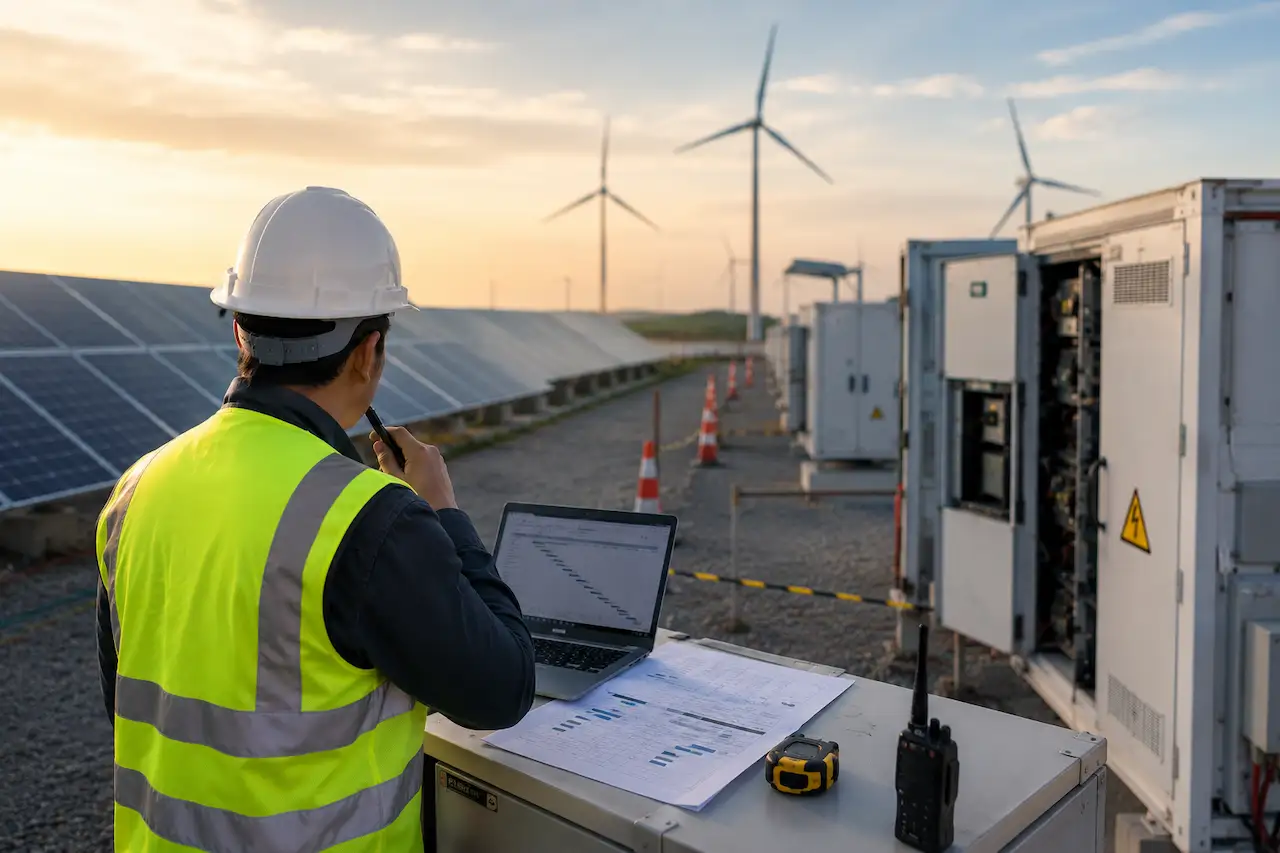
Renewable energy projects often move quickly toward construction completion, but reaching that milestone does not mean a facility is ready for energisation or commercial operation. Solar farms, battery energy storage systems, wind projects, and other renewable facilities must pass through a detailed commissioning process before they can operate as intended. This is often where unexpected delays appear.
A project may have installed equipment on site, but incomplete documentation, protection issues, communication failures, unresolved interfaces, or unfinished construction work can prevent the next stage from moving forward. Even relatively small problems can affect the overall commissioning schedule when several systems depend on each other. Understanding the most common renewable energy commissioning delay helps project teams identify risks earlier and take practical steps to avoid them.
This guide explains why commissioning delays happen, where they commonly occur, and how project owners, EPC contractors, and engineering teams can improve the commissioning process.
Why Renewable Energy Commissioning Delays Are Common in Projects
Renewable energy facilities combine multiple electrical and digital systems that must operate together. A typical project may include generation equipment, inverters or converters, transformers, switchgear, protection relays, plant controllers, SCADA platforms, communication networks, and grid connection infrastructure. Different contractors and equipment suppliers may be responsible for these systems. Each system can appear complete on its own while the overall facility is still not ready for operation.
Commissioning delays often occur at the point where systems interact. For example, an inverter may be ready for testing, but the communication network required for remote control may not be complete. Protection equipment may be installed, but incorrect settings or incomplete trip circuits can prevent energisation.
Need Engineering Support for Your Power Project?
American Power Engineers delivers power system studies, substation design, renewable energy engineering, BESS projects, NERC compliance, MEP engineering, and POI interconnection services.
Explore Our Engineering ServicesThis is why commissioning should not be treated as a final activity that begins only after construction is complete. It requires planning, coordination, and technical preparation throughout the project.
1. Incomplete Construction Before Commissioning Begins
One of the most common causes of renewable energy commissioning delay is beginning testing before the required construction work is complete. Commissioning teams may arrive on site ready to perform tests, only to discover unfinished cable terminations, incomplete grounding, missing equipment labels, or unresolved installation work. This creates an inefficient process. Engineers may begin a test, identify a construction issue, wait for corrective work, and then return to repeat the activity.
How to Avoid It
Project teams should clearly define what construction activities must be completed before each commissioning stage begins. Instead of relying only on a general statement that the system is “complete,” readiness should be confirmed against specific requirements. A structured readiness review can verify:
- Physical installation is complete
- Required cable connections are finished
- Equipment is accessible for testing
- Grounding is complete
- Required drawings are available
- Critical punch list items have been addressed
Clear boundaries between construction and commissioning help prevent testing from starting before the system is genuinely ready.
2. Poor Commissioning Planning
Commissioning becomes difficult when it is planned too late. Some projects focus heavily on construction schedules but give limited attention to how systems will be tested and energised. As the project approaches completion, teams may then discover that testing procedures, responsibilities, or required resources have not been properly defined. This can lead to confusion between contractors and delays in organising equipment suppliers or specialist engineers.
How to Avoid It
Commissioning planning should begin during the engineering and construction phases. The project should have a clear plan covering the testing sequence, system dependencies, responsibilities, acceptance criteria, and energisation requirements. Important questions should be answered early:
Planning a Solar, Wind, BESS, or Grid Interconnection Project?
Our engineering team helps project owners, developers, utilities, and facility teams move from technical planning to reliable project execution.
View Engineering Services- What must be tested first?
- Which systems depend on other systems?
- Who is responsible for each test?
- What documentation is required?
- Which specialists must be present?
- What issues could prevent energisation?
Early planning makes it easier to identify schedule risks before they become critical.
3. Incomplete or Outdated Documentation
Accurate documentation is essential during commissioning. Engineers rely on drawings, schematics, protection settings, equipment manuals, communication architectures, and test procedures to understand how the facility should operate. Problems arise when field changes are not reflected in the latest documentation.
For example, a cable may have been rerouted during construction, or a control system configuration may have changed. If the commissioning team is working from an outdated drawing, troubleshooting can become unnecessarily difficult.
How to Avoid It
Project teams should establish a clear process for managing commissioning documentation. Before major testing activities begin, engineers should have access to the latest approved information, including:
- Single-line diagrams
- Electrical schematics
- Protection and control drawings
- Equipment datasheets
- Protection settings
- Communication architecture
- Approved test procedures
- Manufacturer documentation
Construction changes should also be communicated to the commissioning team as early as possible. Accurate documentation reduces uncertainty and allows engineers to focus on solving real technical problems rather than identifying differences between drawings and the installed system.
4. Poor Coordination Between Contractors and Suppliers
Renewable energy commissioning projects often involve several organisations. The EPC contractor may manage construction, while equipment manufacturers provide specialised systems. Separate teams may be responsible for protection, SCADA, communications, grid interconnection, and commissioning.
Delays occur when these teams work independently without sufficient coordination. One contractor may consider their work complete while another team cannot proceed because an interface remains unfinished.
How to Avoid It
Clear ownership and communication are essential. Each system and interface should have an identified responsible party. Project teams should also establish regular commissioning coordination meetings to review progress, upcoming tests, and unresolved issues. Particular attention should be given to handover points between contractors. The project team should clearly understand:
- Who owns the equipment?
- Who performs the test?
- Who provides technical support?
- Who approves the results?
- Who resolves problems?
Clear answers to these questions can prevent significant delays during critical project stages.
5. Protection and Control System Problems
Protection systems are critical to safe energisation and operation, particularly when protection performance must be coordinated with the results of power system studies.
However, protection and control issues are also a common source of commissioning delays. Incorrect relay settings, wiring problems, CT or VT configuration errors, and incomplete trip circuits can prevent the project from moving forward. These problems may not be discovered until detailed testing begins.
How to Avoid It
Protection testing should be planned early rather than left until the final days before energisation. The project team should verify that protection settings are available, approved, and correctly applied to the installed equipment. Testing should cover more than individual relay operation. Engineers also need to confirm:
- Measurement circuits are correct
- Protection logic operates as intended
- Trip circuits function correctly
- Circuit breakers respond properly
- Required interlocks are working
Early protection verification provides more time to resolve issues before they affect the energisation schedule.
6. SCADA and Communication Failures
Modern renewable energy projects rely heavily on digital communication. SCADA platforms, plant controllers, protection equipment, inverters, Battery Management Systems, and other devices must exchange accurate information. A device appearing online does not necessarily mean the complete system is functioning correctly. Problems can occur because of incorrect network settings, communication protocol mismatches, missing data points, or incorrect signal mapping.
How to Avoid It
Communication testing should follow an end-to-end approach. Instead of simply confirming that devices are connected, engineers should verify the complete sequence.
For example:
- A command is issued from the control system.
- The command reaches the correct equipment.
- The equipment performs the required action.
- The correct status is returned to SCADA.
This approach helps identify problems that basic connectivity checks may miss. Early interface testing between SCADA, plant controls, and field equipment can also reduce last-minute troubleshooting.
7. Poor Interface Management
Some of the most difficult commissioning problems occur between systems rather than within individual equipment. A solar inverter may operate correctly. The plant controller may also operate correctly. However, the two systems may not communicate or respond properly when integrated. The same issue can occur between battery systems and Power Conversion Systems, protection relays and switchgear, or SCADA platforms and field devices. Managing interfaces is particularly important during grid interconnection engineering, where plant equipment, protection systems, controls, and utility requirements must work together correctly.
How to Avoid It
Project teams should identify critical interfaces during the planning stage. Each interface should have clear technical requirements and testing responsibilities. An interface matrix can help teams track:
- Systems that must communicate
- Required signals and commands
- Responsible parties
- Testing status
- Outstanding issues
Managing interfaces early reduces the risk of discovering major integration problems during the final stages of commissioning.
8. Late Discovery of Equipment Problems
Equipment defects or incorrect configurations can also delay commissioning. A problem may originate during manufacturing, transportation, installation, or configuration. If it is discovered only when the equipment is needed for energisation, the project may face significant delays. Replacement equipment or specialist support may not be immediately available.
How to Avoid It
- Factory Acceptance Testing and early equipment inspections can help identify problems before installation.
- After equipment arrives on site, project teams should verify its condition and configuration before the final commissioning phase.
- Where possible, critical systems should be tested progressively rather than waiting until the entire project is ready.
This allows issues to be identified while there is still time to correct them without affecting major milestones.
9. Unclear Energisation Procedures
Energisation is a critical project milestone, particularly for projects involving complex substations and high-voltage equipment designed through substation design engineering. Delays can occur when the energisation sequence has not been clearly planned or when project teams are uncertain about their responsibilities. The process requires coordination between multiple parties and must follow approved safety and operational procedures.
How to Avoid It
A detailed energisation plan should be developed and reviewed before the scheduled energisation date. The plan should clearly identify:
- Equipment to be energised
- Energisation sequence
- Responsible personnel
- Required approvals
- Communication procedures
- Safety requirements
- Emergency arrangements
A formal readiness review should also be completed before proceeding. This ensures that energisation decisions are based on verified information rather than assumptions.
10. Ineffective Punch List Management
Punch lists are a normal part of construction and commissioning. The problem occurs when critical issues are not properly prioritised or tracked. A large number of minor items can make it difficult to identify which issues genuinely affect safety or energisation readiness. At the same time, unresolved critical items can remain open because responsibility is unclear.
How to Avoid It
Punch list items should be categorised according to their impact. Critical issues affecting safety, electrical integrity, protection, or energisation should receive immediate attention. Each issue should have:
- A clear description
- An assigned owner
- A target completion date
- A defined status
- Verification of closure
A structured process prevents critical issues from being lost among less important items.
11. Insufficient Specialist Resources
Commissioning requires specialised engineering knowledge. A project may have experienced construction teams but still require dedicated support for protection testing, SCADA integration, plant controls, high-voltage systems, or grid compliance. Delays can occur when specialist engineers are scheduled too late or are unavailable when problems arise.
For projects requiring independent technical oversight, owner’s technical advisory services can also help project owners coordinate technical requirements and manage critical project risks.
How to Avoid It
Project teams should identify specialist resource requirements early. Critical engineers and equipment suppliers should be scheduled around key commissioning and energisation milestones. It is also useful to identify backup support for critical systems where possible. Having the right expertise available at the right time can significantly reduce the duration of troubleshooting and repeat testing.
A Better Approach to Renewable Energy Commissioning
Avoiding commissioning delays requires more than completing tests quickly. The most successful projects take a structured approach that connects engineering, construction, testing, and energisation activities. A strong commissioning strategy should focus on four key areas:
- Plan Early: Identify testing requirements and dependencies before the final stages of construction.
- Test Progressively: Do not wait until the entire project is complete to begin checking critical systems. Verify equipment and interfaces as they become available.
- Manage Interfaces: Give special attention to the points where electrical, protection, control, and communication systems connect.
- Track and Resolve Issues: Use a structured process to record problems, assign responsibility, and verify that corrective work has been completed.
These practices help reduce last-minute surprises and create a more controlled transition from construction to operation.
Why Specialist Engineering Support Can Make a Difference
Renewable energy commissioning brings together multiple technical disciplines. A problem discovered during testing may not have an obvious cause. An equipment issue may actually originate in a communication system, protection configuration, or control interface. Specialist engineering support can help project teams investigate the complete system rather than focusing only on the point where the issue first appears. This is particularly valuable during:
- Protection and relay testing
- SCADA and control integration
- Grid interconnection activities
- High-voltage energisation
- Integrated system testing
A coordinated engineering approach improves communication between technical teams and can help identify risks before they affect the overall project schedule.
Need Support with Renewable Energy Commissioning?
Commissioning delays can place pressure on project schedules, increase costs, and postpone commercial operation. Early planning and technical coordination can help project teams identify potential problems before they become critical. Grid Engineering Group supports renewable energy projects with specialist engineering services for commissioning readiness, power systems, protection and control, SCADA integration, grid interconnection, and technical advisory requirements.
Whether your project is approaching energisation or experiencing technical challenges during commissioning, early engineering support can help improve coordination and reduce avoidable delays.
Contact Grid Engineering Group to discuss your renewable energy commissioning and engineering requirements.
Frequently Asked Questions
What are the most common causes of commissioning delays?
Common causes include incomplete construction, poor planning, outdated documentation, protection issues, communication failures, equipment problems, and poor coordination between contractors and suppliers.
How can renewable energy commissioning delay be reduced?
Early planning, progressive testing, accurate documentation, clear responsibilities, structured issue management, and early interface testing can help reduce delays.
Why do communication problems delay renewable energy projects?
Modern renewable energy facilities rely on communication between multiple systems. Incorrect configurations, missing data points, or protocol mismatches can prevent equipment from responding correctly and delay integrated testing.
What is an energisation readiness review?
An energisation readiness review is a formal assessment performed before electrical equipment is energised. It confirms that required testing, safety checks, approvals, and critical corrective actions have been completed.
Why is interface management important during commissioning?
Many technical problems occur where different systems interact. Managing these interfaces helps ensure that electrical equipment, protection systems, controls, and communication networks work together correctly.
When should commissioning planning begin?
Commissioning planning should begin during the engineering and construction phases rather than waiting until construction is nearly complete. Early planning helps identify dependencies and potential risks before they affect the project schedule.
Work With American Power Engineers
Expert engineering support for power system studies, substation design, renewable energy projects, BESS engineering, NERC compliance, MEP engineering, and POI interconnection services.
Explore All Engineering Services