
HV Testing Before Energisation: What Project Teams Need to Know
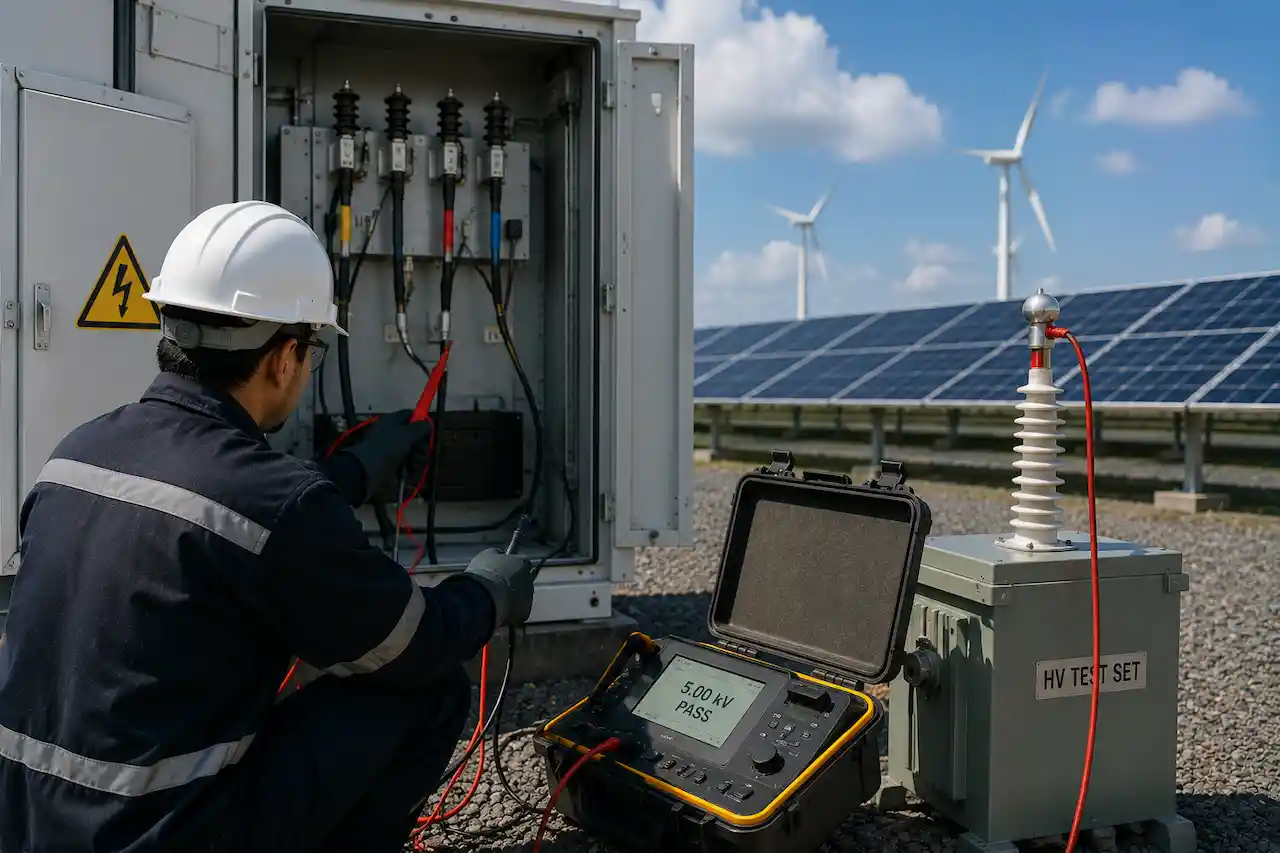
High-voltage testing is one of the most important stages before a power system, substation, renewable energy plant, or other electrical facility is energised. Before high voltage is introduced, project teams need confidence that equipment has been installed correctly, insulation systems are in acceptable condition, protection systems are ready, and the overall electrical system can operate safely.
HV testing before energisation is not simply about completing a list of individual equipment tests. It is part of a wider commissioning process that helps identify installation problems, equipment defects, wiring errors, and other issues before they can affect the project during operation.
For EPC contractors and project owners, a well-planned testing process can reduce last-minute delays and provide clearer evidence that the facility is ready to move into energisation.
What Is HV Testing Before Energisation?
HV testing refers to a range of electrical tests performed on high-voltage equipment and systems to verify their condition and readiness for service.
The exact testing requirements depend on the project and the equipment involved. A utility-scale renewable energy project, for example, may include transformers, switchgear, cables, circuit breakers, protection systems, and other high-voltage equipment that must be tested before energisation.
Need Engineering Support for Your Power Project?
American Power Engineers delivers power system studies, substation design, renewable energy engineering, BESS projects, NERC compliance, MEP engineering, and POI interconnection services.
Explore Our Engineering ServicesThe main objective is to identify potential problems before the system is placed into service. HV testing may help confirm:
- The condition of insulation systems
- The integrity of electrical connections
- The correct operation of switching equipment
- The readiness of protection and control systems
- The condition of HV cables and associated equipment
- Whether equipment meets project and manufacturer requirements
Testing should be planned around the approved engineering design, equipment specifications, applicable standards, and project commissioning procedures.
Why HV Testing Is Important Before Energisation
Energisation introduces a new level of risk to the project. Once equipment is live, testing and troubleshooting activities become more complex and must be carefully controlled. Identifying problems before energisation is therefore significantly preferable to discovering them after the system has entered service. An insulation problem, incorrect connection, or equipment defect may not always be visible during a visual inspection. HV testing can provide additional information about the condition and performance of the electrical system.
For project teams, successful testing also supports the overall energisation decision. It provides evidence that important equipment and systems have passed the required checks and that outstanding issues have been reviewed. However, a successful test on one piece of equipment does not automatically mean that the complete facility is ready. Individual test results must be considered alongside protection testing, control verification, SCADA commissioning, safety checks, and wider system readiness.
When Does HV Testing Take Place?
HV testing is generally carried out after equipment installation has reached an appropriate stage and before final energisation. The exact sequence varies depending on the project. Testing may begin with inspections and basic electrical checks before moving to more detailed equipment-specific tests. A typical process may include several stages.
Pre-Testing Inspection
Before electrical testing begins, the commissioning team should confirm that the equipment is ready. This may involve checking installation quality, equipment condition, physical connections, grounding arrangements, identification labels, and available documentation.
Planning a Solar, Wind, BESS, or Grid Interconnection Project?
Our engineering team helps project owners, developers, utilities, and facility teams move from technical planning to reliable project execution.
View Engineering ServicesTesting should not begin simply because equipment has been installed. The team needs to confirm that the correct equipment is present and that the installation has reached the required level of completion
Any obvious construction issues should be addressed before detailed testing starts.
Equipment-Specific Testing
Different types of HV equipment require different testing procedures. For example, transformers, cables, circuit breakers, and switchgear each have different operating characteristics and potential failure modes.
The testing programme should therefore be based on the specific equipment and project requirements rather than applying the same test to every component.
Integrated System Testing
After individual equipment has been tested, the project moves towards verifying how different systems operate together. This may involve protection systems, control circuits, interlocking functions, communication systems, and switching operations.
The purpose is to confirm that equipment does not only function individually but also responds correctly as part of the wider electrical system.
What Equipment May Require HV Testing?
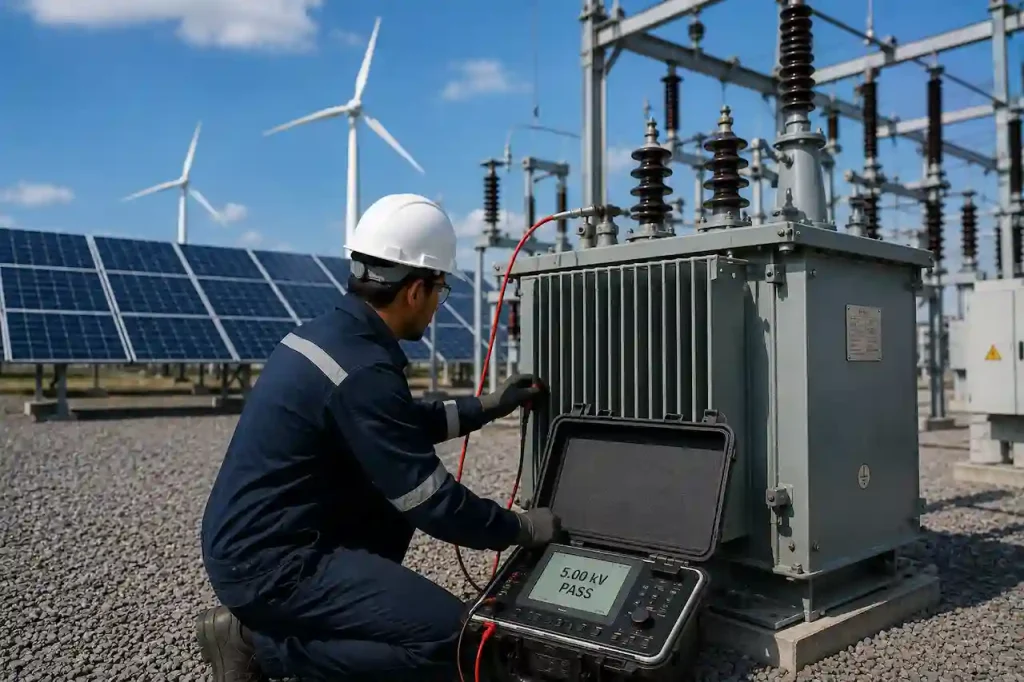
The scope of HV testing depends on the project design. A renewable energy facility or substation may contain several major electrical assets that require inspection and testing before energisation. Common equipment can include:
- Power transformers
- HV and MV switchgear
- Circuit breakers
- HV and MV cables
- Instrument transformers
- Disconnect switches
- Busbars
- Surge arresters
- Protection and control systems
Each equipment type requires a different testing approach. Project teams should avoid treating all electrical equipment as if it has the same testing requirements. The commissioning plan should clearly identify what must be tested, how it will be tested, and what criteria will be used to assess the results.
Transformer Testing Before Energisation
Transformers are among the most critical pieces of equipment in many power projects. Their performance and operating conditions may also be evaluated through relevant power system studies during the wider engineering process. A transformer problem can have a major impact on the commissioning schedule and plant operation. Testing may be used to assess the condition of transformer components and verify that the equipment has been installed correctly.
Depending on the equipment and project requirements, transformer testing may involve checks related to insulation, winding condition, transformer ratio, connections, and auxiliary systems. The results should be reviewed in context rather than considered individually without engineering assessment.
A measurement that appears unusual may require further investigation, comparison with manufacturer information, or additional testing. The objective is not simply to produce a passing test report. It is to understand whether the transformer is suitable for safe energisation.
HV Cable Testing
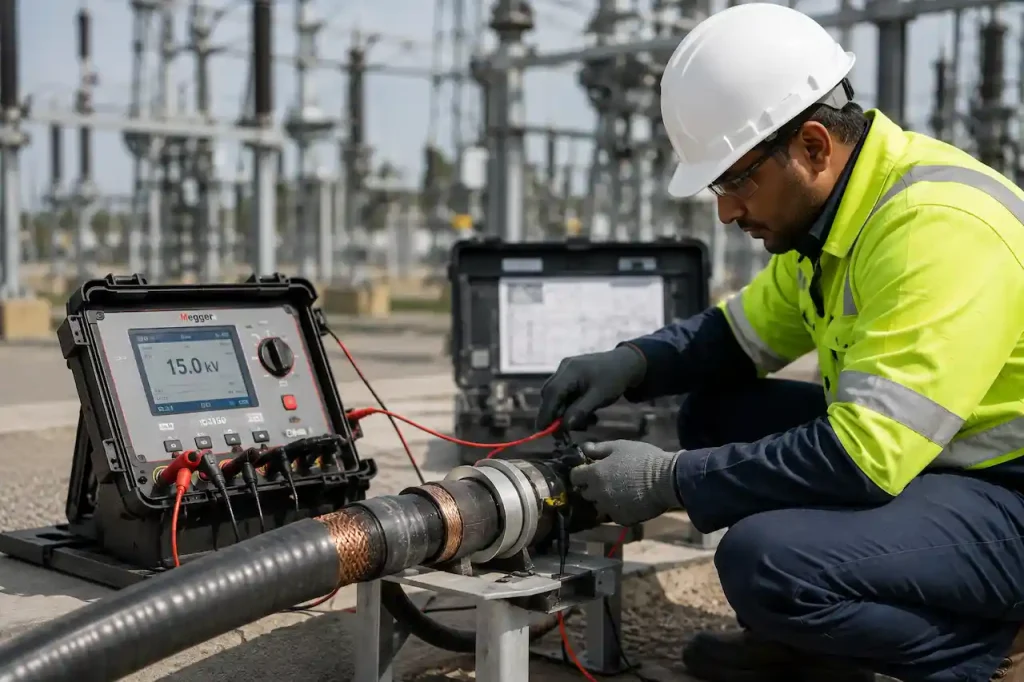
HV and MV cables form important connections between major pieces of electrical equipment. Cable problems can be particularly difficult to resolve once the project has moved into energisation. This makes pre-energisation testing an important stage of the commissioning process. Testing may help identify issues associated with insulation, cable installation, joints, and terminations.
Before testing begins, the project team should also confirm that cable installation has been completed and that the correct sections are ready for testing. Clear identification is important because complex facilities may contain multiple cable circuits. The commissioning team must know exactly which circuit is being tested and ensure that appropriate safety controls are in place.
Cable test results should be documented clearly so that they can be reviewed during commissioning and used as future reference information.
Switchgear and Circuit Breaker Testing
Switchgear and circuit breakers perform important functions during both normal operation and fault conditions. Before energisation, project teams need to verify that switching equipment can operate as intended. Testing may involve mechanical and electrical checks, operational verification, control circuit testing, and confirmation of equipment status.
The relationship between the circuit breaker and its associated protection and control systems is also important. A circuit breaker may operate correctly during an individual mechanical test but still fail to respond correctly when a protection system initiates a trip command.
For this reason, equipment testing should eventually progress towards integrated functional testing. The project team needs confidence that the complete sequence works correctly, from fault detection through to the required switching action.
Insulation Testing and Equipment Condition
Electrical insulation is essential for the safe operation of high-voltage systems. Insulation problems can result from equipment defects, damage during transport, poor installation, contamination, moisture, or other site conditions. Testing helps project teams assess whether the insulation system is in an acceptable condition before the equipment is placed into service. The appropriate test method depends on the equipment and the project requirements.
Results should be assessed carefully. Environmental conditions and equipment characteristics can influence certain measurements, which means engineering interpretation is important. Where unusual results are identified, the team may need to investigate further rather than simply repeating the same test without understanding the possible cause. A structured investigation can help determine whether the issue is related to the equipment itself, the installation, the test setup, or another factor.
Protection and Control Testing
HV equipment cannot be considered ready for energisation based only on primary equipment testing. Protection and control systems must also be verified. Protection systems are designed to detect abnormal conditions and initiate the required response. Before energisation, engineers may need to confirm that relay settings, measurement circuits, trip circuits, and protection logic operate correctly. Important testing activities can include:
- Verifying approved protection settings
- Checking CT and VT connections
- Testing relay inputs and outputs
- Verifying trip circuits
- Confirming circuit breaker operation
- Testing protection logic and interlocking functions
Protection testing should be coordinated with HV equipment testing. A complete commissioning process considers both the physical equipment and the systems responsible for monitoring and protecting it.
Testing Earthing and Grounding Systems
Grounding systems play an important role in electrical safety and system performance. The grounding system must be installed according to the approved engineering design and project requirements. Before energisation, project teams may need to verify grounding connections and assess the overall condition of the installed system.
Grounding arrangements can involve equipment connections, structures, cable systems, and other electrical components across the facility. The commissioning team should ensure that required inspections and testing have been completed before the facility moves into energisation.
Problems with grounding should not be treated as minor issues simply because the equipment appears operational. Grounding is directly connected to the safety and performance of the electrical system.
Functional Testing Before Energisation
Individual test results provide valuable information, but commissioning must eventually verify how systems operate together. Functional testing examines the interaction between equipment, protection, control, and communication systems. For example, the team may need to verify a complete operational sequence involving:
- Detection of an abnormal condition
- Operation of the protection relay
- Transmission of the trip signal
- Circuit breaker operation
- Status indication through SCADA or local systems
This type of testing can identify interface problems that are not visible when individual components are tested separately. A relay may operate correctly during a secondary injection test while the trip signal fails to reach the correct circuit breaker. Similarly, a circuit breaker may operate locally while the associated status indication is incorrectly mapped within the SCADA system. Integrated testing helps project teams investigate these connections before the system becomes operational.
The Importance of Documentation and Test Records
Accurate documentation is essential throughout the HV testing process. Test procedures should be based on approved and current engineering information. If teams work from outdated drawings or settings, equipment may be tested against requirements that are no longer valid. Important documents can include:
- Single-line diagrams
- Equipment datasheets
- Protection settings
- Test procedures
- Cable schedules
- Control schematics
- Manufacturer documentation
- Commissioning records
Test results should also be recorded clearly. Good documentation provides evidence of completed work and helps the project team understand the condition of equipment before energisation. It also becomes useful during future maintenance and troubleshooting. A structured record of the tests performed, results obtained, issues identified, and corrective actions completed provides much better visibility than informal notes or disconnected reports.
Managing Problems Identified During HV Testing
Finding an issue during testing does not necessarily mean that the project has failed. One of the main purposes of commissioning is to identify problems before they affect safe operation. The important factor is how effectively the issue is investigated and resolved. A structured process should:
- Clearly describe the problem
- Identify the affected equipment or system
- Assign responsibility for investigation
- Record the corrective action
- Retest after corrective work
- Confirm formal closure
Problems should not be closed simply because a temporary solution has been applied. The commissioning team needs confidence that the underlying cause has been addressed and that the equipment now performs as required. This approach helps prevent the same problem from reappearing during energisation or later project stages.
Common Challenges During HV Testing
HV testing can become complicated when multiple contractors and equipment suppliers are involved. A project may have separate teams responsible for electrical installation, equipment supply, protection systems, SCADA, and commissioning. This creates technical interfaces where problems can occur.
Common challenges include:
- Incomplete construction work
- Missing or incorrect documentation
- Equipment configuration issues
- Incorrect field wiring
- Unresolved protection system problems
- Communication and control interface failures
- Late engineering changes
- Unclear responsibility between contractors
Many commissioning delays occur because the underlying issue crosses more than one technical discipline. Coordinating these technical interfaces is an important part of effective facility systems engineering. For example, an apparent circuit breaker problem may actually be caused by a protection wiring issue. A missing status indication may involve the equipment, control wiring, or SCADA configuration.
Coordinated engineering support can help teams investigate the complete system rather than focusing only on one component.
How Project Teams Can Reduce HV Testing Delays
The most effective approach is to plan testing before the final stages of construction. HV testing should be considered during engineering and project planning rather than being treated as a final activity before energisation. Several practices can help reduce delays.
Start Commissioning Planning Early
Testing requirements should be identified during the engineering stage. The project team should understand what tests will be required, what equipment must be available, and which specialists will be involved. Early planning can identify potential challenges before the project reaches a critical energisation deadline.
Confirm Construction Readiness
Testing teams should not spend valuable time waiting for incomplete work to be finished. Clear readiness criteria can help determine when equipment is genuinely prepared for testing. This improves coordination between construction and commissioning teams.
Control Engineering Changes
Late changes to equipment, protection settings, or system design can create significant testing problems. Any change should be communicated clearly to the relevant engineering and commissioning teams. Testing should always be based on the latest approved information.
Test in a Logical Sequence
A structured sequence makes troubleshooting easier. Testing can progress from inspections and individual equipment checks towards protection testing, functional verification, and integrated system operation. This approach helps identify problems closer to their source.
Maintain Clear Issue Management
Every significant issue should be recorded and tracked through to closure. The project team should know what remains open, who is responsible, and whether corrective work has been verified. Clear issue management helps prevent unresolved problems from being discovered at the final energisation stage.
The Role of Specialist HV Testing Engineers
HV testing requires technical knowledge across different types of electrical equipment and systems. Specialist engineers understand how test results should be interpreted and how different systems interact. Their role goes beyond operating test equipment and recording measurements.
They can help investigate unexpected results and determine whether a problem is related to equipment condition, installation quality, wiring, engineering design, or system configuration. Specialist support becomes particularly valuable when:
- Critical HV equipment requires detailed investigation
- Test results do not match expected values
- Protection and primary equipment testing must be coordinated
- Multiple contractors are involved
- Energisation deadlines are approaching
- Complex technical interfaces need to be resolved
A coordinated engineering approach can help project teams resolve issues more efficiently and improve confidence in the overall commissioning process.
Preparing for Safe Energisation
Successful HV testing is an important milestone, but energisation should only proceed when the wider system is ready. For grid-connected projects, overall readiness must also align with the technical requirements identified during grid interconnection engineering. Before moving forward, the project team should review several critical areas, including:
- Completed test results to confirm required testing has been successfully performed
- Outstanding issues to identify any problems that could affect energisation
- Protection system readiness to verify critical protection functions are operational
- Control and communication functions to confirm systems respond as expected
- Safety requirements and procedures to ensure the energisation process is properly controlled
Critical systems should not move into energisation with unresolved issues that could affect personnel safety or equipment performance.
The energisation decision should therefore be based on the overall readiness of the facility rather than a single completed test report. A well-managed commissioning process provides the evidence and coordination needed to make this decision with greater confidence.
Need Support with HV Testing Before Energisation?
HV testing can involve complex equipment, multiple engineering disciplines, and tight project schedules. Grid Engineering Group provides specialist engineering support for power system testing, protection and control verification, commissioning coordination, and grid integration projects. For project owners requiring independent technical guidance during critical commissioning stages, our owner’s technical advisory services can provide additional support.
Our engineers can support project teams in identifying technical issues, coordinating system interfaces, and preparing electrical facilities for energisation. If your project is approaching a critical commissioning or energisation stage, specialist engineering support can help improve testing coordination and reduce avoidable delays.
Contact Grid Engineering Group to discuss your HV testing and commissioning requirements.
Frequently Asked Questions
What is HV testing before energisation?
HV testing before energisation involves inspecting and testing high-voltage equipment and electrical systems to verify their condition and readiness before high voltage is introduced.
What equipment requires HV testing?
Depending on the project, equipment may include transformers, switchgear, circuit breakers, HV cables, instrument transformers, busbars, and associated protection and control systems.
Why is HV testing important?
HV testing can help identify equipment defects, installation problems, insulation issues, wiring errors, and other problems before the electrical system enters service.
Does successful HV testing mean the plant is ready for energisation?
Not necessarily. HV testing is one part of the wider commissioning process. Protection systems, control functions, SCADA integration, safety requirements, and other critical systems must also be ready.
How can HV testing delays be reduced?
Early commissioning planning, clear construction readiness criteria, controlled documentation, logical testing sequences, and structured issue management can help reduce delays.
When should HV testing begin?
Testing should begin when the relevant equipment has reached the required level of construction completion and all necessary safety and engineering prerequisites have been confirmed.
Work With American Power Engineers
Expert engineering support for power system studies, substation design, renewable energy projects, BESS engineering, NERC compliance, MEP engineering, and POI interconnection services.
Explore All Engineering Services