
How Protection Settings Affect Renewable Energy Plant Performance
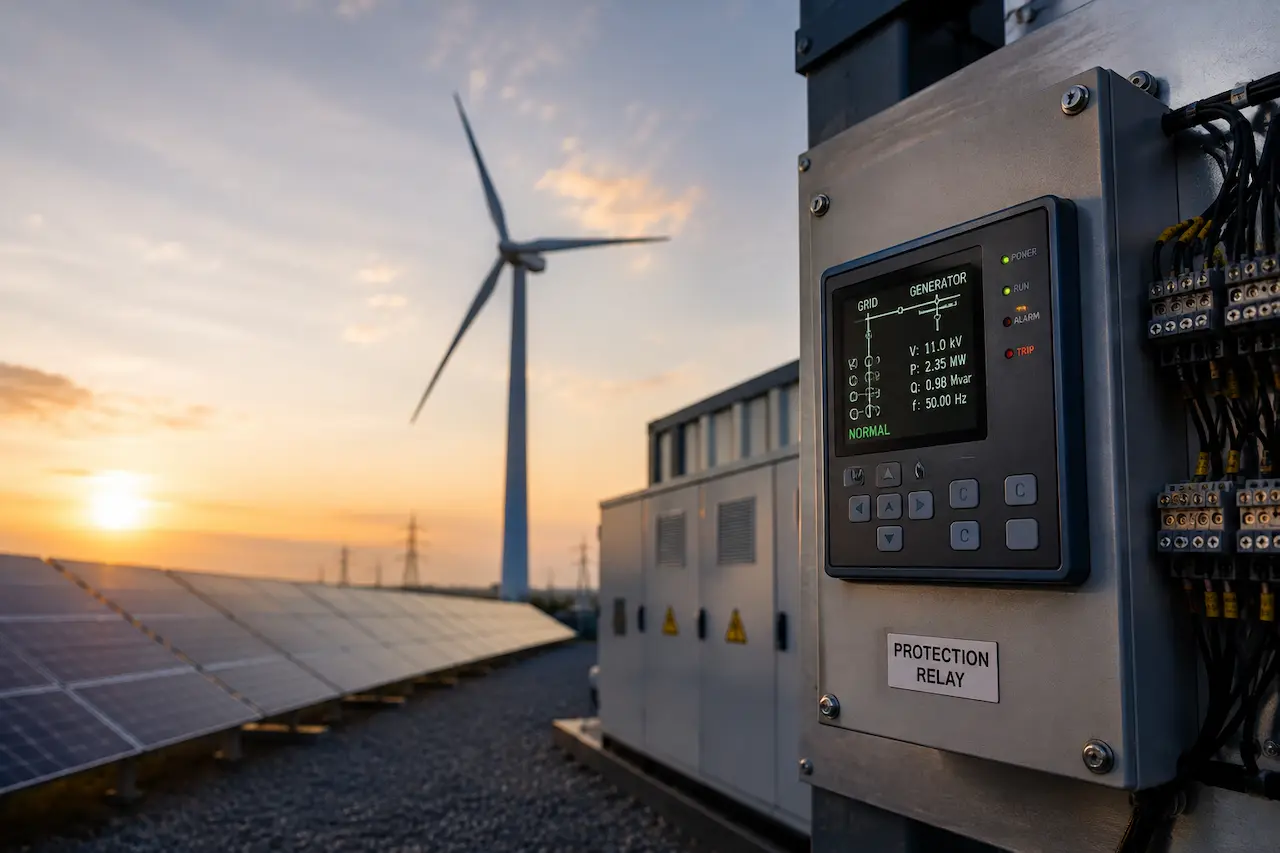
Renewable energy plants depend on protection systems to operate safely, reliably, and in line with grid requirements. Whether the project is a solar farm, battery energy storage system, wind facility, or another inverter-based power plant, protection settings play an important role in determining how the electrical system responds to abnormal conditions.
Protection relays continuously monitor the power system and respond when they detect conditions such as faults, abnormal voltage, frequency deviations, or excessive current. However, the performance of these relays depends heavily on how they are configured.
Incorrect or poorly coordinated settings can cause unnecessary plant trips, equipment disconnections, and avoidable generation losses. Settings that are too slow or insensitive can also affect fault clearing and expose equipment to unnecessary stress. For renewable energy projects, the challenge is not simply to protect equipment. The protection system must also support reliable plant operation and meet the requirements of the grid connection.
This article explains how protection settings renewable energy projects use can affect plant performance and why proper protection engineering is essential throughout the life of an asset.
What Are Protection Settings Renewable Energy?
Protection settings are the parameters configured within protection relays to determine when and how they should operate. Relays monitor electrical quantities such as current, voltage, and frequency. When these values move outside defined limits or indicate a fault, the relay responds according to its programmed settings and logic. These settings can include:
- Pickup values
- Operating time delays
- Protection curves
- Voltage thresholds
- Frequency limits
- Directional settings
- Logic and interlocking conditions
The purpose is to ensure that the protection system responds to genuine electrical problems without operating unnecessarily during normal system conditions. This balance is particularly important in renewable energy plants, where temporary disturbances may occur on the wider grid without representing a fault inside the generating facility.
Need Engineering Support for Your Power Project?
American Power Engineers delivers power system studies, substation design, renewable energy engineering, BESS projects, NERC compliance, MEP engineering, and POI interconnection services.
Explore Our Engineering ServicesWhy Protection Settings Matter for Plant Performance
Protection settings have a direct effect on how often equipment remains available and how the plant responds to electrical disturbances. A protection system that operates unnecessarily can disconnect inverters, feeders, transformers, or larger sections of the plant. Every unnecessary trip can result in lost generation and additional time spent investigating and restoring equipment.
On the other hand, a protection system that does not operate correctly during a genuine fault can create much more serious problems. Poor settings can affect plant performance in several ways:
- Reduced plant availability
- Unnecessary equipment trips
- Delayed fault clearing
- Loss of generation
- Increased equipment stress
- Operational disruptions
- Potential grid compliance issues
For this reason, protection settings should be treated as an important part of overall asset performance rather than simply a technical requirement completed during commissioning.
The Risk of Unnecessary Plant Trips
One of the most noticeable effects of poor protection settings is unnecessary tripping. A relay may be configured with a pickup value or time delay that does not properly reflect the actual operating characteristics of the plant. As a result, normal variations or temporary grid disturbances may trigger a protection response.
For example, voltage or frequency conditions may briefly move outside normal operating values. If the protection settings are too sensitive, the plant could disconnect even though the applicable grid requirements allow the facility to remain connected. This creates a direct impact on generation availability.
An unnecessary trip may require operators and engineers to investigate the event, confirm the cause, reset equipment, and restore the plant to service. Depending on the system, this process can result in significant downtime. The goal of a well-designed protection system is to avoid unnecessary operation while still responding quickly when genuine faults occur.
Protection Coordination and Selective Fault Clearing
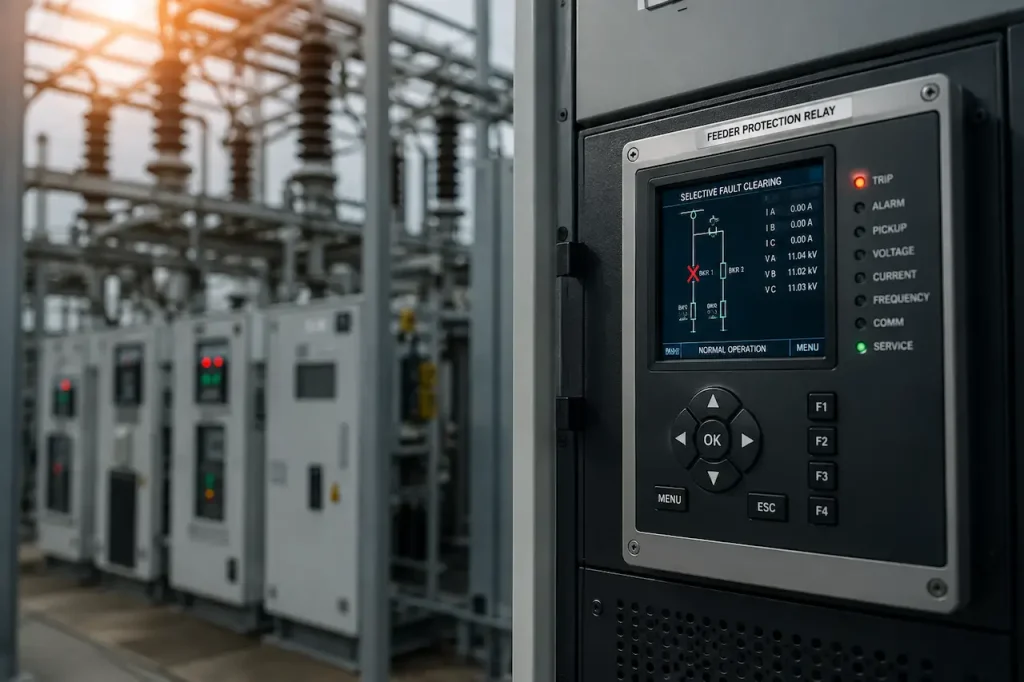
Protection coordination is another major factor affecting plant performance. A renewable energy plant may contain multiple protection devices operating at different levels of the electrical system. These devices must be coordinated so that the correct device responds to a fault. Ideally, a fault should be isolated as close to its location as possible.
Planning a Solar, Wind, BESS, or Grid Interconnection Project?
Our engineering team helps project owners, developers, utilities, and facility teams move from technical planning to reliable project execution.
View Engineering ServicesFor example, if a fault occurs on one feeder, the protection system should isolate that feeder without unnecessarily disconnecting the entire plant. Poor coordination can result in a wider outage than necessary. An upstream relay may operate before the protection device closest to the fault, causing healthy parts of the electrical system to disconnect. This can significantly affect plant availability. Proper coordination helps ensure that:
- The affected equipment is isolated
- Healthy sections remain in operation where possible
- Faults are cleared within the required time
- The overall impact on generation is reduced
Protection coordination studies are therefore an important part of developing reliable settings for renewable energy facilities.
Voltage and Frequency Settings
Voltage and frequency protection are particularly important for grid-connected renewable energy plants. The wider power system can experience temporary voltage dips, voltage increases, or frequency deviations. The plant must respond according to its equipment capabilities and applicable grid connection requirements.
If voltage protection settings are too sensitive, a solar or BESS plant may disconnect during a disturbance that it should have been able to ride through. The same principle applies to frequency protection.
Settings must be selected carefully so that the protection system does not conflict with the plant’s required operating behaviour. This requires coordination between several areas of the project, including:
- Grid connection requirements
- Plant control functions
- Inverter capabilities
- Protection relay settings
- System operating studies
If these elements are developed independently, the plant may experience unexpected behaviour during real system events.
Overcurrent Protection in Renewable Energy Plants
Overcurrent protection remains an important part of many electrical protection schemes. However, renewable energy facilities can present different challenges compared with conventional generating plants. Inverter-based resources often have limited fault current contribution. Their response during faults may also be controlled by the inverter and plant control system.
This means engineers cannot always apply traditional protection assumptions without considering the actual behaviour of the generating equipment. Protection settings must be based on realistic fault levels and system conditions. If an overcurrent pickup value is too high, the protection may not detect certain faults as intended. If it is too low, normal operating conditions may cause unnecessary operation. The protection design should therefore consider the complete electrical system rather than focusing only on the relay itself. Accurate power system studies provide important information for establishing these settings.
How Protection Settings Affect Grid Compliance
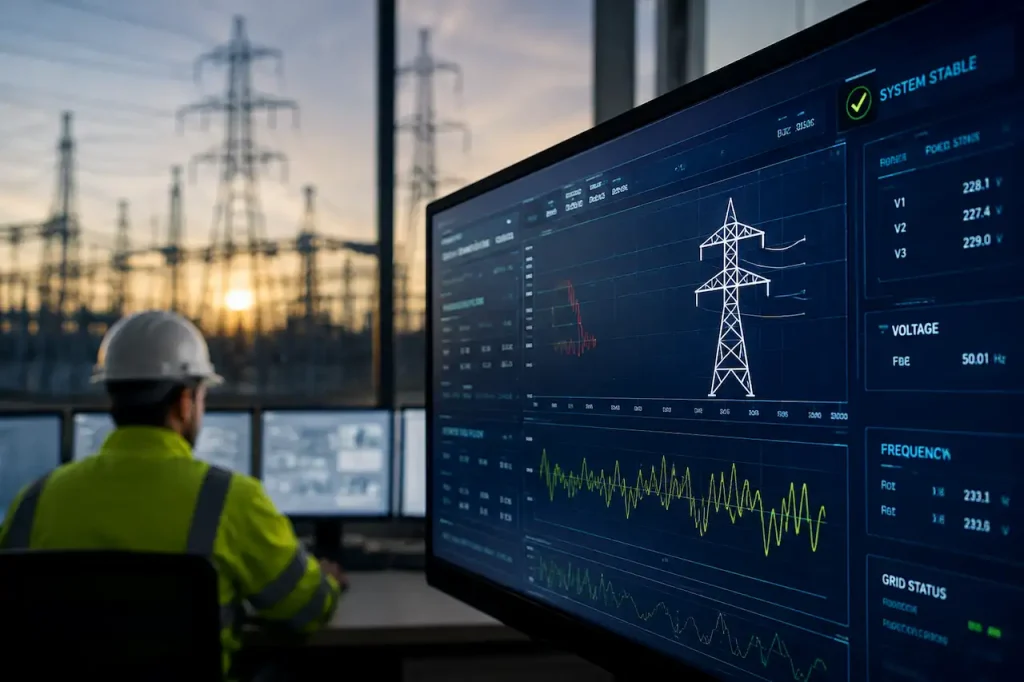
Renewable energy plants are often required to meet specific interconnection and grid performance requirements. Effective grid interconnection engineering helps ensure that protection functions, plant controls, and equipment capabilities are aligned with the requirements of the connected power network.
Grid operators may define how generating facilities should respond to voltage and frequency disturbances. In some situations, the plant may be required to remain connected rather than disconnect immediately. Protection settings play an important role in achieving this response. A plant can have correctly functioning equipment but still experience compliance issues if its protection thresholds conflict with the required grid performance.
For example, a voltage protection function may trip the plant before the required ride-through period has been completed. Key areas that need to be coordinated include:
- Voltage ride-through requirements: Protection settings should allow the plant to respond appropriately during temporary voltage disturbances.
- Frequency response requirements: Frequency protection must align with applicable grid operating limits and plant capabilities.
- Interconnection requirements: Relay settings should support the specific performance obligations defined for the grid connection.
This is why protection settings should not be developed in isolation. The engineering team must understand how protection functions interact with the overall grid connection requirements and the operating capabilities of the plant.
The Importance of Accurate Protection Studies
Protection settings are only as reliable as the engineering information used to develop them. Electrical systems can change during the design, construction, and operational stages of a project. Changes to equipment, generation capacity, transformers, cables, or the point of interconnection can affect the way the system behaves. If protection settings are based on outdated assumptions, they may no longer represent the actual electrical network. Accurate power system studies provide the technical information needed to develop protection settings based on the actual configuration and operating conditions of the facility. Relevant engineering studies may include:
- Short-circuit studies
- Protection coordination studies
- Load flow studies
- Dynamic studies
- Arc flash studies
These studies help engineers understand different aspects of system performance and develop protection strategies that reflect the actual project configuration. Settings should also be reviewed when significant modifications are made to an operating facility.
Protection Settings for Solar and BESS Projects
Solar and battery energy storage projects rely heavily on power electronic equipment and digital controls. The protection system may interact with inverters, power conversion systems, plant controllers, Battery Management Systems, and SCADA platforms. This creates additional engineering considerations. A protection event may not involve only a relay and circuit breaker. The plant controller or inverter may also respond to changing system conditions.
For BESS projects, multiple systems may need to coordinate their response. This level of integration is an important consideration in battery storage engineering projects, where electrical protection must work alongside battery controls and other operational systems. Electrical protection must work alongside battery controls and other operational systems. This makes system integration particularly important.
Protection engineers need to understand how the complete facility behaves during different operating conditions instead of reviewing each system independently.
Communication and Protection System Performance
Modern protection systems increasingly depend on communication between intelligent electronic devices. Relays may exchange information with other relays, SCADA systems, and plant controllers. Communication can support faster and more coordinated protection schemes, but it also introduces additional configuration requirements. Engineers need to verify that:
- Communication signals are mapped correctly
- Required information reaches the correct devices
- Logic operates within the expected timing
- Time synchronisation is functioning properly
- The system responds appropriately to communication failures
A communication issue can affect plant operation even when the relay settings themselves are correct. For this reason, protection testing should include the wider communication and control interfaces where they are relevant to the protection scheme.
Why Settings Verification During Commissioning Is Essential
Developing approved protection settings is not the final step. The approved settings must be correctly applied to the relays installed at the project site. During commissioning, engineers verify that the equipment configuration matches the latest approved protection design. For projects involving complex electrical infrastructure, this verification may also form part of a broader substation design engineering and commissioning process.
This is important because project changes can occur between the initial design and final energisation. Equipment may be replaced, settings files may be revised, or changes may be made during construction. A structured verification process can include reviewing:
- Relay configuration files
- Protection function settings
- Logic configurations
- CT and VT ratios
- Communication parameters
- Equipment identification
Testing then confirms that the protection system responds according to the approved engineering design. This process helps identify problems before the plant is energised and placed into normal operation.
Common Protection Settings Problems
Several issues can affect renewable energy plant performance when protection settings are not properly managed.
- Outdated Settings: The electrical system may have changed while the relay configuration remains based on older engineering information. This can create a gap between the actual system and the assumptions used to develop the settings.
- Incorrect Coordination: Protection devices may not operate in the intended sequence, resulting in a larger section of the plant being disconnected than necessary.
- Incorrect Settings Applied to Relays: Approved settings may exist in project documentation but may not have been correctly uploaded to the installed equipment.
- CT and VT Configuration Issues: Incorrect ratios, polarity, or wiring can cause relays to receive inaccurate electrical measurements.
- Changes in Plant Operating Conditions: Renewable energy facilities may operate differently depending on generation levels, system configuration, or grid conditions. Settings should consider these operating scenarios where relevant.
How to Improve Protection System Performance
Improving protection performance requires a structured engineering approach. The first step is understanding the actual electrical system and confirming that available studies and documentation are current. From there, the process should connect protection design, relay configuration, commissioning, and ongoing asset management. A practical approach includes:
- Review the latest electrical system configuration.
- Confirm whether existing studies remain valid.
- Update protection coordination studies where required.
- Develop and approve relay settings.
- Apply the approved settings to the installed equipment.
- Verify configurations during commissioning.
- Test protection functions, logic, and trip circuits.
- Review settings after significant system changes.
This approach helps reduce the risk of unnecessary trips and ensures that protection design remains aligned with plant operation.
The Role of Specialist Protection Engineers
Protection settings involve more than entering values into a relay. They depend on the relationship between electrical system behaviour, equipment characteristics, protection coordination, and grid requirements. Specialist protection engineers support this process by analysing how these elements work together. For project owners who require independent engineering oversight during critical design, commissioning, or operational stages, owner’s technical advisory services can provide additional technical support and coordination. Their work may involve:
- Reviewing the electrical system configuration
- Performing protection coordination studies
- Developing relay settings
- Checking grid-related protection requirements
- Supporting commissioning and relay testing
- Investigating unwanted protection operations
When a renewable energy plant experiences repeated trips, the cause may not be immediately obvious. The problem could involve relay settings, equipment behaviour, measurement circuits, communication systems, or plant controls. A systematic engineering review helps identify the root cause instead of simply changing settings without understanding the wider system.
Protection Settings Should Be Reviewed Throughout the Asset Life Cycle
Protection settings should not be considered permanent once a plant completes commissioning. Electrical systems can change over time. A plant may expand its generation capacity, add new equipment, replace existing equipment, or experience changes at the grid connection. These changes can affect the assumptions used to develop the original protection settings. Asset owners should therefore include protection reviews as part of their wider engineering and maintenance strategy. Periodic reviews can help confirm that:
- Settings remain appropriate for the current system
- Protection coordination remains effective
- System modifications have been assessed
- Equipment configurations are documented
- Previous protection issues have been addressed
This proactive approach can support long-term plant reliability and help reduce avoidable operational disruptions.
Need Support with Renewable Energy Protection Settings?
Protection settings can directly affect the safety, availability, reliability, and grid performance of a renewable energy plant. Incorrect or outdated settings can lead to unnecessary trips, delayed fault clearing, and avoidable generation losses. Grid Engineering Group provides specialist support for protection and relay engineering, including protection coordination studies, relay settings, protection testing, commissioning support, and power system studies. For project owners who need independent technical guidance, our owner’s technical advisory services can also support critical engineering decisions and project requirements.
Whether your project is approaching energisation or an operating plant is experiencing repeated protection trips, a structured engineering review can help identify the underlying cause and support more reliable system performance. Contact Grid Engineering Group to discuss your protection and relay engineering requirements.
Frequently Asked Questions
What are protection settings in a renewable energy plant?
Protection settings are parameters configured in protection relays that determine when and how the system responds to abnormal electrical conditions.
Can incorrect protection settings reduce plant availability?
Yes. Settings that are too sensitive or poorly coordinated can cause unnecessary equipment trips and reduce generation availability.
Why is protection coordination important?
Protection coordination helps ensure that the correct device isolates a fault while allowing unaffected sections of the plant to remain in operation where possible.
How do protection settings affect grid compliance?
Protection settings influence how a plant responds to voltage and frequency disturbances. Incorrect settings may cause the facility to disconnect when grid requirements expect it to remain connected.
When should protection settings be reviewed?
Settings should be reviewed after significant changes to the electrical system, equipment configuration, generation capacity, or grid connection.
Why is specialist protection engineering support important?
Protection engineers analyse relay settings, system behaviour, coordination, and equipment interfaces to help ensure that the protection system operates according to the approved engineering design.
Work With American Power Engineers
Expert engineering support for power system studies, substation design, renewable energy projects, BESS engineering, NERC compliance, MEP engineering, and POI interconnection services.
Explore All Engineering Services