
SCADA Integration Problems That Can Delay Project Energisation
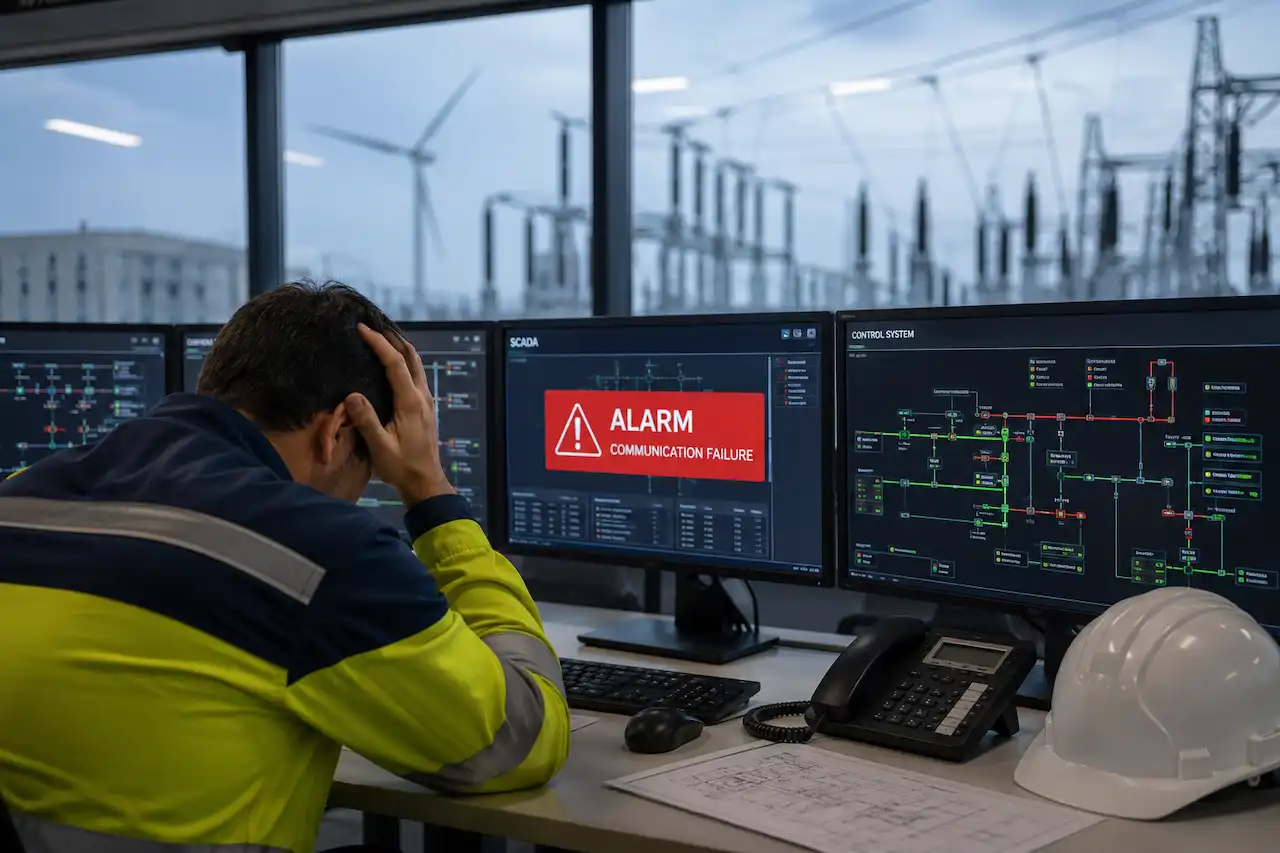
SCADA integration is a critical part of commissioning modern renewable energy and power system projects. Before a plant can move safely toward energisation, different systems must be able to communicate and operate together as intended. A typical project may include protection relays, inverters, plant controllers, meters, substation equipment, communication networks, and remote control interfaces. Each system may work correctly on its own, but problems often appear when these systems are connected and tested as one integrated facility.
These SCADA integration problems can delay important project milestones, including energisation and commercial operation. For EPC teams, the challenge is often not installing the equipment. It is identifying and resolving communication, configuration, and interface issues before they affect the commissioning schedule. This article explains the most common SCADA integration problems, why they occur, and how project teams can reduce their impact before energisation.
Why SCADA Integration Is Important Before Energisation
Before energisation, project teams need confidence that operators can monitor important equipment and receive accurate information about the condition of the electrical system. SCADA provides visibility into equipment status, measurements, alarms, and other operational information. In many projects, it also supports remote control functions.
If SCADA integration is incomplete, operators may not be able to confirm whether equipment is operating correctly. Important alarms may be missing, measurements may be inaccurate, or control commands may not reach the intended equipment. These issues can create uncertainty during energisation.
The project may therefore be unable to progress until critical communication and control functions have been tested and accepted. SCADA integration is not simply an IT activity. It is closely connected to electrical safety, operational readiness, and the wider commissioning programme.
Need Engineering Support for Your Power Project?
American Power Engineers delivers power system studies, substation design, renewable energy engineering, BESS projects, NERC compliance, MEP engineering, and POI interconnection services.
Explore Our Engineering ServicesWhat Causes SCADA Integration Problems?
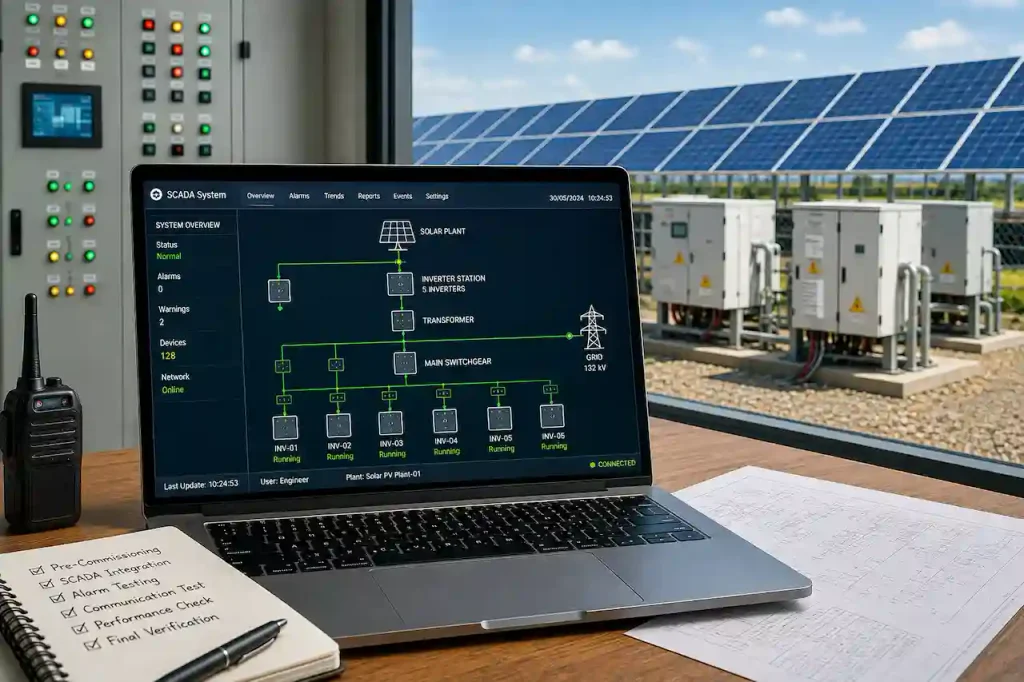
SCADA integration problems can originate at different points within the project. The issue may involve field equipment, communication networks, control systems, software configuration, or documentation.
Because several contractors and engineering disciplines are often involved, identifying the actual cause can take time. Common causes include:
- Incomplete point lists
- Incorrect signal mapping
- Communication protocol mismatches
- Network configuration errors
- Incorrect device addresses
- Software configuration problems
- Unclear interface responsibilities
- Late engineering changes
The difficulty is that the visible problem may not indicate where the actual fault exists. For example, a missing status signal on the SCADA screen may appear to be a SCADA issue. However, the cause could be located in a protection relay, controller, communication gateway, or network configuration. A structured investigation process is therefore important.
Incomplete or Incorrect Point Lists
The point list is one of the most important documents used during SCADA integration. It identifies the information that should be exchanged between equipment and systems. Depending on the project, the list may include:
- Equipment status
- Alarm signals
- Measurements
- Control commands
- Setpoints
- Fault indications
- Communication status
Problems occur when point lists are incomplete, outdated, or interpreted differently by different contractors. One team may configure a signal based on an older revision while another team is working from updated information. This can lead to missing points, incorrect mappings, and unnecessary rework during commissioning. Point list management should therefore be controlled throughout the project. Changes should be documented and communicated to every party affected by the interface.
Incorrect Signal Mapping
A communication link can be active while the information being exchanged is incorrect. This commonly happens when signals are mapped to the wrong data points. For example, an equipment status may appear under the wrong device, or an alarm may be connected to an incorrect SCADA tag.
Incorrect mapping can be difficult to identify without structured testing. During point-to-point testing, engineers compare the actual field condition with the information displayed in SCADA. A well-planned verification process should confirm:
Planning a Solar, Wind, BESS, or Grid Interconnection Project?
Our engineering team helps project owners, developers, utilities, and facility teams move from technical planning to reliable project execution.
View Engineering Services- The correct signal is received
- The signal is associated with the correct equipment
- The status changes correctly
- Alarms appear as intended
- Measurements are displayed accurately
Testing every critical point may require significant time, particularly on large renewable energy facilities. However, identifying mapping problems before energisation is far more efficient than discovering them during plant operation.
Communication Protocol Mismatches
Different systems may use different communication protocols. SCADA platforms, protection relays, plant controllers, meters, and other intelligent electronic devices must be configured to exchange information using compatible communication methods. A problem can occur when two connected systems are configured differently.
For example, devices may support the same protocol but use different versions or communication parameters. The result may be partial communication or a complete failure to exchange information.
Project teams should confirm protocol requirements during the engineering stage rather than waiting until final commissioning. Interface documentation should clearly define how each system is expected to communicate.
Network Configuration Problems
SCADA systems depend on communication networks to connect devices across the plant. Incorrect network settings can prevent devices from communicating even when the physical infrastructure is installed correctly. Common network configuration issues include:
- Incorrect IP addresses: Devices may be assigned incorrect or conflicting addresses.
- Subnet configuration errors: Incorrect subnet settings can prevent devices from communicating across the intended network.
- Gateway settings: Incorrect gateway configuration can affect communication with other network segments.
- Network routing problems: Data may not reach the required SCADA server or remote interface.
A device may be visible on part of the network but unable to communicate with the required SCADA server or remote interface. Network problems can also be difficult to isolate because the same issue may affect multiple systems.
A structured verification process should therefore begin with the network architecture before moving into detailed signal testing. The team should confirm that devices are connected through the intended communication paths and that required network services are available.
Device Configuration Errors
Each intelligent device must be configured correctly before it can exchange useful information with the wider system. This may include:
- Protection relays
- Remote terminal units
- Programmable controllers
- Inverters
- Meters
- Communication gateways
A small configuration error can prevent a major part of the SCADA system from functioning correctly.
For example, the device may be online but configured to send data using incorrect addresses or signal definitions.
Device configuration should be checked against the latest approved engineering documentation. This is particularly important when equipment settings have been modified during construction or commissioning.
Problems with SCADA and Protection System Interfaces
Protection relays provide important operational information to SCADA systems. They may communicate equipment status, alarms, measurements, protection operations, and other event information. Integration problems can occur when the relay configuration and SCADA database do not match. A protection relay may operate correctly while the associated alarm or trip indication does not appear on the operator interface.
This can create significant problems during commissioning and future fault investigations. Project teams should coordinate protection and SCADA testing to verify that important information is correctly exchanged between the two systems. The focus should not only be on whether the relay communicates but also whether the correct information is available to operators.
Plant Controller Integration Issues

Plant controllers play an important role in many renewable energy facilities. They may coordinate several important plant-level functions, including:
- Active power control
- Reactive power control
- Voltage control
- Other plant-level operational functions
The controller may communicate with multiple inverters or power conversion systems while also exchanging information with SCADA and external grid interfaces. This creates several potential integration points.
If communication between the plant controller and SCADA is incomplete, operators may have limited visibility into plant performance. If commands or setpoints are incorrectly mapped, the plant may not respond as expected. Plant controller integration should therefore be tested as part of the wider system rather than as an isolated activity. The engineering team should verify that monitoring and control functions operate correctly across the complete communication path.
Remote Control and Command Failures
Some projects require equipment to be controlled remotely through the SCADA system. Before energisation, teams may need to confirm that authorised operators can perform specific control actions safely. A command failure can result from several causes. The command may not be correctly configured, required permissions may be missing, an interlock may be active, or the communication path may be incomplete. Remote control testing should confirm the complete sequence:
- The correct command is available in SCADA.
- The command is issued by an authorised user.
- Required interlocks and permissions are checked.
- The command reaches the intended device.
- The equipment responds correctly.
- The updated equipment status returns to SCADA.
This end-to-end testing helps identify problems that may not be visible when individual components are tested separately.
Incorrect Measurements and Scaling
A measurement can appear on a SCADA screen and still be incorrect. This commonly occurs because of scaling, engineering unit, or configuration errors.
For example, a power value may be displayed at an incorrect magnitude because the associated scaling factor has been configured incorrectly.
This can affect operational decision-making and performance monitoring. During commissioning, measurements should be compared with known field values or other reliable reference points. The team should confirm that:
- Values are accurate
- Engineering units are correct
- Scaling is properly configured
- Data updates as expected
Accurate measurement verification is particularly important where information is used for plant control or reporting.
Alarm Management Problems
Alarms help operators identify abnormal conditions and respond appropriately. However, an alarm system can create problems when alarms are missing, incorrectly configured, or associated with the wrong equipment. Too many unnecessary alarms can also reduce their operational value. During SCADA integration, engineers should verify that important alarms are generated under the correct conditions and clearly presented to operators. Alarm testing should consider both the technical signal and the operational purpose of the alarm. An alarm that is technically available but unclear or incorrectly prioritised may not provide the intended operational benefit.
Time Synchronisation Issues
Modern power system projects often rely on accurate time synchronisation. Protection relays, controllers, SCADA servers, and other devices may record events and disturbances. If devices are not synchronised to a common time source, engineers can have difficulty understanding the sequence of events following a fault or operational disturbance.
Time synchronisation problems may not immediately prevent communication, but they can create serious challenges during testing and event analysis. Project teams should therefore verify that relevant devices are synchronised according to the approved project requirements.
Late Changes to Engineering and Equipment
Late project changes are a common source of SCADA integration problems. Equipment may be replaced, additional signals may be required, or control philosophy may change during construction. If these changes are not reflected across all connected systems, the final configuration may become inconsistent.
For example, a new protection relay configuration may include additional signals that are not included in the SCADA database. Similarly, a revised plant controller may require updated communication mappings. Change management is essential for preventing these problems. Every relevant engineering change should be reviewed for its potential impact on connected systems and commissioning activities.
Unclear Interface Responsibilities
Large EPC projects often involve several contractors. One contractor may supply field equipment, another may configure the SCADA platform, while another may be responsible for communication networks or plant controls. Integration problems can become difficult to resolve when responsibilities are not clearly defined. Teams may spend time determining who should investigate an issue rather than resolving it. A clear interface responsibility matrix can help identify:
- Who owns each system
- Who is responsible for configuration
- Who performs testing
- Who supports fault investigation
- Who approves final acceptance
Clear ownership helps reduce delays and improves coordination during commissioning.
How SCADA Integration Problems Delay Energisation
SCADA problems can affect energisation because critical operational functions may need to be available before equipment is placed into service. For facilities involving substations and high-voltage equipment, these operational requirements must also be coordinated with the wider substation design engineering approach. Project teams may need reliable visibility into:
- Circuit breaker status
- Electrical measurements
- Protection alarms
- Communication status
- Equipment faults
Without this information, operators may not have sufficient awareness of plant conditions. Control functions may also be required during energisation.
If these functions have not been tested, the project may need to delay the next commissioning stage. SCADA issues can also create a backlog of unresolved items. A project may have dozens of minor problems that individually appear manageable but collectively prevent the system from reaching operational readiness. Early testing and structured issue management are essential for avoiding this situation.
How EPC Teams Can Prevent SCADA Integration Delays
The best approach is to treat SCADA integration as an ongoing engineering and commissioning activity. It should not be left until the final days before energisation. EPC teams can reduce delays by focusing on several areas early in the project.
- Start Interface Planning Early:
- Communication requirements, system boundaries, and interface responsibilities should be defined during engineering.
- Early planning allows teams to identify potential compatibility issues before equipment arrives at the project site.
- Maintain Controlled Documentation:
- Point lists, communication architecture drawings, and interface documents should be controlled and regularly updated.
- Teams should avoid working from outdated revisions.
- Test Systems in Stages:
- Testing should move from individual devices to complete integrated functions.
- This approach makes it easier to identify where a problem originates.
- Track and Close Issues Systematically:
- Every significant issue should be recorded, assigned, tracked, and retested before closure.
- A structured issue management process gives the project team visibility into remaining risks.
- Coordinate Electrical and SCADA Teams:
- SCADA issues often involve electrical equipment and control systems.
- Protection, commissioning, SCADA, and plant control engineers should coordinate testing rather than working independently.
The Role of Specialist SCADA Engineers
Specialist SCADA engineers help project teams understand how the different systems across a facility interact. Their role goes beyond checking whether devices are connected. They may review communication architecture, verify signal mapping, test control functions, and investigate problems across system interfaces. When an issue occurs, the visible problem may be in SCADA while the actual cause is located elsewhere.
A systematic engineering investigation can help identify whether the issue originates from a field device, network, controller, protection relay, or SCADA configuration. This multidisciplinary understanding is particularly valuable during energisation, when unresolved issues must be addressed quickly without compromising system safety.
Preparing for Successful Project Energisation
Successful energisation requires more than completing equipment installation. For renewable energy facilities, specialist solar farm engineering can help address the wider electrical and system integration requirements across the project lifecycle.
The project team needs confidence that electrical, protection, control, and SCADA systems can operate together. Before critical energisation stages, teams should review the readiness of important system interfaces and confirm that outstanding issues do not create unacceptable operational risks. A structured readiness review should consider:
- Communication network availability
- Critical SCADA points
- Equipment status visibility
- Alarm functionality
- Control capabilities
- Protection system interfaces
- Plant controller communication
- External grid interfaces
This process helps identify remaining gaps before they affect the energisation schedule.
Need Support with SCADA Integration Problems?
SCADA integration problems can affect commissioning schedules, delay energisation, and create operational challenges after the project enters service. Grid Engineering Group provides specialist engineering support for SCADA integration, renewable energy commissioning, protection and control coordination, communication testing, and system interface management. For project owners requiring independent technical oversight during commissioning and energisation, our owner’s technical advisory services can provide additional engineering support.
Whether your project is approaching energisation or experiencing unresolved SCADA issues, a structured engineering review can help identify the source of the problem and support effective resolution.
Contact Grid Engineering Group to discuss your SCADA integration and commissioning requirements.
Frequently Asked Questions
What are the most common SCADA integration problems?
Common problems include incorrect point mapping, incomplete point lists, network configuration errors, protocol mismatches, device configuration issues, and unclear system interfaces.
Can SCADA problems delay project energisation?
Yes. If critical equipment status, alarms, measurements, or control functions are unavailable, the project may not be ready to safely proceed with energisation.
What is point-to-point testing?
Point-to-point testing verifies that information from field equipment is correctly transmitted, received, and displayed in the SCADA system.
Why is interface management important during SCADA integration?
Multiple contractors and systems may be involved. Clear interface management helps define responsibilities and prevents issues from being delayed because ownership is unclear.
When should SCADA integration testing begin?
Planning and early integration testing should begin during engineering and construction rather than being left until the final stage before energisation.
How can specialist engineers help resolve SCADA issues?
Specialist engineers can investigate communication, configuration, mapping, and interface problems across the wider system to identify the actual cause and support resolution.
Work With American Power Engineers
Expert engineering support for power system studies, substation design, renewable energy projects, BESS engineering, NERC compliance, MEP engineering, and POI interconnection services.
Explore All Engineering Services