
Why EPC Contractors Need Specialist Grid Engineering Support
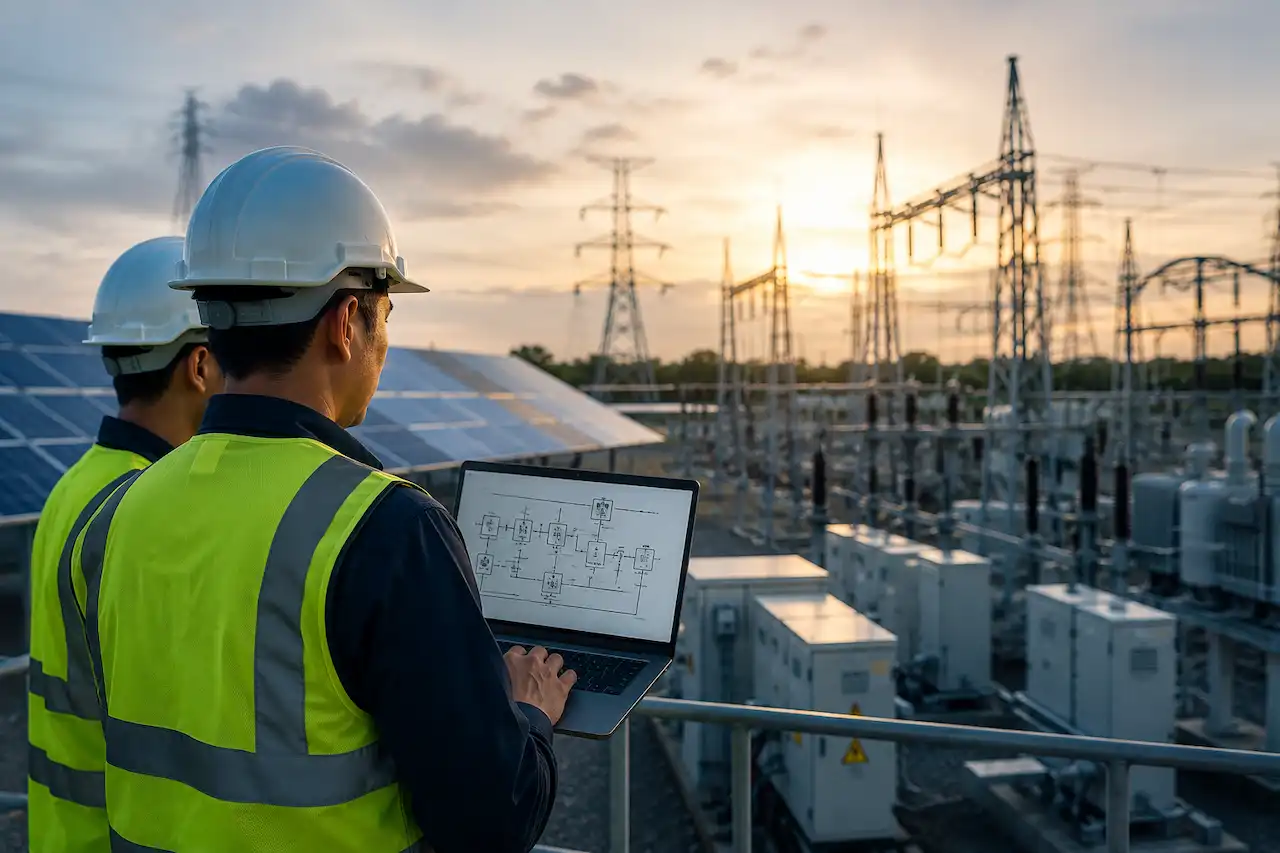
EPC contractors are responsible for bringing complex energy infrastructure projects from design through construction, commissioning, and final handover. In renewable energy and grid-connected projects, this involves much more than installing equipment and completing civil and electrical works. Solar farms, battery energy storage systems, wind projects, substations, and other power infrastructure must operate safely and reliably while meeting the technical requirements of the grid.
This is where EPC engineering support becomes important. Specialist grid engineers provide technical expertise across power system studies, protection and control, grid interconnection, SCADA, commissioning, and system integration. Their involvement can help EPC contractors identify technical issues early, manage complex interfaces, and reduce the risk of delays during energisation.
Why Grid Engineering Is Important for EPC Projects
A grid-connected project does not operate independently. It must interact correctly with the wider electrical network. The behaviour of the project can affect grid voltage, frequency, fault levels, power quality, and system stability. Grid engineering considers these interactions before and during project delivery.
EPC contractors often manage multiple work packages, suppliers, subcontractors, and project deadlines. However, specialist grid engineering knowledge may be required to address technical issues that fall between these disciplines. For example, a project may have correctly installed equipment but still face challenges because of:
- Unresolved grid interconnection requirements
- Incomplete power system studies
- Protection coordination issues
- Incorrect control settings
- SCADA integration problems
- Plant controller performance issues
These challenges can become particularly significant as the project approaches energisation. Specialist engineering support helps EPC teams understand how the complete system is expected to perform rather than focusing only on individual equipment packages.
Need Engineering Support for Your Power Project?
American Power Engineers delivers power system studies, substation design, renewable energy engineering, BESS projects, NERC compliance, MEP engineering, and POI interconnection services.
Explore Our Engineering ServicesUnderstanding Complex Grid Connection Requirements
Grid connection requirements can vary depending on the project location, network operator, and type of generating facility. Effective grid interconnection engineering helps project teams understand and address these technical requirements throughout project delivery.
Projects may need to demonstrate compliance with specific technical requirements before they can connect and operate. These requirements can involve areas such as voltage performance, frequency response, fault ride-through capability, reactive power, and control functions.
EPC contractors may receive detailed technical requirements that need to be translated into practical engineering activities. This can create challenges when several systems are involved.
A requirement related to voltage ride-through, for example, may affect inverter capabilities, plant controller settings, protection functions, and overall control philosophy. Specialist grid engineers can help interpret these requirements and identify how they apply to the project. This provides EPC teams with clearer direction during engineering, construction, and commissioning.
Supporting Power System Studies
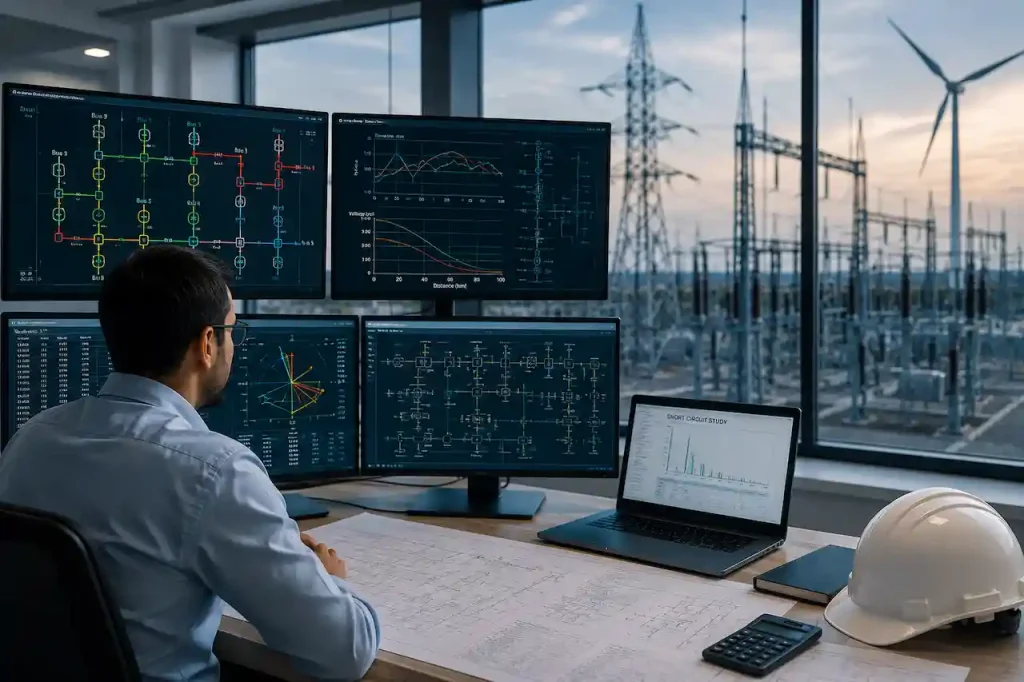
Power system studies are an important part of many grid-connected projects. These studies help engineers understand how a new facility will interact with the electrical network. Depending on the project, studies may include:
- Load flow studies
- Short circuit studies
- Harmonic analysis
- Protection coordination studies
- Dynamic studies
- Electromagnetic transient studies
- Arc flash analysis
The results of these studies can influence equipment selection, protection settings, control strategies, and project design. If studies are delayed or not properly coordinated with the wider engineering work, problems may appear later in the project.
For example, a change in system configuration could affect fault levels and require updated protection settings. Similarly, study results may identify control or harmonic issues that need to be addressed before energisation.
Planning a Solar, Wind, BESS, or Grid Interconnection Project?
Our engineering team helps project owners, developers, utilities, and facility teams move from technical planning to reliable project execution.
View Engineering ServicesSpecialist grid engineers can support the study process and help EPC teams understand how the findings affect the project.
Managing Protection and Control Challenges
Protection and control systems are critical to the safe operation of electrical infrastructure. For projects involving substations and high-voltage equipment, these systems must also align with the wider requirements of substation design engineering. These systems must detect abnormal conditions and respond appropriately while avoiding unnecessary trips. On a complex project, protection performance depends on several elements working together, including:
- Approved protection settings
- Correct relay configuration
- CT and VT connections
- Trip and close circuits
- Circuit breaker operation
- Communication interfaces
A protection system may appear correctly installed while still containing configuration or coordination problems. Specialist protection and grid engineers can help review these systems from a wider power system perspective. Their support can be valuable when reviewing protection philosophies, coordinating relay settings, investigating test failures, and preparing systems for energisation.
Supporting Renewable Energy Integration
Renewable energy projects introduce additional engineering challenges because their generation technology and control systems operate differently from traditional synchronous generation. Solar farms, BESS facilities, and wind projects may use inverter-based resources that depend on sophisticated control and protection systems. The project must be designed and configured to meet both plant requirements and grid expectations. Grid engineering support can help address issues involving:
- Plant controller performance
- Active and reactive power control
- Voltage regulation
- Frequency response
- Fault ride-through
- Inverter-based resource behaviour
- Grid model validation
These areas often involve multiple equipment suppliers and engineering disciplines. Specialist engineers help coordinate the technical requirements across these interfaces.
Reducing Risks During Project Engineering
Technical problems are generally easier and less expensive to resolve during the engineering stage. Once equipment has been delivered and installed, changes can affect procurement, construction schedules, and commissioning activities. Early grid engineering involvement can help EPC contractors identify potential issues before they become major project risks. This may include reviewing:
- Single-line diagrams
- Grid connection requirements
- Protection philosophies
- Study assumptions
- Control architecture
- Equipment capabilities
- System interfaces
Early technical reviews do not eliminate every project issue. However, they can improve visibility into potential risks and allow the project team to address them before critical milestones are affected.
Coordinating Multiple Technical Interfaces
One of the biggest challenges on EPC projects is managing interfaces between different systems and contractors.
A renewable energy facility may involve equipment suppliers, civil contractors, electrical contractors, protection engineers, SCADA specialists, network engineers, and grid operators. Each party may be responsible for a specific part of the project, but problems often occur at the point where their systems and responsibilities overlap. The most common interface challenges can include:
- Communication interfaces between plant equipment, controllers, and SCADA systems
- Signal and control coordination between different equipment packages
- Protection and control interfaces that must operate correctly during normal and fault conditions
- Grid connection interfaces involving the plant and external network requirements
For example, an inverter supplier may confirm that its equipment is operating correctly, while the plant controller supplier identifies a communication issue. The underlying problem may involve network configuration, signal mapping, or control settings.
Without coordinated engineering support, determining responsibility can take significant time. Specialist grid engineers can help investigate the complete system and identify how different interfaces affect one another. This multidisciplinary approach supports faster problem resolution and clearer communication between project stakeholders.
Improving Commissioning and Energisation Readiness
The final stages of a project can place significant pressure on EPC teams. Construction may be nearing completion, outstanding issues may still be open, and energisation dates may be approaching. At this stage, technical problems can quickly affect the project schedule.
Specialist engineering support can help the project team assess whether critical systems are ready for the next commissioning stage. This may involve reviewing:
- Protection system readiness
- SCADA communication
- Plant controller integration
- Equipment status and alarms
- Grid interface requirements
- Outstanding technical issues
- Test documentation
A structured readiness review helps distinguish between minor outstanding items and issues that could prevent safe energisation. This allows EPC teams to focus resources on the most important risks.
Supporting SCADA and System Integration
Modern energy projects depend on communication and control systems. SCADA platforms connect equipment across the facility and provide operators with visibility into plant status, measurements, alarms, and control functions. Integration problems can delay commissioning even when individual devices are working correctly.
Common challenges include incorrect point mapping, network configuration problems, protocol mismatches, and incomplete communication between plant systems. Specialist engineering support can help investigate these issues across the complete system.
The objective is not simply to confirm that devices are online. Engineers must verify that information is accurate, commands operate correctly, and connected systems behave as intended. This is particularly important where SCADA interfaces with protection relays, plant controllers, inverters, and remote grid operator systems.
Helping EPC Teams Respond to Engineering Changes
Changes are common during major infrastructure projects. Equipment may be replaced because of availability issues. Design assumptions may change. Grid requirements may be updated, or project configurations may be modified. A change in one part of the project can affect several other engineering areas.
For example, changing a transformer or inverter configuration may require updates to power system studies, protection settings, control configurations, and commissioning procedures.
Without a coordinated review, these dependencies can be missed. Specialist grid engineers can assess how engineering changes affect the wider electrical system and identify activities that may need to be updated. This helps prevent inconsistencies between the final installed equipment and the engineering documentation.
Providing Independent Technical Expertise
EPC contractors often rely on equipment manufacturers and specialist suppliers for technical information. Supplier expertise is essential, but each supplier is generally focused on its own equipment package. The project still requires an overall engineering perspective. Independent specialist engineers can assess how individual systems interact with the wider plant and grid.
This can be particularly useful when technical responsibilities overlap or when different parties have conflicting views about the cause of a problem. An independent engineering perspective can help the project team focus on technical evidence and system behaviour rather than assumptions about responsibility.
Supporting Issue Investigation and Resolution
Not every commissioning issue has an obvious cause. A plant may fail to respond as expected even when individual equipment tests have been successful. For example, a failed control test could result from:
- Incorrect controller settings
- Communication problems
- Protection interlocks
- Signal mapping errors
- Equipment configuration issues
- Network faults
A structured investigation is required to identify the actual source of the problem. Specialist engineers can support this process by reviewing system behaviour, engineering documentation, configurations, and test results. Their experience across multiple engineering disciplines can help reduce the time spent investigating complex issues.
Improving Communication with Grid Operators
Grid operators may require technical information, test results, models, and evidence of compliance before a project can progress through connection and energisation stages. Specialist support for grid reliability and compliance can help project teams understand and manage technical compliance requirements.
EPC contractors need to coordinate these requirements alongside construction and commissioning activities. Specialist grid engineers can help prepare technical responses and review whether project testing provides the information required by the grid operator. They can also support discussions involving:
- Grid study requirements
- Technical compliance
- Model submissions
- Commissioning procedures
- Plant performance testing
- Grid interface issues
Clear technical communication can reduce misunderstandings and help projects move more efficiently through the connection process.
When Should EPC Contractors Involve Specialist Grid Engineers?
The best time to involve specialist engineers is often before major technical decisions have been finalised. Early involvement provides more opportunity to identify risks and influence the engineering approach. However, specialist support can also be valuable at other stages of the project.
- During Early Project Development: Engineers can review grid connection requirements, study needs, and major technical risks.
- During Detailed Engineering: Support may focus on power system studies, protection design, control systems, and technical interfaces.
- During Construction: Specialists can help assess engineering changes and resolve issues that affect the installed systems.
- During Commissioning: Support becomes particularly valuable for testing, issue investigation, system integration, and energisation readiness.
The level of support can be adapted to the needs of the project rather than treating specialist engineering as a separate process.
The Value of a Coordinated Engineering Approach
Complex power projects require more than individual specialists working independently. The electrical system must operate as one integrated facility. A coordinated approach brings together knowledge of power systems, protection, control, SCADA, renewable energy technology, and grid requirements. This helps project teams understand how decisions in one engineering area can affect another.
For EPC contractors, the value comes from improved technical visibility and stronger coordination during critical project stages. Rather than waiting for problems to appear during energisation, the team can identify and manage technical risks throughout the project lifecycle.
Need Specialist Grid Engineering Support for Your EPC Project?
EPC projects can face complex technical challenges as they move from engineering through construction, commissioning, and energisation. Grid Engineering Group provides specialist EPC engineering support across grid interconnection, power system studies, protection and control, renewable energy integration, SCADA, commissioning, and system performance. For project owners requiring independent technical guidance, our owner’s technical advisory services can provide additional support throughout critical project stages.
Our engineering support helps EPC teams address complex technical interfaces, investigate project issues, and improve readiness for critical milestones. Whether your project is in the engineering stage or approaching energisation, specialist support can help your team manage technical risks and move forward with greater confidence.
Contact Grid Engineering Group to discuss your EPC project and grid engineering requirements.
Frequently Asked Questions
What is EPC engineering support?
EPC engineering support provides specialist technical expertise to contractors delivering complex energy and infrastructure projects. It can cover grid studies, protection, controls, SCADA, commissioning, and system integration.
Why do EPC contractors need specialist grid engineering support?
Grid-connected projects involve complex technical requirements and interfaces. Specialist engineers help EPC teams manage power system studies, protection, controls, grid compliance, and commissioning challenges.
Can grid engineering support help reduce commissioning delays?
Yes. Early engineering support can help identify technical risks, coordinate system interfaces, and resolve issues before they affect critical commissioning and energisation activities.
What services can specialist grid engineers support?
Support may include power system studies, grid interconnection, protection coordination, SCADA integration, plant controller testing, renewable energy integration, and commissioning support.
When should specialist engineers be involved in an EPC project?
Ideally, specialist engineers should be involved early in the project. However, they can also provide valuable support during detailed engineering, construction, commissioning, and energisation.
Can specialist engineers support renewable energy EPC projects?
Yes. Specialist grid engineers can support solar, wind, BESS, and other renewable energy projects by addressing grid integration, controls, protection, compliance, and commissioning requirements.
Work With American Power Engineers
Expert engineering support for power system studies, substation design, renewable energy projects, BESS engineering, NERC compliance, MEP engineering, and POI interconnection services.
Explore All Engineering Services