
Power Quality Testing for Renewable Energy Projects
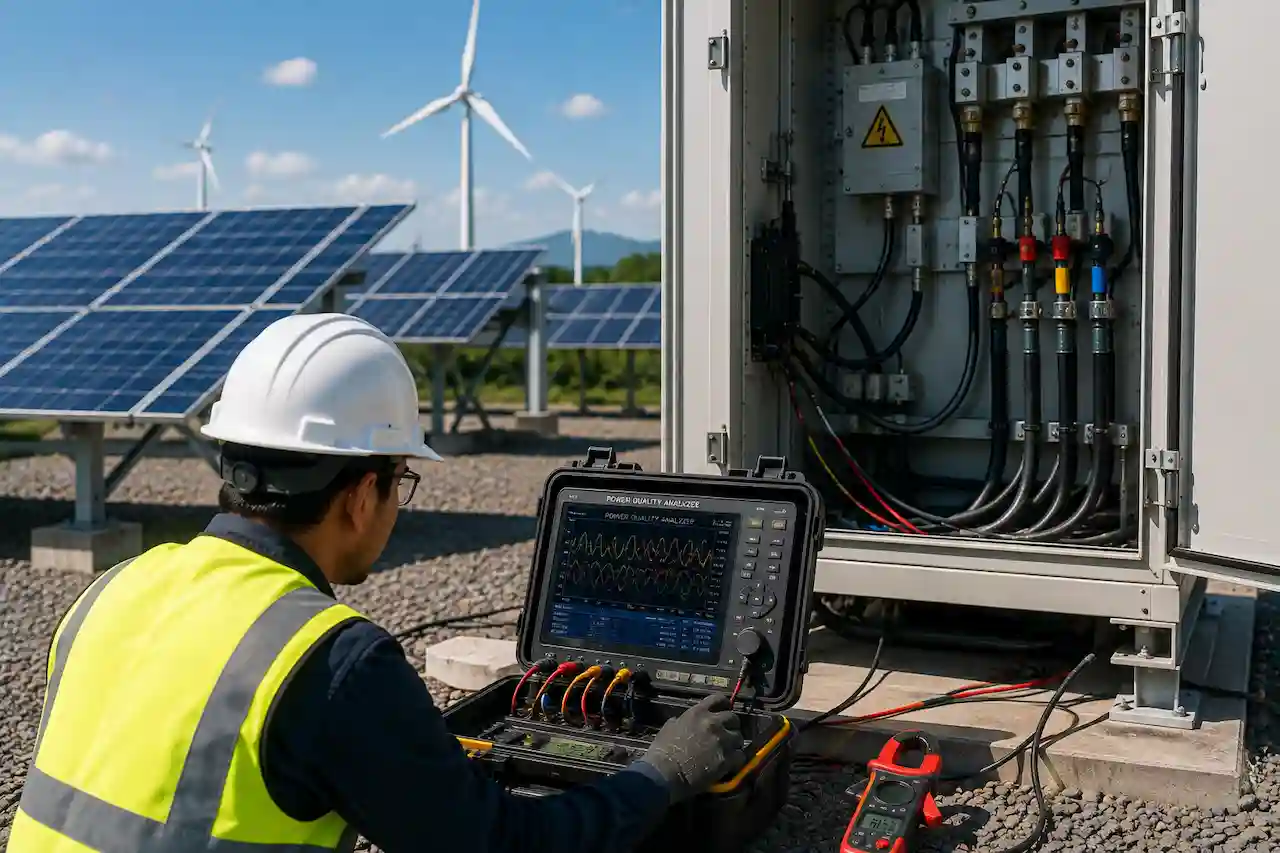
Renewable energy projects must do more than generate electricity. They must also operate in a way that supports the stability and reliability of the wider power system. As solar farms, wind farms, battery energy storage systems, and other inverter-based resources become more common, power quality has become an important part of project engineering and commissioning.
Power quality testing helps project teams understand how electrical characteristics at a facility compare with project requirements and grid connection requirements. Issues such as harmonics, voltage variation, flicker, unbalance, and frequency-related performance can affect equipment operation and the wider network.
For EPC contractors, developers, and asset owners, identifying power quality issues early can reduce operational problems and support a smoother transition from commissioning to commercial operation.
What Is Power Quality Testing?
Power quality testing involves measuring and analysing electrical characteristics within a power system to determine whether the system is operating within the required limits. The exact scope of testing depends on the project, equipment, grid connection requirements, and applicable technical standards.
In renewable energy projects, power quality testing may focus on how the plant interacts with the electrical network. This can involve measurements at different locations, including the point of interconnection and other important parts of the electrical system. Power quality assessments can examine several areas, including:
Need Engineering Support for Your Power Project?
American Power Engineers delivers power system studies, substation design, renewable energy engineering, BESS projects, NERC compliance, MEP engineering, and POI interconnection services.
Explore Our Engineering Services- Harmonic distortion
- Voltage variation
- Voltage unbalance
- Flicker
- Frequency behaviour
- Power factor
- Electrical transients
The purpose is not simply to collect electrical measurements. Engineers must understand what the results mean and whether any observed conditions could affect equipment performance, grid compliance, or system reliability.
Why Power Quality Matters for Renewable Energy Projects
Renewable energy facilities often contain large numbers of power electronic devices. Solar projects use inverters to convert DC power into AC power. Battery energy storage systems use power conversion equipment, while many modern wind facilities also depend on sophisticated electronic control systems.
These technologies provide important flexibility and control, but they can also introduce complex interactions within the electrical network. Poor power quality may affect:
- Plant equipment performance
- Protection and control systems
- Sensitive electrical equipment
- Grid compliance
- Equipment reliability
- Overall plant availability
A project may operate successfully during basic functional testing but still experience problems under different operating conditions. For this reason, power quality should be considered as part of the wider engineering and commissioning process rather than as an isolated final-stage activity.
When Should Power Quality Testing Be Performed?
Power quality considerations should begin during the engineering stage. Before construction, power system studies may be used to predict how the proposed facility could interact with the network. These studies can help identify potential harmonic or voltage-related issues before equipment is installed.
Testing and measurement activities may then take place during commissioning and after the plant begins operating. The exact timing depends on project requirements, but a structured approach may include:
Planning a Solar, Wind, BESS, or Grid Interconnection Project?
Our engineering team helps project owners, developers, utilities, and facility teams move from technical planning to reliable project execution.
View Engineering ServicesEngineering and Design Stage
Power quality studies can help engineers evaluate potential system behaviour before the facility is built. This stage may involve reviewing the proposed equipment, network characteristics, and expected operating conditions.
Early analysis can identify whether additional mitigation measures or design changes may be required.
Commissioning Stage
During commissioning, project teams can verify that installed equipment is operating as expected. Measurements may be collected to assess actual system behaviour and compare it with project expectations.
This can be particularly important when multiple systems and suppliers are involved.
Operational Stage
Power quality monitoring may also continue after energisation. Operating conditions can change over time as generation levels, network conditions, and connected equipment change.
Ongoing monitoring can help asset owners identify developing issues and understand long-term system performance.
Key Power Quality Parameters
Power quality testing can cover a range of electrical characteristics. The required measurements depend on the project and the specific concerns being investigated.
Harmonics
Harmonics are electrical waveform components that occur at frequencies that are multiples of the fundamental system frequency.
Power electronic equipment can contribute to harmonic distortion within an electrical system. Excessive harmonics may affect equipment performance and contribute to overheating or other operational concerns.
Harmonic testing helps engineers measure distortion levels and understand how they compare with applicable project and grid requirements. The analysis may consider both individual harmonic components and overall distortion levels.
Voltage Variation
Voltage levels can change as generation and load conditions vary. Renewable energy facilities may experience changing output levels due to environmental conditions, equipment operation, or changes within the connected network.
Power quality testing can help identify whether voltage remains within the required operating range. Voltage behaviour is particularly important near the point of interconnection, where plant operation interacts directly with the external grid.
Voltage Unbalance
Voltage unbalance occurs when the three phases of an electrical system are not operating under equal conditions.
An excessive level of unbalance can affect motors, transformers, power electronic equipment, and other electrical assets. Testing helps engineers identify whether phase voltages are operating within acceptable limits.
If an issue is identified, further investigation may be required to determine whether the cause is related to plant equipment, system loading, network conditions, or another part of the electrical system.
Flicker
Voltage flicker refers to rapid changes in voltage that may cause noticeable fluctuations in lighting or affect sensitive equipment. Some types of generation and load changes can contribute to voltage fluctuations.
Power quality testing may assess short-term and long-term flicker performance depending on the project requirements. Understanding these variations can help engineers evaluate how plant operation affects the surrounding network.
Frequency Behaviour
Frequency is an important characteristic of power system operation. While frequency is generally controlled at the wider grid level, Renewable energy plants may be required to respond to frequency changes according to their grid interconnection requirements.
Testing and monitoring can help confirm that plant controls respond appropriately under expected operating conditions. The focus may include how generation changes, whether protection systems operate correctly, and whether plant controllers respond according to approved settings.
Power Factor
Power factor describes the relationship between active and apparent power. Renewable energy facilities may have specific reactive power and power factor requirements at the point of interconnection.
Testing can help verify whether the facility operates within the required range. The results may also provide useful information about plant controller performance and reactive power capability.
Harmonic Testing in Solar and Wind Projects
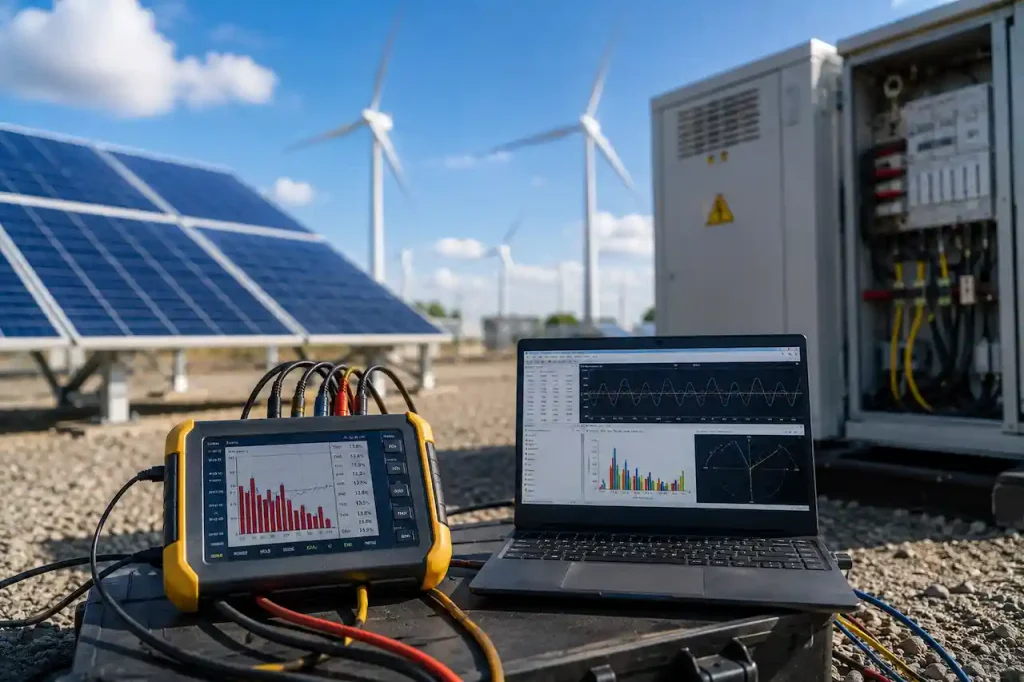
Harmonic performance is an important consideration for projects that use large amounts of power electronic equipment. In a solar farm, multiple inverters may operate together and interact with transformers, cables, capacitor banks, and the external network.
Similarly, wind and battery projects may contain power conversion equipment that influences harmonic behaviour. The complete electrical system must therefore be considered. A single inverter may meet its individual performance requirements, but interactions between multiple devices can produce different results at the plant level. Harmonic testing and analysis may therefore consider:
- Individual equipment performance
- Combined plant operation
- Network impedance characteristics
- Transformer and cable effects
- Interaction with harmonic filters
- Conditions at the point of interconnection
This system-level approach helps project teams investigate the wider electrical environment rather than focusing only on one device.
Power Quality Testing at the Point of Interconnection
The point of interconnection is an important location for renewable energy projects because it represents the interface between the facility and the wider power system. Effective POI interconnection engineering helps project teams understand the technical requirements and performance expectations at this critical interface. Grid operators may define technical requirements for electrical performance at or near this location. Testing may involve collecting electrical measurements during different plant operating conditions.
The objective is to understand how the facility interacts with the network and whether performance remains within the required limits. Power quality measurements at the point of interconnection can provide useful information about:
- Voltage conditions
- Harmonic levels
- Reactive power behaviour
- Power factor
- Frequency response
- Other grid performance characteristics
The testing process should use the appropriate measurement methods and approved project requirements. Results should also be reviewed carefully because grid conditions outside the facility can influence the measurements obtained.
The Role of Power Quality Analysers
Power quality analysers are used to measure and record electrical characteristics over a defined period. The equipment can collect data that helps engineers identify variations and events that may not be visible during a short inspection. Depending on the testing requirements, power quality analysers may be used to monitor:
- Voltage and current levels across the electrical system
- Harmonic distortion and changes in waveform quality
- Voltage variations and unbalance between phases
- Frequency behaviour during different operating conditions
- Electrical events and disturbances that may affect system performance
However, collecting data is only one part of the process. The results must be interpreted in relation to the project requirements and operating conditions. For example, a measured harmonic level may vary depending on plant output and network conditions. Engineers may therefore need to review trends rather than relying only on a single measurement.
The measurement setup is also important. Incorrect connections, unsuitable measurement locations, or configuration problems can affect the quality of the data collected. Testing procedures should clearly define where measurements will be taken and how the results will be recorded.
Power Quality Testing During Commissioning
Commissioning provides an important opportunity to verify actual electrical system performance. At this stage, equipment has been installed and the project team can observe how systems operate together. Testing may be coordinated with other commissioning activities, including protection testing, SCADA commissioning, plant controller testing, and functional verification. These activities form part of the wider power systems engineering requirements needed to verify overall system performance. A structured commissioning approach can help engineers determine whether a power quality issue is related to:
- Equipment configuration
- Plant operating conditions
- Control system behaviour
- Network characteristics
- Incorrect engineering assumptions
- Interactions between multiple systems
Power quality testing should therefore not be carried out in complete isolation from other technical activities. Communication between electrical, protection, control, and commissioning teams can improve the investigation process when unexpected results are identified.
Common Power Quality Problems in Renewable Energy Projects
Power quality issues can result from a range of technical and operational factors. Some common challenges include excessive harmonic levels, voltage fluctuations, incorrect reactive power control, and unexpected interactions between equipment. Other issues may involve:
- Incorrect inverter or converter settings
- Plant controller configuration problems
- Harmonic resonance
- Inadequate filtering
- Changing network conditions
- Equipment interactions
- Incorrect measurement setup
- Changes to the project design
Identifying the root cause can sometimes be difficult. A measurement that appears abnormal does not automatically mean that one piece of equipment has failed. The issue may result from an interaction between the renewable energy facility and the external network. A systematic engineering investigation is therefore important.
How Power Quality Issues Can Affect Grid Compliance
Grid-connected renewable energy projects are often required to meet specific electrical performance requirements. If measured power quality characteristics exceed applicable limits, the project may need further investigation or corrective action. This can affect commissioning schedules and delay final acceptance. Power quality issues can affect grid compliance in several ways, including:
- Excessive harmonic distortion that exceeds applicable limits
- Voltage variations outside the required operating range
- Voltage unbalance that affects system performance
- Incorrect reactive power or power factor behaviour
- Performance issues that require further investigation before project acceptance
Power quality performance should therefore be considered alongside wider grid reliability and compliance requirements. A project team may need to demonstrate that the plant can operate within the required technical limits under relevant operating conditions.
If an issue is identified late in commissioning, resolving it may require changes to equipment settings, plant controls, filtering systems, or other parts of the electrical design. Early engineering analysis can reduce the risk of discovering these issues when the project is approaching commercial operation.
Investigating Power Quality Problems
When testing identifies an unexpected result, the project team should avoid making immediate assumptions about the cause. A structured investigation should begin by confirming that the measurement itself is accurate. The team should review the test equipment, measurement location, system configuration, and operating conditions. The investigation may then consider:
- Whether the measurement equipment is correctly configured
- The operating condition of the renewable energy plant
- Relevant inverter, converter, or controller settings
- Changes within the external network
- Interactions between plant equipment
- Previous power system study results
This approach can help engineers separate measurement problems from genuine system performance issues. Once the cause is understood, the team can determine whether corrective action is required.
How EPC Teams Can Reduce Power Quality Risks
Power quality should be managed throughout the project rather than only investigated when a problem occurs. EPC teams can reduce risk by focusing on several important areas.
Consider Power Quality During Engineering
Power system studies and technical assessments should be completed early enough to influence the project design.
Potential harmonic and voltage-related issues should be reviewed before major equipment decisions are finalised.
Coordinate Equipment Suppliers
Different equipment packages can affect overall power quality performance. Inverter, transformer, plant controller, and other suppliers should provide the information needed for system-level analysis.
Clear coordination helps identify compatibility issues earlier.
Maintain Accurate Engineering Documentation
Testing and analysis should be based on current information. Changes to equipment, network configuration, or plant controls should be communicated to the relevant engineering teams.
Outdated information can lead to incorrect assumptions and unnecessary troubleshooting.
Test Under Relevant Operating Conditions
A single measurement at one operating condition may not provide a complete picture. Where required, testing should consider different generation levels and operating conditions.
This can help identify issues that only appear when the plant reaches certain output levels.
Investigate Problems Systematically
Unexpected results should be documented and investigated through a structured process.
Teams should confirm the measurement, identify possible causes, assign responsibility, and verify the effectiveness of corrective action.
The Role of Specialist Power Quality Engineers
Power quality investigations often require knowledge of power system behaviour, electrical equipment, network characteristics, and control systems. Specialist engineers can help project teams understand the relationship between measured data and the wider electrical system. Their role may include:
- Reviewing power quality study results
- Planning measurement and testing activities
- Analysing harmonic and voltage data
- Investigating unexpected electrical behaviour
- Coordinating with equipment suppliers
- Recommending corrective actions
Specialist support can be particularly valuable when an issue involves multiple technical systems. For example, an apparent inverter problem may actually involve plant controls, network impedance, or an interaction with other equipment.
A system-level engineering approach helps project teams investigate the complete situation rather than focusing only on the equipment where the problem first appears.
Power Quality Testing and Long-Term Asset Performance
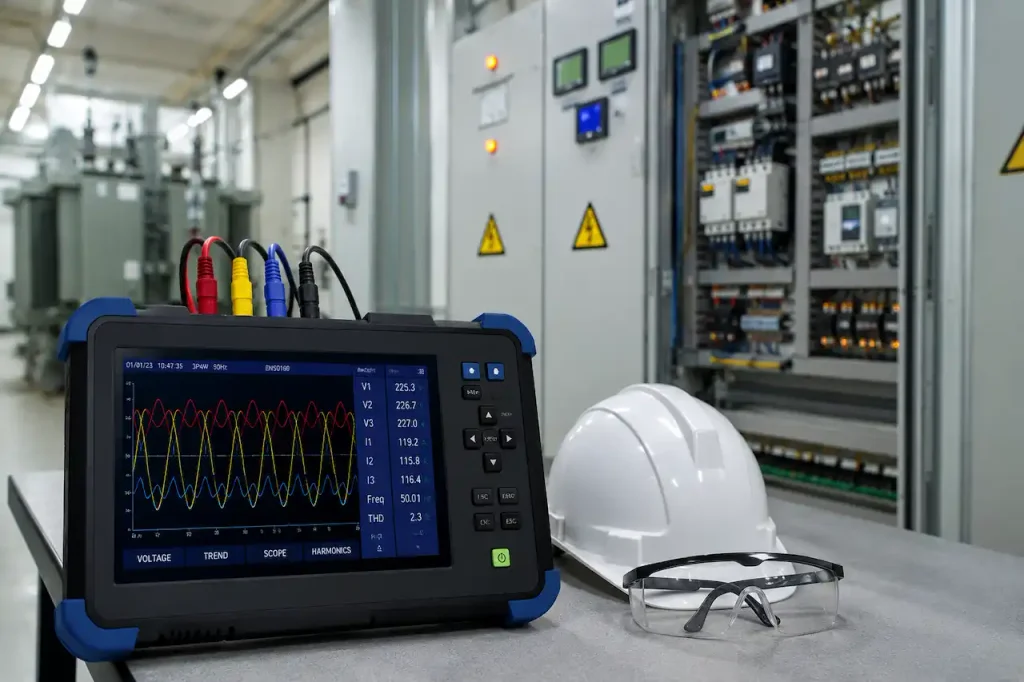
Power quality testing is not only important during commissioning. Electrical conditions can change throughout the operating life of a renewable energy facility. Changes in the surrounding network, additional generation, equipment modifications, or changing operating patterns can influence system behaviour.
Periodic monitoring can help asset owners identify trends before they develop into significant operational problems. Historical measurement data can also support troubleshooting.
If a new issue develops, engineers can compare current conditions with previous measurements to understand how system behaviour has changed. This can support better maintenance planning and more informed engineering decisions.
Need Support with Power Quality Testing for Renewable Energy Projects?
Power quality issues can involve complex interactions between generation equipment, plant controls, electrical networks, and grid connection requirements. Grid Engineering Group provides specialist engineering support for power quality assessments, power system studies, commissioning, protection and control, and renewable energy grid integration. For project owners requiring independent technical guidance, our owner’s technical advisory services can provide additional engineering support during critical project stages.
Our engineers can support project teams with testing coordination, data analysis, technical investigations, and the identification of potential system performance issues.
If your renewable energy project requires support with power quality testing or grid integration, contact Grid Engineering Group to discuss your engineering requirements.
Frequently Asked Questions
What is power quality testing?
Power quality testing involves measuring and analysing electrical characteristics such as harmonics, voltage variation, flicker, unbalance, and other parameters that can affect electrical system performance.
Why is power quality important for renewable energy projects?
Renewable energy projects often use power electronic equipment that can interact with the electrical network. Power quality testing helps identify potential issues that could affect equipment performance, reliability, or grid compliance.
What are harmonics in a power system?
Harmonics are waveform components that occur at frequencies that are multiples of the fundamental system frequency. Excessive harmonic distortion can affect electrical equipment and overall system performance.
Where is power quality testing performed?
Testing may be performed at different locations within a renewable energy facility, including near major electrical equipment and at the point of interconnection with the wider power system.
When should power quality testing take place?
Power quality should be considered during engineering and design, verified during commissioning where required, and monitored during operation when ongoing assessment is needed.
Can power quality problems delay project energisation?
Yes. If significant power quality or electrical performance issues are identified during commissioning, further investigation and corrective action may be required before the project can progress toward final acceptance or commercial operation.
Work With American Power Engineers
Expert engineering support for power system studies, substation design, renewable energy projects, BESS engineering, NERC compliance, MEP engineering, and POI interconnection services.
Explore All Engineering Services