
Large Load Integration: What Happens When Data Centers Connect to the Grid?
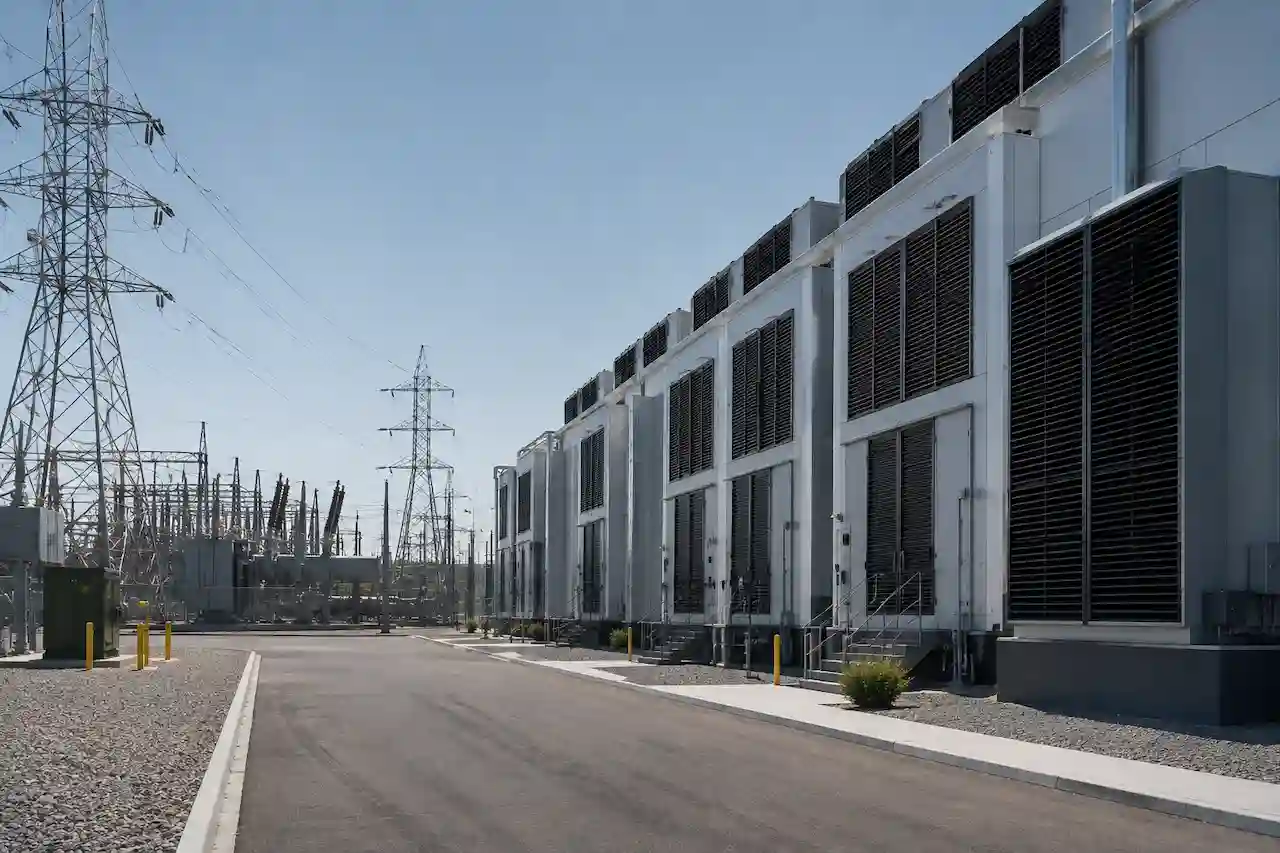
Data centers are becoming some of the largest individual electrical loads connecting to modern power systems. Artificial intelligence, cloud computing, digital services, and high-density computing are increasing the amount of power required at individual sites, while developers often expect those facilities to become operational much faster than traditional transmission infrastructure can be planned and built.
Connecting a large data center to the grid is therefore not simply a matter of installing a transformer and energising the facility. The grid needs to be assessed to determine whether it can supply the required capacity while maintaining acceptable voltage, protection coordination, power quality, system stability, and reliability.
Data center grid integration requires coordinated planning across the utility network, customer substation, protection systems, power quality equipment, SCADA, communications, backup generation, and commissioning programme. The larger the load, the more important those interfaces become.
What Is Data Center Grid Integration?
Data center grid integration is the engineering process of connecting a large computational load to the electricity network while confirming that both the facility and the wider power system can operate reliably under the expected range of conditions.
A large data center connection may involve:
Need Engineering Support for Your Power Project?
American Power Engineers delivers power system studies, substation design, renewable energy engineering, BESS projects, NERC compliance, MEP engineering, and POI interconnection services.
Explore Our Engineering Services- New transmission or distribution connections
- Dedicated substations
- High voltage transformers
- Medium voltage distribution systems
- Protection and control systems
- SCADA and utility telemetry
- Emergency and standby generation
- Uninterruptible power supplies
- Battery energy storage
- Power electronic loads
- Harmonic mitigation equipment
- Redundant electrical supplies
These systems need to operate together while also meeting the requirements of the transmission provider, utility, system operator, and facility owner. The grid connection therefore needs to be treated as a complete power systems engineering project.
Why Data Centers Are Different from Conventional Loads
Traditional load growth often develops gradually. A utility may see residential, commercial, and industrial demand increase over many years across a relatively wide geographic area. A large data center can be very different. Hundreds of megawatts of new demand may be concentrated at one location, and project developers may seek connection within a relatively short development period. This creates several engineering challenges. The network may need to accommodate:
- A large increase in local demand
- High load concentration
- Rapid load changes
- Power electronic equipment
- Redundant supply arrangements
- Backup generation
- Battery systems
- Strict power quality requirements
- High availability expectations
A data center may also have operating characteristics that are not adequately represented by traditional static load assumptions.
For this reason, utilities and system planners increasingly need more detailed information about how these facilities actually behave.
The First Question Is Whether the Grid Can Supply the Load
Before detailed connection design begins, engineers need to determine whether sufficient network capacity exists through a detailed grid interconnection engineering assessment. A proposed data center may require tens or hundreds of megawatts. The local network may not have enough spare transformer, transmission, generation, or reactive power capability to accommodate that demand without upgrades. A connection assessment may therefore consider:
- Existing network loading
- Transformer capacity
- Transmission capacity
- Generation availability
- Voltage performance
- Reactive power requirements
- Contingency conditions
- Network security
- Planned future loads
- Planned network upgrades
The fact that a connection point is physically close to a transmission line or substation does not necessarily mean the requested capacity is available. The network needs to be studied under both normal and contingency conditions.
Planning a Solar, Wind, BESS, or Grid Interconnection Project?
Our engineering team helps project owners, developers, utilities, and facility teams move from technical planning to reliable project execution.
View Engineering ServicesData Center Load Forecasting Matters
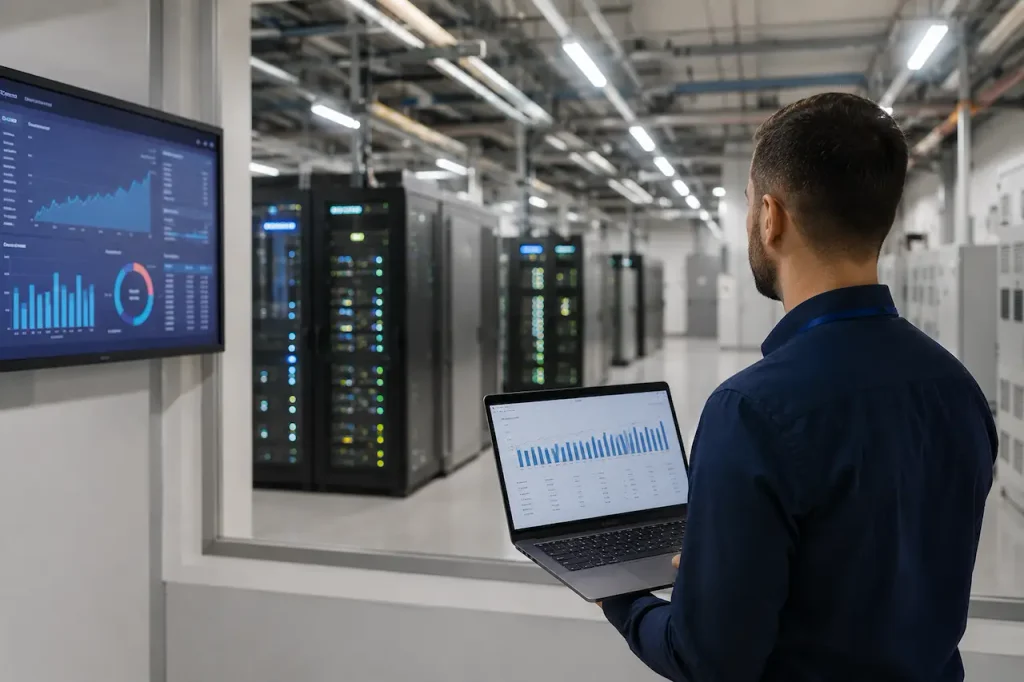
One of the difficulties with large data center projects is establishing a realistic load forecast. A site may ultimately be designed for several hundred megawatts, but the full load may not appear immediately. Development may occur in stages.
For example, the project may energise one building or electrical block first and add additional capacity over time.
The grid operator needs to understand:
- Initial energisation load
- Expected ramp-up
- Maximum demand
- Development phases
- Load factor
- Seasonal variation
- Redundancy arrangements
- Potential flexible operation
Overestimating demand can lead to unnecessary infrastructure planning. Underestimating it can result in insufficient capacity. The connection study should therefore use realistic development assumptions supported by the project schedule.
Interconnection Studies for Large Loads
Large load connections typically require several types of power system studies The exact studies depend on the grid market, voltage level, network operator, and connection arrangement. Studies may include:
- Load flow analysis
- Short-circuit studies
- Voltage assessments
- Contingency analysis
- Protection coordination
- Harmonic studies
- Dynamic studies
- Reactive power analysis
- Power quality studies
- Reliability assessments
These studies help determine whether the existing network can accommodate the proposed load and what upgrades may be required. The results can influence major project decisions. A study may show that the preferred connection location requires additional transformers, transmission reinforcement, reactive compensation, harmonic mitigation, or revised protection schemes.
For this reason, power system studies should be completed early enough to influence the project design.
Voltage and Reactive Power Performance
A large data center load can materially affect network voltage and reactive power performance. As demand increases, more current flows through transmission lines, transformers, and cables, which can increase voltage drop and place additional demands on the network.
Under normal operating conditions, the grid may maintain acceptable voltage levels. However, contingency conditions, such as the loss of a transmission circuit or transformer, can increase network loading and lead to greater voltage reduction.
The engineering assessment may consider:
- Normal, minimum, and maximum operating voltage
- Transformer tap ranges
- Reactive power demand
- Contingency conditions
- Load ramping
- Voltage recovery
Data center equipment, including transformers, cables, UPS systems, motors, and power electronic equipment, can influence the facility’s reactive power requirements. Depending on the electrical design and grid connection requirements, additional equipment may be needed, such as:
- Capacitor banks
- Reactors
- Static VAR compensators
- STATCOM systems
- Inverter-based reactive power support
Voltage and reactive power performance should be assessed at the point of connection rather than only within individual data center systems. This helps confirm that the facility can maintain acceptable grid performance across its expected operating range.
Power Quality and Harmonic Challenges
Data centers contain large quantities of power electronic and nonlinear equipment, including server power supplies, UPS systems, variable-speed drives, cooling equipment, and battery systems. When aggregated across a large facility, these systems can affect overall power quality and introduce harmonic distortion.
Key power quality considerations may include:
- Harmonic and voltage distortion
- Voltage fluctuations and rapid voltage changes
- Flicker and imbalance
- Switching transients
- System resonance
The impact depends on several factors, including equipment characteristics, transformer and cable impedance, network strength, operating conditions, and filter design.
Power quality and harmonic studies can identify potential distortion or resonance issues before equipment is installed. Where problems are identified, mitigation may involve filter systems, equipment selection, revised transformer design, or other electrical changes.
Studies should be completed during the design stage where possible, with commissioning measurements used to confirm actual performance under relevant operating conditions.
Protection Coordination and Fault Levels
Large data center connections require coordinated protection across transformers, feeders, bus sections, backup generators, UPS systems, and battery systems. The goal is to isolate faults without unnecessarily interrupting healthy parts of the facility. Key considerations include:
- Transformer, bus, and feeder protection
- Overcurrent and earth fault protection
- Breaker failure and intertripping
- Voltage and frequency protection
- Protection coordination with the utility network
New transformers, generators, and battery systems can also change system fault levels. Short-circuit studies should confirm maximum and minimum fault currents, equipment ratings, and protection sensitivity.
The final protection design should reflect the actual electrical configuration and operating conditions of the complete facility.
Backup Power, UPS Systems, and Batteries
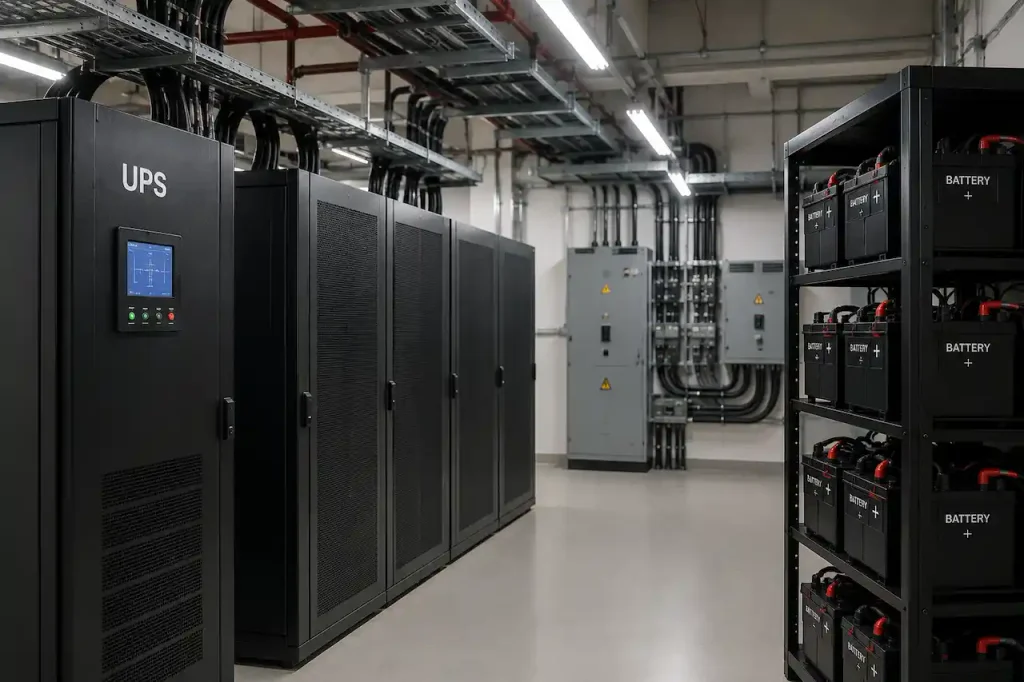
Data centers are designed for high availability, so backup generators, UPS systems, and batteries play an important role in maintaining power during grid disturbances or outages.
Backup generation requires a clear operating philosophy covering:
- Grid separation and transfer schemes
- Synchronisation and protection
- Load shedding
- Generator controls
- Restoration sequences
UPS systems provide continuity between the loss of normal supply and the availability of backup power. Large facilities may also use battery energy storage.
These systems can affect:
- Harmonic performance
- Reactive power
- Short-term load behaviour
- Fault contribution
- Control interactions
- Power quality
- Load transfer behaviour
If backup generators are permitted to operate in parallel with the grid, additional protection and control requirements may apply. All backup power systems should therefore be included in the electrical studies and overall grid integration design.
Rapid Load Changes and Large Load Modeling
Data centers are not always steady electrical loads. Their power demand can change depending on computing activity, cooling requirements, UPS operation, and other facility systems. Rapid load changes can affect:
- System frequency
- Voltage
- Generator response
- Reactive power
- Network loading
- Automatic controls
For large facilities, utilities may need to understand load ramping characteristics rather than relying only on maximum demand. Power system studies also require realistic load models. Depending on the study, the model may need to consider:
- Static load characteristics
- Power electronic behaviour
- UPS systems
- Cooling loads
- Battery systems
- Voltage and frequency sensitivity
- Load recovery
The objective is to represent the electrical characteristics that materially affect the grid without making the model unnecessarily complex.
Transmission Upgrades and Staged Energisation
Some large data center projects require substantial network reinforcement before the full load can be connected. Required upgrades may include:
- New transmission lines
- New substations
- Additional transformers
- Bus upgrades
- Reactive compensation
- Protection and communication upgrades
- New metering and breakers
Because transmission infrastructure can take longer to develop than the data center itself, connection planning should begin early.
Where the final load is very large, staged energisation can help bring parts of the facility online while additional infrastructure is completed. A typical sequence may include:
- Initial substation and transformer energisation
- Medium voltage system energisation
- First data hall connection
- Initial operational load
- Subsequent load blocks
- Final site demand
Each stage can change network loading and system behaviour. The utility and project team should therefore assess expected demand and grid performance throughout the energisation process.
SCADA, Utility Telemetry, and Communication Systems
Large data centers may need to provide operational data to the utility or system operator. This information helps the network operator monitor the facility’s status, demand, and connection conditions. Telemetry may include:
- Active and reactive power
- Voltage and current
- Breaker and transformer status
- Connection availability
- Facility demand
- Alarm information
Reliable communication is essential because protection relays, meters, SCADA devices, controllers, and utility systems must exchange information correctly. The communication architecture should consider:
- Network redundancy
- Protocol compatibility
- Cybersecurity
- Time synchronisation
- Device addressing
- Network monitoring
- Communication failure modes
The exact telemetry requirements depend on the connection agreement. SCADA and communication requirements should be defined early as part of the wider facility systems engineering approach, as late integration can delay energisation. Where protection depends on communications, the system should also have a clearly defined response to communication failures.
Redundancy Creates Engineering Complexity
Data centers are typically designed with high levels of electrical redundancy. This may involve configurations such as:
- Dual utility feeds
- Multiple transformers
- Multiple switchboards
- Redundant UPS systems
- Backup generators
- Multiple power paths
Redundancy improves facility resilience, but it can make protection and operational logic more complex. Different switching configurations can change:
- Fault current
- Power flow
- Protection coordination
- Transformer loading
- Available capacity
The engineering studies should consider the operating configurations that are realistically expected.
Grid Disturbances and Data Center Response
A large load should also be assessed for how it responds to grid disturbances. Possible disturbances include:
- Voltage dips
- Frequency deviations
- Transmission faults
- Temporary outages
- Switching events
- Loss of one supply circuit
One important question is whether the facility remains connected or disconnects. If a very large data center suddenly disconnects from the network, the grid can experience an abrupt reduction in demand. The effect depends on the size of the load and system conditions. Protection and ride-through behaviour should therefore be coordinated with utility requirements.
Simultaneous Load Disconnection
The risk becomes more significant when multiple data centers are located within the same electrical region. If several facilities use similar equipment or protection settings, they may respond similarly to the same voltage or frequency disturbance. A common grid event could therefore result in several large loads disconnecting at approximately the same time.
This is one reason grid operators increasingly require better information about large-load protection and disturbance behaviour. Coordination between facility protection and system-level requirements is therefore becoming more important.
Commissioning a Large Data Center Grid Connection
Commissioning should verify the complete connection rather than only individual equipment, particularly where substation design engineering and utility interfaces are involved.
The programme may include:
- Transformer testing
- Switchgear testing
- Protection relay testing
- CT and VT verification
- Trip circuit testing
- SCADA point-to-point testing
- Meter verification
- Communication testing
- Backup generator testing
- UPS testing
- Transfer scheme testing
- Power quality measurements
- Utility telemetry testing
- Operational sequence testing
Where the load is introduced gradually, measurements should be reviewed as demand increases. This can help confirm that actual system behaviour remains consistent with design assumptions.
Common Data Center Integration Problems
Several issues can create delays during connection projects.
- Network Capacity Identified Too Late: A site may be selected before the available network capacity is fully understood. This can lead to unexpected transmission or substation upgrades.
- Incomplete Load Information: Utilities cannot perform accurate studies if the project provides only maximum demand without realistic ramping, staging, or electrical characteristics.
- Power Quality Issues: Large quantities of power electronic equipment can create harmonic or voltage issues if they are not considered during design.
- Protection Interface Problems: Customer and utility protection may be designed separately without sufficient coordination.
- Late SCADA Requirements: Telemetry requirements discovered close to energisation can delay the grid connection.
- Incorrect System Models: Studies may not accurately represent UPS systems, generators, batteries, or actual data center load behaviour. Early interface management can reduce these problems.
Flexible Load Operation
Data centers may eventually provide more operating flexibility than traditional large industrial loads. Depending on the facility and commercial arrangement, some computational workloads may be shifted or reduced temporarily. Battery systems may also help manage facility demand. Potential flexibility could support:
- Peak demand reduction
- Emergency grid support
- Energy optimisation
- Load ramp management
- Demand response
However, these functions need to be defined carefully. Grid operators cannot rely on flexibility unless the operating capability, controls, communications, and contractual arrangements are clear.
The Role of Power Systems Integration Engineers
Data center projects require coordination across utility, transmission, substation, facility, protection, SCADA, power quality, and commissioning disciplines, often supported by specialist owner’s technical advisory services. Power systems integration engineers help connect those areas. Their scope may include:
- Connection strategy
- Power system studies
- Network capacity assessments
- Protection coordination
- Power quality analysis
- Harmonic studies
- SCADA integration
- Communication reviews
- Equipment interface management
- Testing procedures
- Commissioning
- Utility coordination
- Troubleshooting
This integrated approach helps identify problems before they become energisation constraints.
Connecting Large Data Centers to the Grid
Data centers are changing the scale and speed of electricity demand growth. The challenge is not simply supplying additional megawatts. Large computational loads can affect network capacity, voltage, reactive power, power quality, protection, transmission planning, communications, and system reliability.
The strongest projects address these requirements early. Network capacity should be understood before major design decisions are finalised. Electrical models should reflect realistic facility behaviour, while protection and SCADA interfaces should be coordinated with the utility. Power quality should also be assessed before equipment is installed, and commissioning should verify the complete connection.
Data center grid integration is therefore a multidisciplinary power systems engineering task.
Grid Engineering Group provides power engineering consulting, protection engineering, SCADA and control systems integration, power quality support, testing, and commissioning for complex grid-connected projects.
Whether the project involves a new hyperscale data center, expansion of an existing campus, dedicated high voltage infrastructure, or large computational loads combined with generation and battery storage, a coordinated engineering approach can reduce connection risks and support a smoother path to energisation.
Contact Grid Engineering Group to discuss your data center grid integration requirements.
Frequently Asked Questions
What is data center grid integration?
Data center grid integration is the engineering process of connecting a large computational facility to the electricity network while coordinating network capacity, protection, voltage, power quality, SCADA, communications, and commissioning requirements.
Why are large data centers difficult to connect to the grid?
Large data centers can add substantial electrical demand at a single location and may require connection much faster than traditional transmission infrastructure can be expanded. Their power electronic equipment and operational characteristics can also require more detailed studies.
What studies are required for a data center grid connection?
Depending on the project, studies may include load flow, short circuit, voltage, contingency, protection coordination, harmonic, power quality, dynamic, and reactive power assessments.
Can a data center affect grid voltage?
Yes. Large increases in electrical demand can create additional voltage drop and reactive power requirements, particularly during high-load or contingency conditions.
Why is power quality important for data centers?
Data centers contain large quantities of power electronic equipment, UPS systems, and other nonlinear loads. These can affect harmonics, voltage distortion, and other power quality parameters if they are not properly assessed.
What should be tested before a large data center is energised?
Testing may include transformers, switchgear, protection relays, SCADA, communications, metering, backup generators, UPS systems, transfer schemes, power quality, telemetry, and complete operational sequences.
Work With American Power Engineers
Expert engineering support for power system studies, substation design, renewable energy projects, BESS engineering, NERC compliance, MEP engineering, and POI interconnection services.
Explore All Engineering Services