
Digital Twins in Power Systems: How They Support Asset Performance
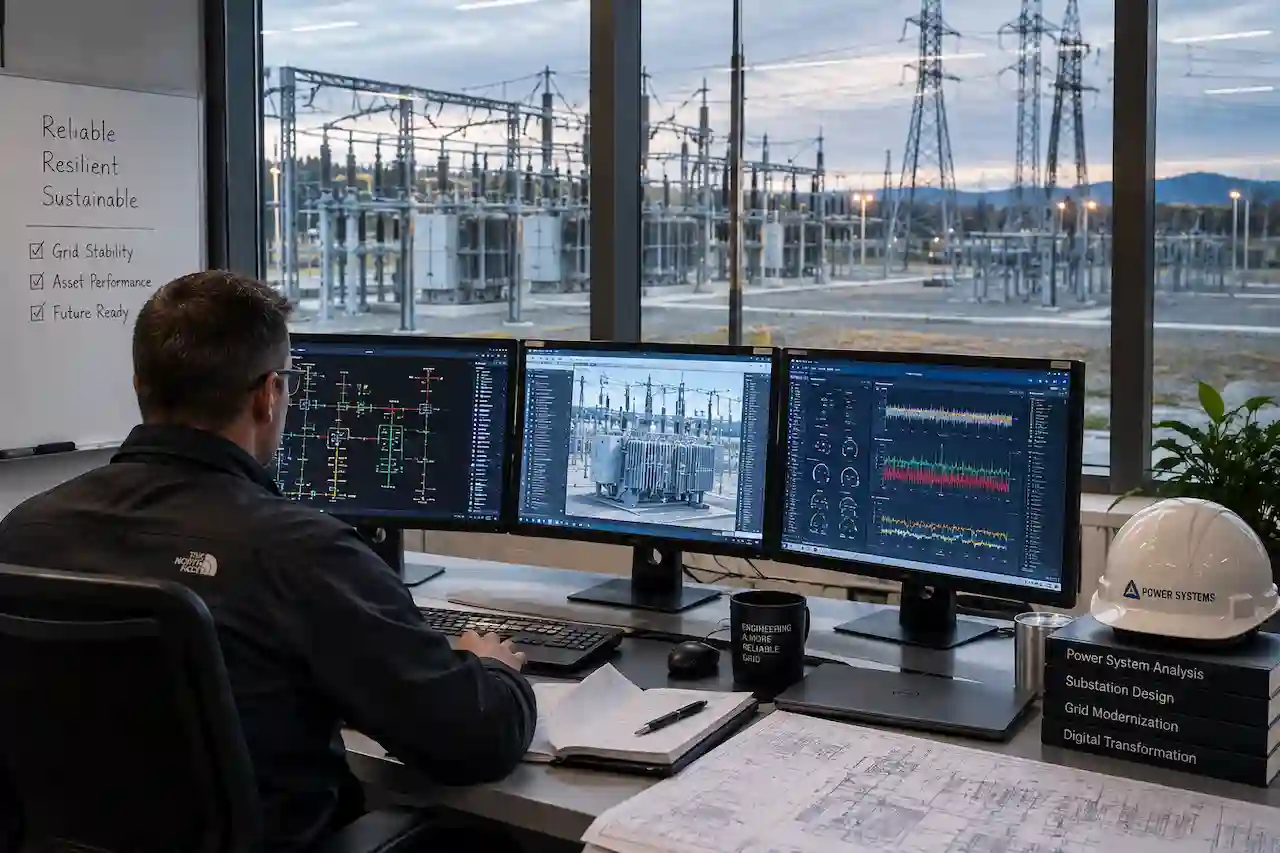
Digital twins power systems by creating virtual representations of electrical assets, helping utilities, renewable energy developers, and asset owners understand system behaviour and improve performance. Managing these systems effectively requires more than relying on historical operating data or periodic engineering studies.
Digital twins provide a way to create a virtual representation of a physical power system or asset and use it to understand how that system behaves under different operating conditions. When properly developed and maintained, a digital twin can support engineering analysis, asset monitoring, maintenance planning, troubleshooting, and long-term performance improvement.
For power system owners and operators, the value of a digital twin is not simply having a 3D model or digital copy of equipment. Its real value comes from connecting engineering models, operational information, equipment data, and system behaviour in a way that supports better technical decisions.
What Is a Digital Twins Power Systems?
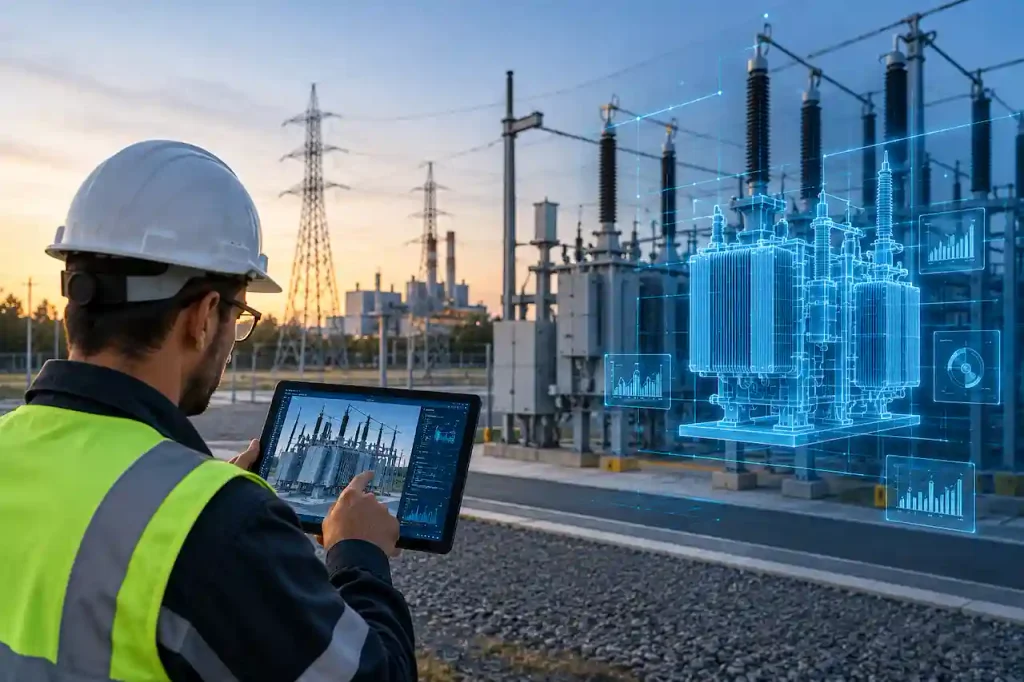
A digital twin is a virtual representation of a physical asset, facility, or electrical system that reflects its actual configuration and operating characteristics.
In a power system environment, the digital twin may represent individual equipment such as transformers, generators, inverters, batteries, switchgear, or protection systems. It can also represent larger systems such as substations, solar farms, wind projects, battery energy storage facilities, or complete electrical networks.
Need Engineering Support for Your Power Project?
American Power Engineers delivers power system studies, substation design, renewable energy engineering, BESS projects, NERC compliance, MEP engineering, and POI interconnection services.
Explore Our Engineering ServicesA useful digital twin can combine information such as:
- Electrical system models
- Equipment specifications
- Protection and control information
- SCADA and operational data
- Equipment condition information
- Historical performance records
- Engineering study results
The level of detail depends on the purpose of the digital twin. A model developed for power flow analysis may have different requirements from one intended for real-time monitoring or predictive maintenance.
Why Digital Twins Matter for Asset Performance
Traditional asset management often relies on periodic inspections, scheduled maintenance, historical records, and engineering studies performed when a specific question arises. These activities remain important, but they may not provide a continuous view of how an asset is performing.
A digital twin can help connect different sources of information.
For example, an engineer may use the virtual model to compare expected electrical behaviour with actual operating conditions. If measured performance begins to differ from the expected behaviour, the difference may indicate a developing equipment issue, changing system conditions, or an inaccurate model.
This can support earlier investigation and more informed maintenance decisions.
Planning a Solar, Wind, BESS, or Grid Interconnection Project?
Our engineering team helps project owners, developers, utilities, and facility teams move from technical planning to reliable project execution.
View Engineering ServicesThe goal is not to replace engineers or physical inspections. Instead, the digital twin provides another layer of information that can help engineering teams understand asset behaviour and prioritise their efforts.
Connecting Engineering Models With Real Operating Data
One of the most important aspects of a useful digital twin is the relationship between the engineering model and the physical asset.
A power system model may contain information about equipment ratings, impedances, protection settings, network configuration, and expected operating conditions. Operational systems can provide measurements such as voltage, current, power output, frequency, temperature, alarms, and equipment status.
Connecting these sources allows engineers to compare the expected system response with actual behaviour.
For example, if a transformer consistently operates at higher temperatures than expected under a particular loading condition, the information may warrant further investigation. Similarly, changes in voltage behaviour or equipment loading could indicate that system conditions have changed since the original engineering model was developed.
The digital twin becomes more valuable when it remains aligned with the physical system.
Digital Twins Can Support Power System Studies
Engineering studies are an important part of power system planning and operation. Power flow, short-circuit, transient stability, protection coordination, and other studies help engineers evaluate how systems will respond to different conditions.
A digital twin can provide a structured representation of the current electrical configuration that supports these analyses.
For example, engineers can use an updated model to evaluate potential equipment changes before they are implemented. They may assess how a new transformer, inverter, battery system, or generation source could affect the existing network.
This can help identify potential constraints before physical modifications are made.
However, the quality of the analysis depends on the quality of the underlying model. If equipment data, system topology, or operating assumptions are outdated, the digital twin may not accurately represent the physical system.
Model maintenance is therefore an essential part of the process.
Supporting Predictive Maintenance
One potential application of digital twins is condition-based or predictive maintenance.
Instead of relying only on fixed maintenance intervals, asset owners can use operational and condition information to identify changes in equipment behaviour. The digital twin can provide a reference for what normal operation should look like and help highlight deviations.
For example, an asset may show changes in temperature, loading, vibration, efficiency, or electrical performance over time. These changes do not automatically mean that equipment is failing, but they can provide useful information for further engineering assessment.
This approach can help maintenance teams prioritise equipment that requires attention rather than treating every asset in exactly the same way.
For critical equipment such as transformers, switchgear, generators, and battery systems, better visibility can support more informed maintenance planning and potentially reduce unexpected outages.
Digital Twins and Renewable Energy Assets
Renewable energy facilities are particularly suitable for digital twin applications because their operating conditions can change significantly.
Solar farms and Wind projects are affected by changing weather conditions, generation levels, grid conditions, inverter behaviour, and plant control strategies. Battery energy storage systems introduce additional operating variables such as state of charge, charging and discharging behaviour, and different operating modes.
A digital twin can help engineers understand how these variables interact.
For example, an engineer may evaluate how changes in renewable generation affect voltage, reactive power, equipment loading, or the point of interconnection at solar farms. For battery projects, the model can help assess different charging and discharging scenarios and their impact on the wider electrical system.
This can support both operational decision-making and future system planning.
Improving Troubleshooting and Root Cause Analysis
When a power system experiences an unexpected event, engineers need to understand what happened and why.
A digital twin can provide a reference model against which the event can be evaluated. Operational data, event records, alarms, and system measurements can be compared with expected behaviour.
This can help engineers investigate questions such as:
- Did the equipment respond as expected?
- Was the system operating within its intended limits?
- Did a protection or control function operate correctly?
- Did the event originate within the facility or from the wider grid?
- Has the same behaviour occurred previously?
The digital twin does not automatically identify the root cause. Its value is in providing structured information and an engineering reference that can make investigations more efficient.
Supporting Protection and Control Engineering
Protection and control systems are closely connected to overall asset performance. A change in system configuration can affect fault levels, protection coordination, control behaviour, and equipment loading.
A digital twin can help engineers maintain an accurate representation of these relationships.
For example, when equipment is replaced or a facility is expanded, the engineering model can be updated to reflect the new configuration. Engineers can then assess whether protection settings, control strategies, and other system parameters remain appropriate.
This is particularly useful for complex facilities such as a substation, where multiple digital devices and control systems interact.
Digital Twins Can Improve Change Management
Power facilities often change over their operating life. Equipment is replaced, new generation is added, control systems are upgraded, and grid connection requirements may evolve.
One challenge is ensuring that engineering documentation remains aligned with the physical installation.
A digital twin can provide a central reference for the system configuration. When a major change is proposed, engineers can evaluate the expected impact before implementation and update the model after the modification is completed.
This creates a stronger connection between engineering design, commissioning information, operational data, and asset records.
Without disciplined change management, however, a digital twin can quickly become outdated. The model must be treated as a living engineering resource rather than a document created once and then forgotten.
Digital Twins and SCADA Integration
SCADA systems provide valuable operational information from power facilities. A digital twin can use relevant SCADA information to provide additional context around those measurements.
Instead of viewing a single measurement in isolation, engineers can evaluate it within the context of the electrical system.
For example, a high current measurement may be expected under one operating condition but abnormal under another. Similarly, an alarm may become more meaningful when considered alongside equipment loading, voltage, generation output, and other system conditions.
This combination of operational data and engineering context can improve situational awareness.
The integration should be carefully designed, particularly for critical OT environments. Data connectivity should not compromise the availability or security of operational systems.
Challenges of Implementing Digital Twins
Although digital twins offer significant potential, implementing one successfully requires more than creating a detailed model.
One of the biggest challenges is data quality. Equipment information may exist across engineering drawings, manufacturer documentation, SCADA databases, maintenance records, and other systems. These sources may not always be consistent.
Another challenge is model maintenance. A digital twin that does not reflect equipment changes can produce misleading results.
Cybersecurity and data governance are also important considerations, particularly when operational data and control system information are connected to digital platforms.
Organisations should therefore define the purpose of the digital twin before implementation and establish clear responsibilities for data ownership, model updates, validation, and access.
Building a Useful Digital Twin Strategy
A successful digital twin programme should begin with a specific engineering or operational objective.
Rather than attempting to model everything at once, asset owners can start with a critical asset or system where improved visibility would provide measurable value.
The process can include:
- Define the asset or system to be modelled.
- Establish the engineering purpose of the digital twin.
- Collect and validate equipment and system data.
- Develop the appropriate electrical and operational model.
- Connect relevant operational information.
- Validate the model against actual system behaviour.
- Establish a process for maintaining the model as the facility changes.
This approach helps ensure that the digital twin remains useful rather than becoming another disconnected engineering database.
The Role of Engineering Expertise
Digital twin technology does not replace power systems engineering expertise. Engineers are still needed to develop accurate models, interpret system behaviour, validate assumptions, and determine whether observed changes require action.
The engineering team also needs to understand the limitations of the model. Not every operational deviation represents an equipment problem, and not every model prediction will perfectly represent real-world behaviour.
Engineering judgement remains essential.
For asset owners, the greatest value often comes from combining digital tools with experienced engineering analysis. This allows operational data to be transformed into information that supports practical decisions about reliability, maintenance, system upgrades, and performance.
Conclusion
Digital twins can provide power system owners and operators with a more connected view of how electrical assets perform throughout their operating life. By bringing together engineering models, equipment information, operational data, and system behaviour, they can support better analysis and more informed asset management.
The potential applications range from predictive maintenance and troubleshooting to power system studies, protection engineering, renewable energy integration, change management, and operational monitoring.
However, a digital twin is only as useful as the information behind it. Accurate data, validated models, disciplined change management, cybersecurity, and ongoing engineering oversight are essential.
When these elements are managed properly, digital twins can become a valuable part of a modern asset performance strategy, helping organisations understand system behaviour, identify potential issues earlier, and make better engineering decisions.
Need Support With Power System Digitalisation and Asset Performance?
Grid Engineering Group supports power system owners, developers, and operators with engineering services for complex electrical infrastructure, including power systems engineering, grid interconnection, renewable energy systems, protection, control, and technical analysis.
Our team can support the engineering work required to understand system behaviour, evaluate equipment changes, analyse operating conditions, and improve long-term asset performance.
For projects involving renewable generation, battery storage, substations, or complex grid-connected facilities, an engineering-led approach can help ensure that digital models and operational information support practical technical decisions.
Contact Grid Engineering Group
If you are considering a digital twin for a power system or need engineering support with asset performance, system modelling, or electrical infrastructure analysis, contact Grid Engineering Group to discuss your project requirements.
Our team can help evaluate the engineering requirements and develop an approach aligned with the physical system, operational needs, and long-term asset objectives.
Frequently Asked Questions
What is a digital twin in a power system?
A digital twin is a virtual representation of a physical electrical asset, facility, or system that can combine engineering models, equipment information, and operational data to support analysis and decision-making.
How can digital twins improve power system asset performance?
They can help engineers compare expected and actual system behaviour, identify changes in equipment performance, support maintenance planning, investigate abnormal events, and evaluate proposed system modifications.
Can digital twins be used for renewable energy projects?
Yes. Digital twins can be applied to solar farms, wind projects, battery energy storage systems, substations, and other renewable energy facilities to evaluate operating behaviour and system interactions.
Do digital twins replace physical inspections?
No. Digital twins complement physical inspections, testing, and maintenance. They provide additional engineering and operational information but cannot replace direct assessment of physical equipment.
What data is required for a power system digital twin?
The requirements depend on the intended application but may include equipment specifications, electrical models, protection information, SCADA measurements, operating records, system configuration, and equipment condition data.
How often should a digital twin be updated?
It should be updated whenever relevant changes occur to the physical system, equipment, protection settings, controls, network configuration, or other information represented by the model. Regular validation is also important.
Are digital twins useful for troubleshooting?
Yes. A digital twin can provide an engineering reference for comparing expected system behaviour with event records, alarms, measurements, and other operational information during an investigation.
Work With American Power Engineers
Expert engineering support for power system studies, substation design, renewable energy projects, BESS engineering, NERC compliance, MEP engineering, and POI interconnection services.
Explore All Engineering Services