
Modernising Protection Systems for a Changing Power Grid
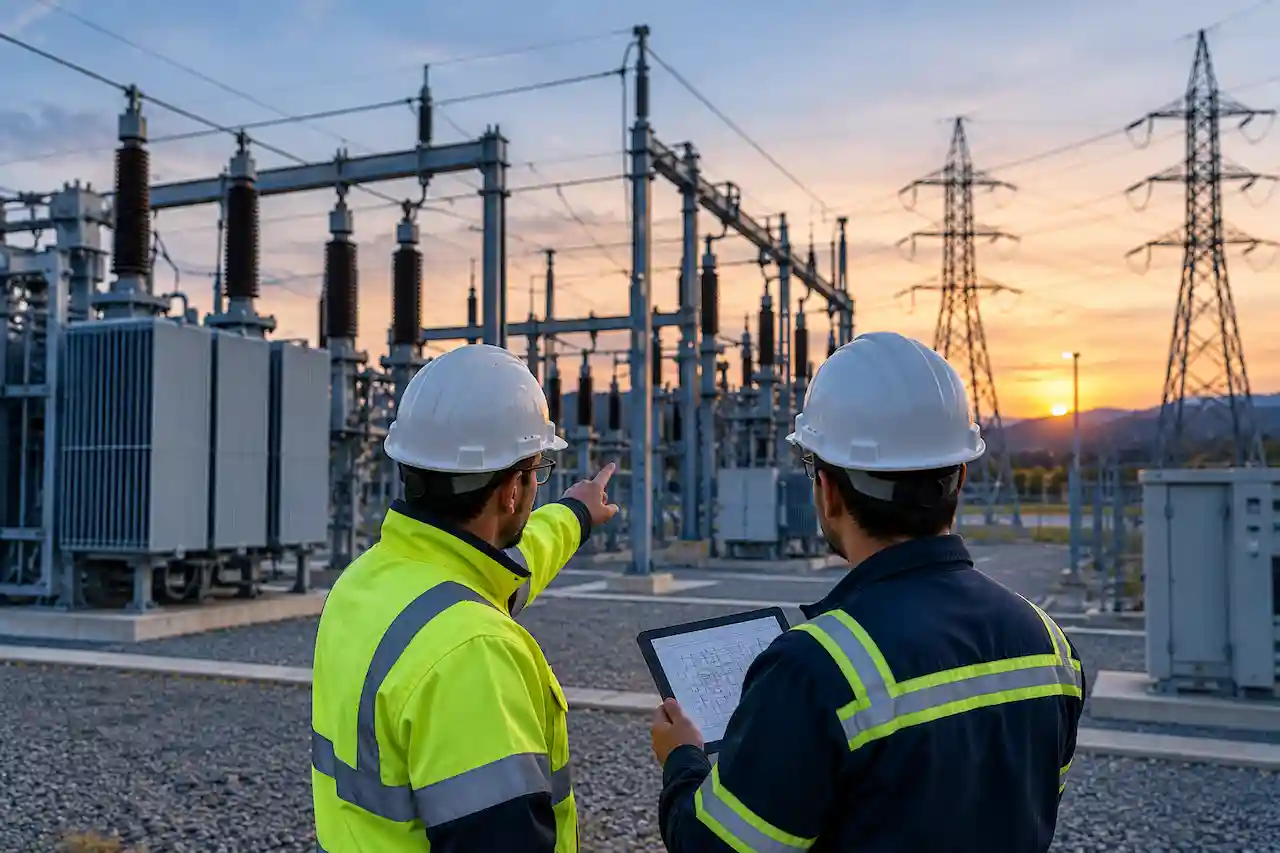
Power grids are changing faster than many existing protection systems were originally designed to accommodate. Renewable generation, battery energy storage systems, distributed energy resources, changing power flows, new communication technologies, and increasingly automated substations are creating operating conditions that can be very different from those considered when older protection schemes were installed.
A protection system that has operated reliably for many years does not automatically remain suitable as the network around it changes. Fault levels can change. Power may flow in different directions. New generation can alter system behaviour. Existing electromechanical or early-generation digital relays may also provide limited communication, event recording, monitoring, or integration capability compared with modern intelligent electronic devices.
Protection system modernisation is therefore becoming an important part of wider grid modernisation programmes. The objective is not simply to replace older relays with newer equipment. Project teams need to review how protection functions, settings, communications, control systems, SCADA interfaces, testing procedures, and operational requirements work together across the upgraded network.
What Is Protection System Modernisation?
Protection system modernisation is the process of reviewing and upgrading protection infrastructure so that it remains suitable for the current and future operating requirements of the power system. The scope may involve individual protection relays, complete protection panels, communication systems, substation automation, protection philosophies, or several interconnected systems.
Depending on the condition of the existing installation, modernisation may include:
Need Engineering Support for Your Power Project?
American Power Engineers delivers power system studies, substation design, renewable energy engineering, BESS projects, NERC compliance, MEP engineering, and POI interconnection services.
Explore Our Engineering Services- Replacing ageing electromechanical or digital relays
- Reviewing protection settings and coordination
- Upgrading protection and control panels
- Introducing modern intelligent electronic devices
- Improving event and disturbance recording
- Upgrading communication interfaces
- Integrating protection systems with SCADA
- Improving time synchronisation
- Reviewing intertrip and teleprotection schemes
- Updating drawings and engineering documentation
- Retesting protection functions following network changes
The purpose is to confirm that the protection system can continue to detect abnormal conditions, isolate faults appropriately, coordinate with other protection devices, and provide the information required by operators and engineering teams. A successful modernisation programme should therefore consider the complete protection architecture rather than treating relay replacement as an isolated equipment upgrade.
Why Existing Protection Systems Need to Change
Many existing protection schemes were designed around network conditions that have since changed.A substation may originally have supplied predominantly passive loads from a centralised generation system. Years later, the same network may include solar generation, battery storage, embedded generation, additional transformers, new feeders, changed operating arrangements, or revised grid connections.
These changes can affect how the protection system sees electrical faults. The original protection philosophy may still appear functional during normal operation, but changed system conditions can create problems when a fault occurs. Project teams should consider whether changes have affected:
- Available fault current
- Fault current direction
- Protection reach
- Relay sensitivity
- Coordination between devices
- Breaker operating requirements
- Intertripping arrangements
- Communication dependencies
- System operating configurations
- Backup protection performance
Protection modernisation provides an opportunity to review these conditions before they become operational problems.
Renewable Energy Is Changing Protection Requirements
Renewable generation introduces operating characteristics that can differ significantly from conventional synchronous generation. Solar farms, wind facilities, and battery energy storage systems commonly connect through power electronic converters. The fault contribution from these systems can behave differently from the fault contribution traditionally expected from synchronous generators.
At the same time, renewable generation may be connected at different points across transmission and distribution networks. This can change the direction and magnitude of power flows during normal operation and fault conditions.
Planning a Solar, Wind, BESS, or Grid Interconnection Project?
Our engineering team helps project owners, developers, utilities, and facility teams move from technical planning to reliable project execution.
View Engineering ServicesProtection engineers therefore need to understand how the complete network behaves rather than relying only on historical settings or assumptions. A protection scheme that was coordinated correctly before a network upgrade may require further review once new generation or storage is introduced.
The engineering assessment should consider the actual network configuration, equipment characteristics, operating scenarios, and applicable grid requirements.
Ageing Protection Relays and Equipment
Age is another important reason for modernisation. Older protection equipment may continue to operate, but ageing systems can create increasing operational and maintenance challenges. These can include:
- Limited availability of spare parts
- Reduced manufacturer support
- Obsolete configuration software
- Difficulty accessing event records
- Limited communication capability
- Inconsistent relay types across substations
- Increased maintenance requirements
- Limited integration with modern SCADA systems
Older protection installations may also depend heavily on hardwired signals. This does not necessarily mean that the protection is unreliable, but it can limit visibility and make system modifications more difficult. Modern intelligent electronic devices can combine multiple protection, monitoring, recording, and communication functions. However, replacing old equipment with modern relays still requires careful engineering.
The new relay must be configured to perform the required protection functions correctly and coordinate with the wider system.
Protection Modernisation Is More Than Relay Replacement
One of the most important principles in a modernisation project is that changing the relay does not automatically modernise the protection system. Protection performance depends on several connected elements. These may include:
- Current and voltage transformers
- DC systems
- Trip circuits
- Circuit breakers
- Communication links
- Interlocking
- SCADA interfaces
- Protection settings
- Teleprotection equipment
- Time synchronisation
- Control systems
- Engineering documentation
If only the relay is replaced, existing problems elsewhere in the system may remain. For example, a modern relay may provide advanced event records and communication functions, but those capabilities provide limited value if the communication architecture has not been designed to support them.
Similarly, a new protection scheme cannot compensate for incorrect CT ratios, unsuitable settings, incomplete drawings, or unreliable trip circuits. Protection system modernisation should therefore begin with an engineering review of the complete installation.
Reviewing the Existing Protection Philosophy
Before deciding what equipment should be replaced, project teams should understand how the existing protection system is intended to operate. The protection philosophy defines how different protection functions respond to faults and abnormal conditions. The review may consider:
- Main and backup protection
- Overcurrent protection
- Earth fault protection
- Distance protection
- Differential protection
- Transformer protection
- Bus protection
- Breaker failure protection
- Underfrequency and overfrequency functions
- Undervoltage and overvoltage functions
- Intertripping
- Automatic reclosing
- Synchronism checking
The exactfunctions depend on the voltage level, equipment, network configuration, and asset requirements. During a modernisation programme, engineers should compare the existing philosophy with current network conditions. This helps determine whether the project requires a direct functional replacement or whether the protection philosophy itself should change.
Protection Settings and Coordination
Accurate power system studies provide important engineering information for reviewing fault conditions, system behaviour, and protection coordination across the modernised network. Settings determine how and when protection functions operate. Changing equipment, generation, network configuration, or fault levels may alter the coordination between protection devices.
The engineering team should therefore avoid simply transferring historical settings into new relays without review. A settings assessment may consider:
- Pickup levels
- Time delays
- Protection curves
- Directional elements
- Distance zones
- Differential characteristics
- Breaker failure timing
- Transformer inrush requirements
- Coordination with upstream and downstream devices
- Minimum and maximum fault conditions
Protection coordination is particularly important where several devices may respond to the same fault. The objective is normally to isolate the affected section while maintaining appropriate selectivity and backup protection. A poorly coordinated system can result in unnecessary outages, delayed fault clearance, or protection operating outside the intended zone.
Digital Protection and Intelligent Electronic Devices
Modern intelligent electronic devices provide capabilities that can support wider grid modernisation. A single device may provide several protection functions together with measurements, event recording, disturbance records, communication, monitoring, and control interfaces. This can improve access to information following system events. For example, after a protection operation, engineering teams may be able to review:
- Which protection element operated
- Measured current and voltage
- Sequence of events
- Disturbance records
- Breaker status
- Communication status
- Timing information
This information can improve fault investigation and help engineers understand how the system behaved during an event. However, additional digital capability also creates additional engineering requirements. Communication configuration, cybersecurity requirements, time synchronisation, data mapping, firmware management, settings control, and system integration all need to be considered as part of the design. The modernisation project therefore needs both protection engineering and digital system integration expertise.
IEC 61850 and Modern Protection Systems
IEC 61850-based communication is increasingly relevant to modern substation design engineering, automation, and protection systems. It can support structured information exchange between intelligent electronic devices and other parts of the power utility automation system.
Depending on the design, modern substations may use digital communication for functions that were historically implemented through larger quantities of hardwired connections. This creates opportunities for improved integration and system visibility, but it also changes the way systems need to be engineered and tested. Project teams may need to consider:
- Device data models
- Communication architecture
- GOOSE messaging
- Network redundancy
- Time synchronisation
- System configuration files
- Protection communication requirements
- Testing of digital interfaces
Protection engineers and communication engineers should coordinate closely where protection functions depend on the digital network. Successful network communication alone does not confirm that the protection scheme is ready for service. The complete protection function still needs to be verified.
SCADA Integration During Protection Modernisation
Protection systems provide important information to SCADA and control systems. Modernisation therefore creates an opportunity to improve operational visibility. Protection relays may provide:
- Breaker status
- Protection alarms
- Trip indications
- Measurements
- Relay health information
- Communication alarms
- Protection events
This wider system coordination is an important part of facility systems engineering, particularly where protection, control, communication, and monitoring systems must operate together. A relay can operate correctly while an associated alarm, measurement, or status is displayed incorrectly at the control system.
For this reason, protection testing and SCADA testing should be coordinated. Point-to-point testing can confirm that information generated by field equipment is received and displayed correctly at the operator interface. Remote control functions, where applicable, should also be tested through the complete operating path.
Communication Systems and Teleprotection
Some protection schemes depend on communication between substations or between protection devices. Examples may include line differential protection, permissive schemes, direct transfer trip, and other teleprotection functions. Modernisation of these systems requires careful coordination because protection performance may depend on both the relay and the communication channel. The engineering team should verify:
- Communication architecture
- Channel availability
- Interface configuration
- Signal mapping
- Communication delays
- Redundancy
- Alarm monitoring
- Failover behaviour
A modern relay cannot provide reliable communication-assisted protection if the supporting communication infrastructure is unsuitable or incorrectly configured. Protection and telecommunications requirements should therefore be developed together.
Time Synchronisation and Event Analysis
Accurate timing becomes increasingly important as protection and automation systems become more digital. Multiple relays and control devices may record events during the same system disturbance.
If their internal clocks are not aligned, reconstructing the event sequence can become difficult. Time synchronisation allows engineers to compare records from different devices more accurately.
During a modernisation project, teams should review how relevant equipment receives and maintains its time reference. Testing should confirm that devices are synchronised according to the approved design and that event records contain useful timestamps for future investigation. This may appear to be a relatively small part of the project, but accurate event information can become extremely important after a network disturbance.
Managing Legacy and Modern Systems Together
Protection system modernisation does not always happen across an entire network at the same time. Utilities and asset owners may upgrade one substation, one protection panel, or one section of the network while surrounding equipment remains unchanged.
This creates a mixed environment where modern digital systems must operate alongside legacy infrastructure. Integration planning becomes particularly important in these projects. Engineers may need to consider:
- Existing hardwired interfaces
- Legacy communication protocols
- Existing CT and VT circuits
- Old SCADA mappings
- Existing teleprotection equipment
- Different relay manufacturers
- Different configuration practices
- Existing drawings and documentation
The objective should be to define clear interfaces between the old and new systems. Temporary arrangements may also be required during staged upgrades. Without careful planning, a project can replace one ageing component while creating new interface problems with the equipment that remains.
Testing Protection Systems After Modernisation
Testing is essential before an upgraded protection system is placed into service. The exact test programme depends on the scope of the project, but it should confirm both individual protection functions and wider system integration. Testing may include:
- Wiring verification
- CT and VT circuit checks
- Relay configuration verification
- Secondary injection testing
- Protection element testing
- Trip circuit testing
- Breaker operation
- Interlock verification
- Communication testing
- SCADA point-to-point testing
- Teleprotection testing
- End-to-end testing where required
- Alarm verification
- Time synchronisation checks
The purpose is not simply to prove that the new relay powers on or accepts a settings file. Testing should verify that the complete protection scheme performs according to the approved design. Planning Protection Upgrades or Wider Grid Modernisation? A coordinated engineering approach can help identify protection, communication, SCADA, testing, and commissioning requirements before they become site issues.
Common Problems During Protection System Modernisation
Modernisation projects can uncover problems that were not obvious during the design stage.
Incomplete Existing Documentation
Historical drawings may not match the equipment installed in the field. Wiring changes may have been completed over many years without every drawing being updated.
Field verification is therefore important before modifications begin.
Reusing Historical Settings Without Review
Existing settings may have been suitable for the previous network but may not reflect current fault levels, generation, or operating arrangements.
Settings should be reviewed against the modernised system.
Poor Interface Definition
Protection, SCADA, telecommunications, control, and field engineering teams may each be responsible for part of the upgrade.
Problems occur when the boundaries between those responsibilities are unclear.
Late Discovery of Legacy Constraints
Existing CT circuits, panel space, DC supplies, communication equipment, or breaker interfaces may limit what can be installed.
Early site assessment can identify these constraints before detailed design and construction.
Incomplete System Testing
Individual devices may pass factory or bench testing while integration problems remain.
The final test programme should verify how the complete system operates together.
Planning a Protection Modernisation Programme
A structured modernisation programme should begin before equipment is ordered.
For projects involving major changes to network connections or generating facilities, grid interconnection engineering can also help define the technical requirements that may affect the protection design. A practical process may include:
- Review existing protection drawings and documentation.
- Inspect installed protection and control equipment.
- Identify obsolete or unsupported equipment.
- Review existing protection functions and settings.
- Assess planned network and generation changes.
- Define the future protection philosophy.
- Review communication and SCADA requirements.
- Develop the modernisation design.
- Prepare testing and commissioning procedures.
- Manage staged implementation and cutover.
- Complete functional and integration testing.
- Update final settings, drawings, and asset records.
The exact sequence will depend on the site and project scope. The important point is that equipment replacement, protection engineering, communication design, integration, and commissioning should be coordinated as one programme.
Why Documentation Matters During Modernisation
Protection systems may remain in service for decades. The engineering documentation produced during modernisation therefore becomes an important operational asset. Final documentation should accurately describe the installed system. Depending on the project, this may include:
- Protection single-line diagrams
- Schematics
- Wiring drawings
- Relay settings
- Settings calculations
- Communication architecture
- Device configuration records
- SCADA point lists
- Test records
- Commissioning reports
- As-built drawings
Poor documentation can create problems long after commissioning has been completed. Future engineers may need this information to investigate faults, modify the network, replace equipment, or complete the next stage of modernisation. Documentation should therefore be treated as part of the engineered system rather than an administrative task completed at the end.
The Role of Specialist Grid Modernisation Engineers
Protection upgrades often sit at the interface between several engineering disciplines. A project may require protection engineering, control systems, SCADA, communications, power system studies, field testing, commissioning, and project coordination. For asset owners requiring independent oversight during these complex project stages, owner’s technical advisory services can provide additional technical support.
Specialist grid modernisation engineers can help coordinate these areas and identify problems that may not be visible when each discipline works separately. Their role may include:
- Existing-system assessments
- Protection philosophy reviews
- Protection settings and coordination
- Relay replacement engineering
- Digital substation integration
- SCADA and communication coordination
- Testing strategy
- Commissioning support
- Issue investigation
- Engineering documentation
This coordinated approach is particularly valuable where a project needs to modernise existing assets without unnecessarily disrupting the operation of the wider network.
Protection Modernisation for the Grid Ahead
Protection systems are fundamental to safe and reliable power system operation, but the network conditions around those systems continue to change. Renewable generation, battery storage, bidirectional power flows, digital substations, greater automation, and increasingly connected power systems are creating new requirements for protection and control infrastructure.
Protection system modernisation gives utilities and asset owners an opportunity to review whether existing protection systems remain suitable for these conditions.
The strongest modernisation programmes do more than replace ageing equipment. They review protection philosophy, settings, communications, SCADA integration, testing, documentation, and operational requirements as one coordinated system. Grid Engineering Group provides specialist grid modernisation engineering, protection and relay engineering, system integration, SCADA support, testing, and commissioning services for power system projects.
Whether the requirement involves replacing ageing protection equipment, integrating modern digital relays, upgrading substation automation, or preparing existing assets for new renewable generation and storage, a structured engineering approach can reduce integration problems and support a more controlled transition to the modernised system.
Contact Grid Engineering Group to discuss your protection system and grid modernisation requirements.
Frequently Asked Questions
What is protection system modernisation?
Protection system modernisation is the process of reviewing and upgrading protection equipment, settings, communication systems, interfaces, and associated infrastructure so the protection system remains suitable for current and future network requirements.
Why do older protection systems need to be modernised?
Older systems may face equipment obsolescence, limited manufacturer support, restricted communication capability, outdated settings, or network conditions that have changed since the original protection system was designed.
How does renewable energy affect protection systems?
Renewable energy projects can change power flows, fault conditions, system configurations, and protection requirements. Protection settings and schemes may therefore need to be reviewed when significant renewable generation or battery storage is added to the network.
Is protection modernisation only about replacing relays?
No. Relay replacement may be one part of the project, but modernisation can also involve protection philosophy, settings, CT and VT circuits, communications, SCADA integration, teleprotection, testing, documentation, and commissioning.
What should be tested after a protection system upgrade?
Testing may include wiring verification, relay configuration checks, secondary injection testing, trip circuit testing, breaker operation, communication testing, SCADA verification, teleprotection testing, alarms, interlocks, and complete functional testing of the protection scheme.
When should protection modernisation planning begin?
Planning should begin before equipment selection and construction. Early engineering review allows project teams to understand existing system conditions, identify legacy constraints, define future requirements, and develop the protection, communication, integration, and testing strategy before implementation.
Work With American Power Engineers
Expert engineering support for power system studies, substation design, renewable energy projects, BESS engineering, NERC compliance, MEP engineering, and POI interconnection services.
Explore All Engineering Services