
What Happens During Solar Farm Commissioning?
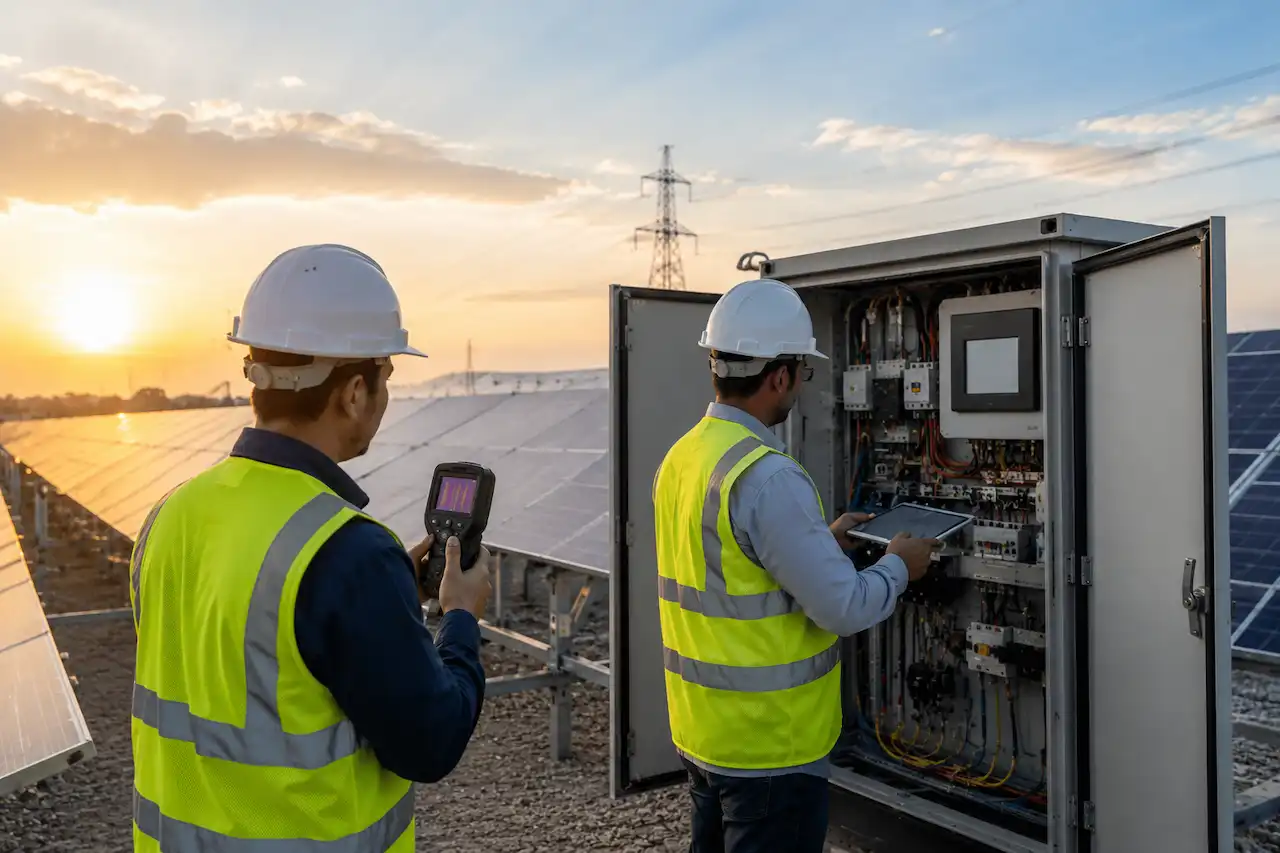
A utility-scale solar farm may look complete once the panels are installed, the inverters are in place, and the electrical infrastructure has been constructed. However, construction completion is only one stage of the project. Before the plant can safely generate electricity and move into commercial operation, its systems must be inspected, tested, energised, and proven to work together correctly. This process is known as solar farm commissioning.
Solar farm commissioning is the critical transition between construction and operation. It confirms that the equipment has been installed correctly, the electrical and control systems function as intended, and the entire facility is ready to operate as an integrated generating asset. The process can involve PV arrays, inverters, transformers, switchgear, protection systems, SCADA platforms, plant controllers, communication networks, and grid interface equipment. Each system may work independently, but commissioning must confirm that they also work correctly together.
This article explains what happens during solar farm commissioning, from early planning and equipment testing through energisation, functional testing, and final handover.
What Is Solar Farm Commissioning?
Solar farm commissioning is a structured process used to verify that a completed solar power plant is safe, functional, and ready for operation. The objective is not simply to switch the plant on. Engineers must confirm that individual components, electrical systems, protection equipment, and control platforms operate according to the project’s design and requirements.
A typical solar farm contains several interconnected layers of equipment. On the generation side, this includes PV modules, strings, DC cabling, combiner equipment, and inverters. The generated power then moves through transformers, collection systems, switchgear, and other electrical infrastructure before reaching the grid connection point.
Need Engineering Support for Your Power Project?
American Power Engineers delivers power system studies, substation design, renewable energy engineering, BESS projects, NERC compliance, MEP engineering, and POI interconnection services.
Explore Our Engineering ServicesAt the same time, the plant depends on protection and control systems to operate safely. SCADA and communication networks provide visibility into equipment status and support operational control. Commissioning brings these systems together in a controlled sequence. The process generally moves through several stages:
- Commissioning planning and preparation
- Construction completion and readiness checks
- Pre-commissioning tests
- Protection and control testing
- SCADA and communications commissioning
- Energisation
- Functional and integrated testing
- Performance verification and handover
The exact process varies depending on the size, design, and requirements of the project, but the principle remains the same: the plant must demonstrate that it is ready to operate safely and reliably.
Why Is Solar Farm Commissioning Important?
A solar farm can be physically complete while still containing technical issues that are not immediately visible.
For example, an inverter may operate correctly when tested individually but fail to respond properly to a command from the plant controller. A protection relay may contain the correct settings but have a wiring issue that affects its operation. A SCADA system may receive data from equipment but display an incorrect status or measurement.
These problems often appear when separate systems begin operating together. Commissioning creates a structured environment for identifying and resolving issues before they affect commercial operation. It also plays an important role in safety. High-voltage equipment must be energised according to controlled procedures, with the correct systems and personnel in place. Proper testing before energisation reduces the risk of equipment damage, unexpected operations, and avoidable project delays. A well-managed commissioning process also gives the asset owner greater confidence that the plant has been properly tested before it is handed over for normal operation.
Stage 1: Commissioning Planning and Preparation
Successful commissioning begins long before the first piece of equipment is energised. The project team must develop a clear commissioning strategy that defines how testing will be performed and how different activities will be coordinated. A commissioning plan typically addresses:
Planning a Solar, Wind, BESS, or Grid Interconnection Project?
Our engineering team helps project owners, developers, utilities, and facility teams move from technical planning to reliable project execution.
View Engineering Services- The scope of each testing activity
- System boundaries and dependencies
- Testing procedures and acceptance criteria
- Roles and responsibilities
- Required documentation
- Safety requirements
- Energisation sequences
- Issue management and reporting
Early planning is particularly important because multiple organisations are usually involved in a solar project. The EPC contractor may manage overall project delivery, while electrical contractors install equipment. Equipment manufacturers may be responsible for specific tests, and specialist engineers may handle protection, SCADA, controls, or HV testing. Without clear coordination, one team may be ready to proceed while another critical system remains incomplete.
Establishing the Right Testing Sequence
Solar farm systems cannot normally be commissioned in a random order. Testing usually progresses from individual equipment toward complete plant operation. Engineers first confirm that systems are installed and ready before moving into more complex functional and integrated tests. This approach helps prevent unnecessary rework. There is little value in testing a plant controller if the communication network or connected field equipment is not yet ready. A properly planned sequence allows the project to move through commissioning in a controlled and logical way.
Stage 2: Construction Completion and System Readiness
Before electrical commissioning begins, engineers need to confirm that the relevant equipment has been installed and is ready for testing. This stage involves inspecting the physical installation of key systems, including PV arrays, DC and AC cabling, inverter stations, transformers, switchgear, protection panels, earthing systems, and communication equipment. This work is particularly important for projects involving complex substation design engineering and associated high-voltage infrastructure.
The commissioning team also reviews important project documentation. Accurate drawings and technical records are essential because they provide the information required to understand how the plant has been designed and how systems are expected to operate.
Typical documentation may include:
- Single-line diagrams
- Approved electrical drawings
- Equipment datasheets
- Cable schedules
- Protection settings
- Manufacturer manuals
- Test procedures
- Inspection records
Mechanical Completion vs Commissioning Completion
These two terms describe different stages of the project. Mechanical completion generally means that the equipment has been physically installed. It does not necessarily mean that the equipment has been fully tested. Commissioning completion is achieved only after the required tests have been completed and the systems have demonstrated that they operate correctly.
This distinction is important because a project can look complete from a construction perspective while still requiring significant work on protection, controls, communications, or system integration.
Stage 3: Pre-Commissioning Testing
Pre-commissioning takes place before full energisation and focuses on confirming that equipment is ready for operational testing. The exact tests depend on the project design and equipment involved. On the DC side of the solar farm, engineers may check the condition and configuration of PV strings, cabling, polarity, insulation, grounding, and combiner equipment. These checks help identify installation errors before the system is placed into service.
The AC system also requires careful verification. Engineers may inspect and test electrical infrastructure such as transformers, medium-voltage cables, switchgear, and associated earthing systems.
Common pre-commissioning activities can include:
- Cable continuity and insulation testing
- Polarity verification
- Equipment inspections
- Earthing checks
- Circuit breaker operational checks
- Control circuit verification
The purpose of these tests is to identify basic problems before they become more difficult to diagnose after energisation.
Stage 4: Protection and Relay Testing
Protection systems are a critical part of any utility-scale solar farm. Their role is to detect abnormal electrical conditions and initiate the appropriate response to protect equipment and support safe system operation. During commissioning, protection engineers verify that relays, measurement circuits, trip functions, and associated control systems operate as intended.
The testing process may involve reviewing relay configurations, checking current and voltage transformer connections, confirming trip logic, and verifying circuit breaker operation. A protection system must do more than simply operate. It must operate under the correct conditions and coordinate properly with the wider electrical system. Incorrect protection settings or wiring can lead to unnecessary equipment trips, operational instability, or failure to respond appropriately during abnormal conditions.
For this reason, protection testing often requires close coordination between commissioning engineers, electrical contractors, and other technical stakeholders.
Stage 5: SCADA and Control System Commissioning
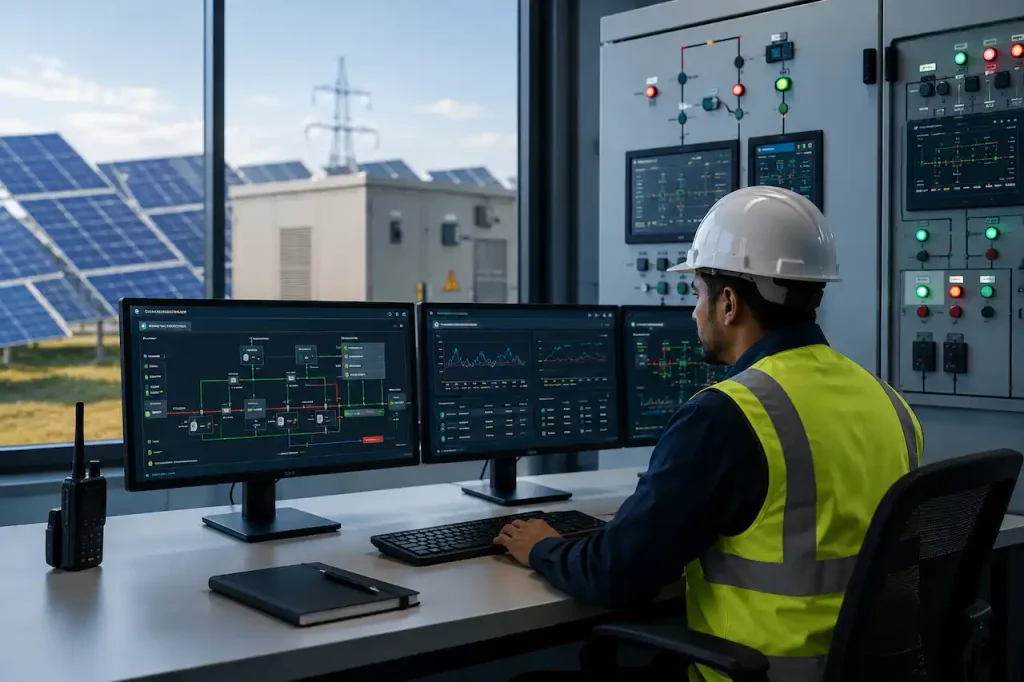
Modern solar farm engineering services rely heavily on SCADA and automated control systems. These systems provide operators with information about plant performance and equipment status.
They can also support alarms, data collection, remote monitoring, and operational control. During SCADA commissioning, engineers verify that field equipment communicates correctly with the control platform.
This may include checking:
- Data point mapping
- Equipment status indications
- Alarm signals
- Measurements
- Control commands
- Communication links
- Historical data collection
However, simply confirming that a device is online is not enough. The commissioning team needs to verify the complete operational sequence. A command sent through the control system should reach the correct equipment, produce the expected response, and return accurate status information.
This is often where integration problems become visible. A device may communicate successfully but use incorrect data mapping. A control command may reach the correct system but fail because of an interlock or configuration issue. SCADA commissioning therefore focuses on how the complete control and communication chain performs.
Stage 6: Factory Acceptance Testing and Site Acceptance Testing
Testing does not always begin at the project site. Many systems undergo Factory Acceptance Testing, or FAT, before they are delivered. FAT allows project teams to inspect and test equipment, panels, control logic, or communication functions in a controlled environment. Identifying a problem at this stage can prevent costly corrections after installation.
After equipment is installed, Site Acceptance Testing, or SAT, is performed to confirm that the system operates correctly in the actual project environment. SAT is important because site installation can introduce new variables. Field wiring, communication networks, interfaces with other systems, and project-specific configurations may all affect performance.
Together, FAT and SAT help reduce the risk of discovering major issues during the final stages of commissioning.
Stage 7: Preparing for Energisation
Energisation is one of the most important milestones in solar farm commissioning. Before high voltage is introduced to the system, the project team must confirm that the relevant equipment is ready and that the appropriate safety controls are in place.
A structured energisation plan usually defines:
- Which equipment will be energised
- The order in which systems will be energised
- Required approvals
- Responsible personnel
- Communication procedures
- Safety and emergency arrangements
Energisation changes the project environment significantly. Equipment that was previously isolated may become live, so careful control of personnel and work activities is essential.
Energisation Is Not the End of Commissioning
Energising the solar farm is a major achievement, but it does not mean the commissioning process is complete. After energisation, engineers still need to verify how systems perform under operating conditions. The plant must demonstrate that its controls, protection systems, communications, and generation equipment operate together correctly.
In many projects, some of the most important commissioning work takes place after energisation because this is when the entire system begins functioning as an integrated facility.
Stage 8: Functional Testing After Energisation
Once equipment is energised, commissioning moves into functional testing. The objective is to confirm that systems do more than simply receive power. They must respond correctly to commands, alarms, operating sequences, and abnormal conditions. Functional testing can include activities such as operating circuit breakers, testing alarms, verifying control commands, checking interlocks, and confirming the response of the plant controller. The commissioning team may also create controlled test conditions to verify that systems respond correctly.
For example, engineers may send a command through the SCADA system and then confirm three things: the correct equipment receives the command, the equipment performs the intended action, and the updated status is accurately reflected in the control system.
This end-to-end approach is important because a problem may originate in a different part of the system from where it first becomes visible.
Stage 9: Integrated Solar Plant Testing
Integrated testing is one of the final and most important stages of solar farm commissioning. At this point, the focus moves away from individual components and toward the overall operation of the generating facility.
The project team evaluates how the following systems work together:
- Solar generation equipment
- Inverters and electrical infrastructure
- Protection systems
- Plant controls
- SCADA platforms
- Communication networks
- Grid interface equipment
This stage often identifies interface issues that were not visible during individual equipment testing.
For example, an inverter may operate correctly during its own tests, and the SCADA system may also function correctly when checked separately. Problems may only become visible when the plant controller sends coordinated commands across multiple systems.
Integrated testing helps identify and resolve these issues before the plant transitions into normal operation.
Common Problems Found During Solar Farm Commissioning
Finding issues during commissioning is a normal part of the process. The purpose of structured testing is to discover problems before they create operational risks. Some common issues include:
- Communication and Data Problems: Devices may fail to exchange information because of network configuration errors, communication failures, protocol mismatches, or incorrect data mapping.
These issues can affect monitoring, alarms, and control functions.
- Protection Configuration Issues: Protection problems can result from incorrect relay settings, wiring errors, incorrect current or voltage transformer configurations, or issues within trip circuits.
Because protection systems are closely connected to the electrical infrastructure, resolving these problems may require coordination between multiple engineering disciplines.
- Incomplete or Outdated Documentation: Construction changes do not always get reflected immediately in drawings or technical records. When documentation does not accurately represent the installed system, troubleshooting becomes more difficult and commissioning activities may take longer.
- Interface Problems Between Systems: A solar farm often includes equipment from different suppliers. Each individual system may meet its own requirements, but problems can occur at the point where systems interact. Managing these interfaces is one of the most important parts of a successful commissioning programme.
How Can Solar Farm Commissioning Delays Be Reduced?
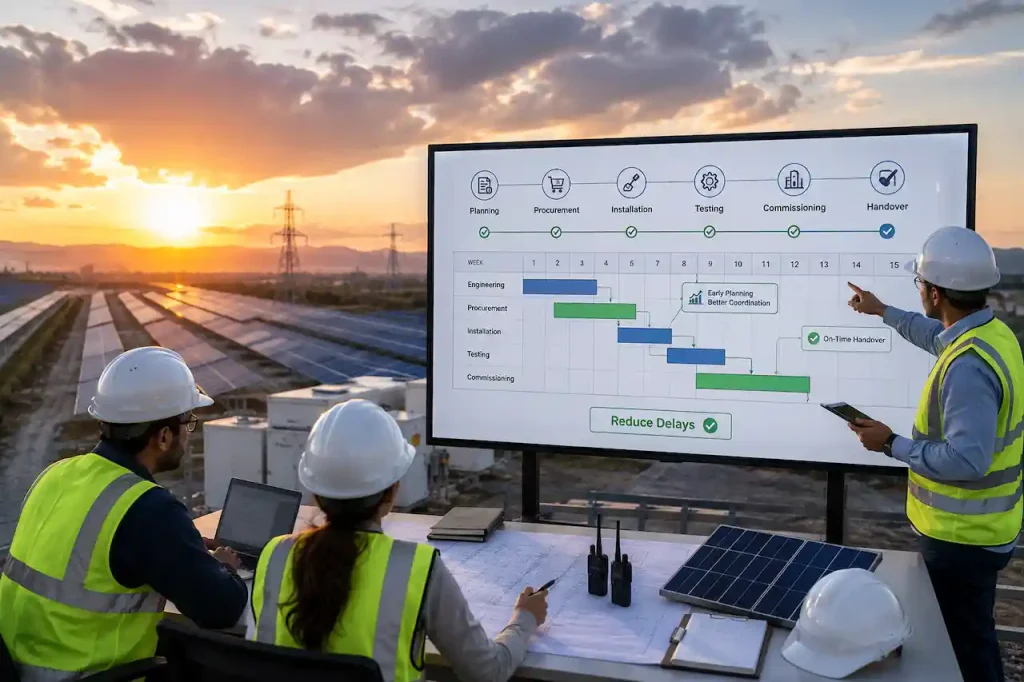
Commissioning delays can affect the overall project schedule and postpone commercial operation. One of the most effective ways to reduce delays is to start planning early. Commissioning requirements should be considered during engineering and construction rather than left until the final stage. Clear responsibilities are equally important. Every contractor and specialist should understand:
- What testing they are responsible for
- What conditions must be met before the next activity can begin
A structured issue management process can also make a significant difference. Problems should be:
- Recorded
- Assigned to the appropriate party
- Tracked
- Formally closed once corrective work has been completed
Project teams should also focus closely on system interfaces. Many delays do not result from a single piece of faulty equipment. They occur because electrical, protection, SCADA, and control systems have not been properly coordinated.
The Role of Specialist Commissioning Engineers
Solar farm commissioning requires expertise across several engineering disciplines. Electrical commissioning engineers focus on equipment readiness and system testing. Protection engineers verify critical protection functions, while SCADA and control specialists focus on communication and operational behaviour. The value of specialist engineering support comes from understanding how these areas interact.
A problem that initially appears to be an inverter issue may actually be caused by a control configuration problem. A communication failure may affect equipment that is otherwise operating correctly. A coordinated engineering approach helps project teams investigate the complete system rather than focusing only on the equipment where the issue first appears. This multidisciplinary coordination can be particularly valuable during:
- Integrated plant operation
- Energisation
- Functional testing
Solar Farm Commissioning to Commercial Operation
The final stage of solar farm commissioning is the transition into normal operation. Before the project is handed over, the team must confirm that critical testing has been completed and that major issues have been resolved or properly managed. The asset owner and operations team also need accurate technical information for ongoing management of the facility.
Important handover information may include:
- Test records
- Equipment manuals
- Protection settings
- As-built drawings
- Operating procedures
- Maintenance requirements
A well-managed handover ensures that the knowledge developed during commissioning is transferred to the people responsible for operating and maintaining the solar farm. Successful commissioning therefore means more than reaching the point where electricity is generated. It means demonstrating that the plant can operate safely, reliably, and as an integrated generating asset.
Need Support with Solar Farm Commissioning?
Solar farm commissioning requires more than testing individual pieces of equipment. PV systems, inverters, transformers, protection equipment, SCADA platforms, controls, and grid interface systems must all operate together correctly.
Grid Engineering Group supports renewable energy projects through coordinated commissioning and engineering services. Our approach helps project teams manage testing, system integration, energisation activities, and operational readiness across complex renewable energy facilities.
Whether your project is approaching energisation or facing technical challenges during commissioning, specialist engineering support can help improve coordination and identify issues before they affect project delivery. Contact Grid Engineering Group to discuss your solar farm commissioning and renewable energy project requirements.
Frequently Asked Questions
What is solar farm commissioning?
Solar farm commissioning is the process of inspecting, testing, energising, and verifying a solar power plant before it enters normal operation. It confirms that electrical, protection, control, and communication systems work together as intended.
How long does solar farm commissioning take?
The duration depends on the size and complexity of the project. Construction readiness, equipment availability, testing requirements, issue resolution, and coordination between different project teams can all affect the schedule.
What is the difference between pre-commissioning and commissioning?
Pre-commissioning focuses on inspections and readiness checks before full energisation. Commissioning is the broader process that includes energisation, functional testing, system integration, and operational verification.
What systems are tested during solar farm commissioning?
Testing can involve PV generation equipment, inverters, transformers, switchgear, protection systems, SCADA platforms, plant controls, communication networks, and grid interface equipment.
What happens after a solar farm is energised?
After energisation, engineers perform functional and integrated testing to verify that equipment responds correctly under operating conditions and that the different systems work together as a complete generating facility.
Why do solar farm commissioning delays occur?
Delays can result from incomplete construction, equipment defects, communication failures, incorrect configurations, protection issues, missing documentation, or poor coordination between contractors and system suppliers.
Why is integrated testing important?
Integrated testing verifies how different systems operate together. It helps identify interface problems that may not be visible when individual equipment is tested separately.
Work With American Power Engineers
Expert engineering support for power system studies, substation design, renewable energy projects, BESS engineering, NERC compliance, MEP engineering, and POI interconnection services.
Explore All Engineering Services