
How to Identify the Root Cause of Renewable Energy Asset Underperformance
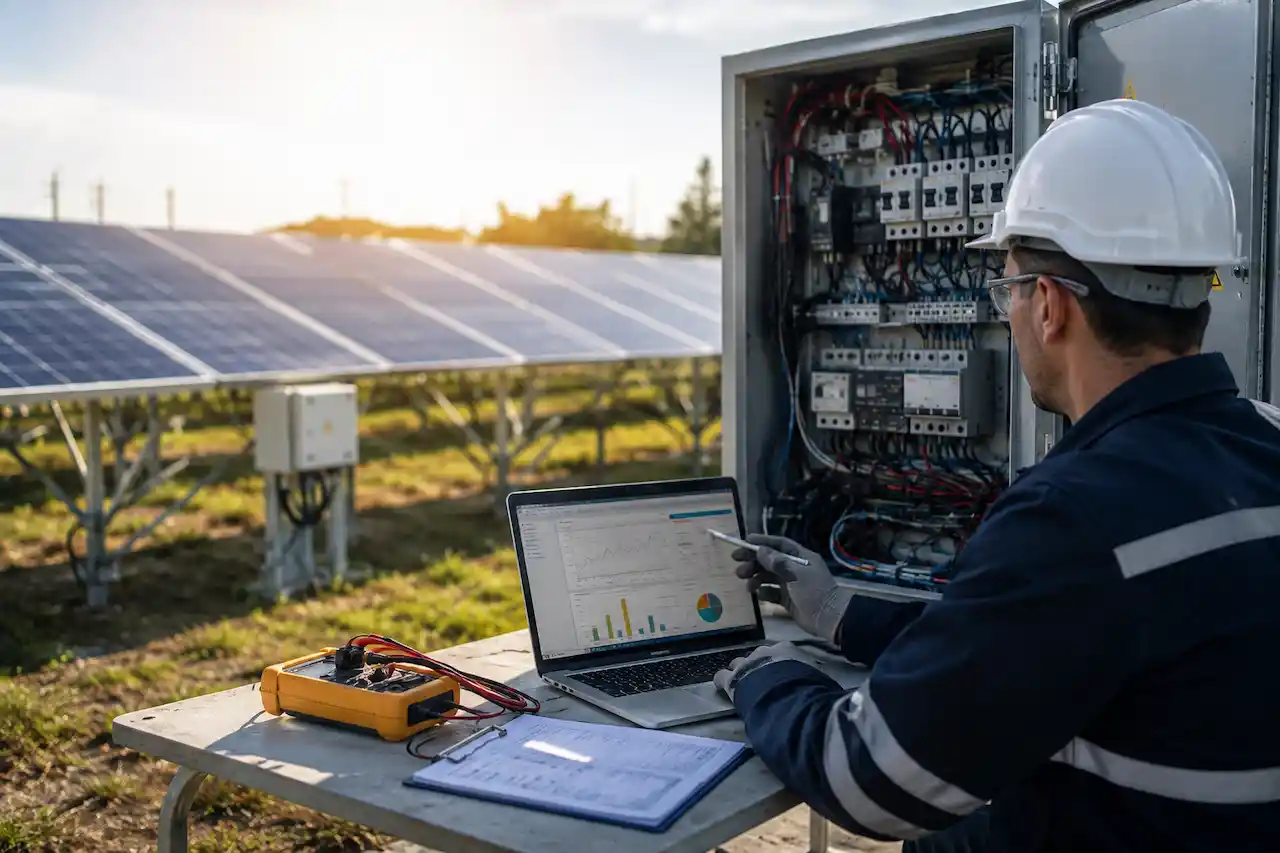
Renewable energy assets are designed to achieve expected levels of generation, availability, efficiency, and grid performance. When actual performance falls below expectations, the visible problem is often simple: the plant is producing less energy or revenue than expected.
Finding the real cause is more complex. Underperformance can result from equipment faults, degradation, control settings, SCADA errors, protection events, grid constraints, environmental conditions, or several smaller losses occurring at the same time.
A proper investigation requires engineers to compare expected and actual performance, verify the available data, identify where losses occur, and use targeted testing to confirm the root cause.
What Is Renewable Energy Asset Underperformance?
Renewable energy asset underperformance occurs when a solar, wind, battery, or hybrid facility performs below its expected design, operational, contractual, or historical level.
Underperformance does not always mean equipment has failed. A plant may remain operational while losing a small amount of output each day. Over time, these losses can become significant.
Need Engineering Support for Your Power Project?
American Power Engineers delivers power system studies, substation design, renewable energy engineering, BESS projects, NERC compliance, MEP engineering, and POI interconnection services.
Explore Our Engineering ServicesCommon signs include:
- Lower-than-expected energy production
- Reduced availability
- Repeated equipment trips
- Increased curtailment
- Unexpected reactive power behaviour
- Communication or SCADA issues
- Frequent protection alarms
- Reduced battery capacity or power
The first step is to clearly define what is underperforming. Without this, teams may spend time investigating systems that are operating correctly.
Establish the Expected Performance Baseline
Before investigating the cause, engineers need to determine how the asset should have performed under the actual operating conditions.
The reference point may come from design models, energy yield assessments, performance guarantees, historical data, equipment specifications, commissioning records, and contractual targets.
A simple comparison with nameplate capacity is usually not enough.
Solar performance depends on irradiance, temperature, soiling, shading, and equipment availability. Wind performance depends on wind conditions, turbine availability, wake effects, and control settings. BESS performance depends on state of charge, temperature, degradation, operating strategy, and dispatch requirements.
Planning a Solar, Wind, BESS, or Grid Interconnection Project?
Our engineering team helps project owners, developers, utilities, and facility teams move from technical planning to reliable project execution.
View Engineering ServicesThe expected performance baseline should reflect the conditions that existed when the loss occurred.
Verify the Performance Data First
Before investigating physical equipment, confirm that the data showing the loss is accurate. A plant can appear to be underperforming because of metering, SCADA, communication, or data-processing problems rather than an actual reduction in energy production, which may require a review of wider facility systems engineering.
The investigation may compare:
- Revenue meter data
- Plant and equipment measurements
- SCADA and historian records
- Weather station data
- Availability calculations
- Missing or delayed data
- Time synchronisation
Different systems may report the same parameter differently because of measurement locations, scaling, CT or VT ratios, sign conventions, communication mapping, or calculation methods.
Data quality should therefore be verified before conclusions are drawn.
Separate Availability Losses from Performance Losses
An important early step is determining whether the problem is related to availability or performance.
An availability problem means equipment was unable to operate when required. Examples include inverter outages, turbine faults, transformer failures, protection trips, and maintenance downtime.
A performance problem can occur while equipment remains online. For example, an inverter may be operating but producing less power than expected.
If availability is high but energy production remains low, the investigation should look beyond outage records and examine equipment performance, controls, grid restrictions, and environmental conditions.
Compare Performance at Equipment Level
Plant-wide production data can hide localised problems. Performance should therefore be reviewed at smaller equipment levels.
For example, engineers may compare inverter blocks, transformers, feeders, turbines, battery racks, or power conversion systems operating under similar conditions.
Differences between comparable units can help identify where losses originate.
A useful investigation should also review trends rather than isolated events. Sudden performance changes may indicate equipment failures, protection events, or configuration changes. Gradual declines may point to degradation, soiling, thermal problems, or increasing losses.
Check Grid and Plant Control Limitations
Not every reduction in renewable generation is caused by the asset itself. The grid may limit how much power a plant can export because of curtailment, export limits, voltage constraints, transmission congestion, network outages, or reactive power requirements associated with the wider grid interconnection.
Plant-level controls should also be reviewed. A plant controller may regulate active power, reactive power, voltage, power factor, ramp rates, and export limits.
Incorrect settings or control problems can reduce output even when individual inverters or turbines are operating normally.
Potential causes include incorrect power limits, incorrect point-of-connection measurements, delayed feedback signals, reactive power limits, unstable control tuning, or outdated setpoints.
Investigate Equipment-Specific Performance
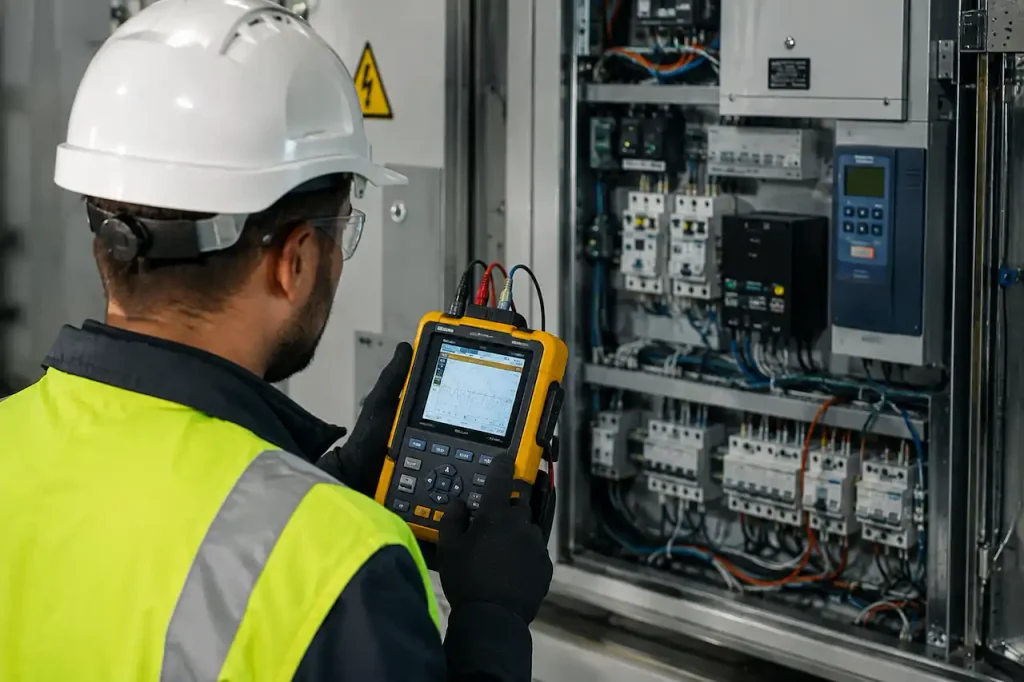
Different renewable technologies require different diagnostic approaches.
Solar Asset Underperformance
Solar losses may originate from inverters or the DC system. Common causes include thermal derating, DC input problems, soiling, shading, string faults, connector problems, tracker issues, module degradation, and inverter limitations. Comparing inverter blocks and string-level performance can help identify whether losses are concentrated in specific areas.
Tracker performance should also be reviewed. Incorrect positioning, communication failures, controller faults, or mechanical problems can reduce generation without causing a complete outage.
Wind Turbine Underperformance
A wind turbine may remain available while producing less energy than expected for the available wind conditions. Possible causes include blade condition, pitch problems, yaw misalignment, sensor errors, control derating, generator limitations, converter issues, wake effects, or grid restrictions.
Power curve comparisons and turbine-to-turbine analysis can help determine whether the problem is localised or affects the wider wind farm.
BESS Underperformance
Battery energy storage systems require a different baseline. Performance depends on charging and discharging behaviour, state of charge, temperature, degradation, control strategy, and operating limits.
Underperformance may involve reduced usable capacity, limited active power, lower efficiency, thermal restrictions, uneven rack performance, or unexpected state-of-charge limits.
The investigation should follow the complete chain from the dispatch command through the battery and power conversion system to the measured output.
Review Protection, SCADA, and Communication Events
Protection events can cause intermittent or repeated production losses. A relay operation may disconnect an inverter block, transformer, feeder, collector system, or the complete plant. Engineers should review relay event reports, disturbance records, sequence-of-events data, trip logic, protection settings, and SCADA alarms as part of a wider power systems engineering review.
Repeated alarms can also reveal developing problems. Correlating events across multiple systems can help establish what happened before a production loss.
Time synchronisation is particularly important. If protection relays, SCADA servers, meters, controllers, and equipment have different timestamps, engineers may incorrectly identify the sequence of events.
SCADA scaling and mapping should also be verified. Incorrect ratios, engineering units, point mapping, frozen values, or alarm thresholds can create misleading performance data.
Check Electrical Infrastructure and Power Quality
Losses can also occur between generation equipment and the point of connection. Transformers, cables, switchgear, and collector systems should be reviewed for thermal limitations, cable faults, excessive voltage drop, connection problems, and uneven feeder loading, particularly where substation design engineering is involved.
Comparing energy measurements at different locations can help identify where losses occur.
Power quality may also reveal problems that are not visible through standard energy reporting. Harmonics, voltage distortion, imbalance, flicker, reactive power, and voltage variation can contribute to equipment overheating, control instability, trips, or connection-point compliance issues.
Consider Environmental Conditions and Historical Performance
Environmental conditions must be separated from technical losses. Solar performance should be assessed against irradiance, temperature, soiling, shading, and other site conditions, particularly when evaluating the performance of a solar farm. Wind performance should account for wind speed, direction, air density, turbulence, and wake effects.
Otherwise, low resource availability may be incorrectly classified as asset underperformance.
Commissioning records can provide another useful reference. They may help determine whether the asset originally achieved the required performance or whether the limitation existed from the beginning.
One of the most useful questions is also simple:
What changed before the problem started?
Possible changes may include firmware updates, protection setting changes, plant controller modifications, SCADA updates, equipment replacement, maintenance activities, or new grid requirements.
Use Targeted Field Testing to Confirm the Cause
Performance data should guide field investigations. Instead of testing the entire site, data analysis may identify one inverter block, feeder, transformer, turbine, or BESS container that requires further investigation. Depending on the suspected issue, testing may include the following activities supported by appropriate power system studies:
- Electrical measurements
- Thermal imaging
- Relay testing
- Power quality measurements
- Communication testing
- Functional testing
- Sensor verification
- Equipment inspection
- Insulation resistance or IV curve testing
The purpose of field testing is to confirm or reject the suspected cause. Replacing equipment before confirming the root cause can increase costs without restoring performance. The equipment showing the symptom may not be the actual source of the problem.
Use a Structured Root Cause Investigation
A practical investigation process should follow a clear sequence:
- Define the performance problem.
- Establish the expected performance baseline.
- Verify the underlying data.
- Determine when the problem started.
- Separate availability losses from performance losses.
- Identify the affected equipment or system.
- Review alarms, events, controls, and grid constraints.
- Compare similar equipment.
- Develop possible causes.
- Complete targeted testing.
- Confirm the root cause.
- Implement corrective action.
- Verify that performance improves.
The process should remain evidence-based. Several symptoms may be caused by one underlying issue, while multiple smaller problems may also exist at the same time.
Prioritise Losses by Their Actual Impact
Not every technical problem has the same impact on the asset. A frequent alarm may have little effect on energy production, while another issue that occurs only during high-resource periods may create significant annual losses. Corrective actions should consider energy loss, revenue impact, reliability risk, safety, grid compliance, equipment damage, and the cost of correction.
After corrective action, performance should be verified through production data, availability trends, functional testing, alarm reviews, power curves, or other relevant measurements.
The investigation is not complete simply because a maintenance ticket has been closed. The objective is to confirm measurable performance recovery.
Finding the Real Cause of Renewable Energy Asset Underperformance
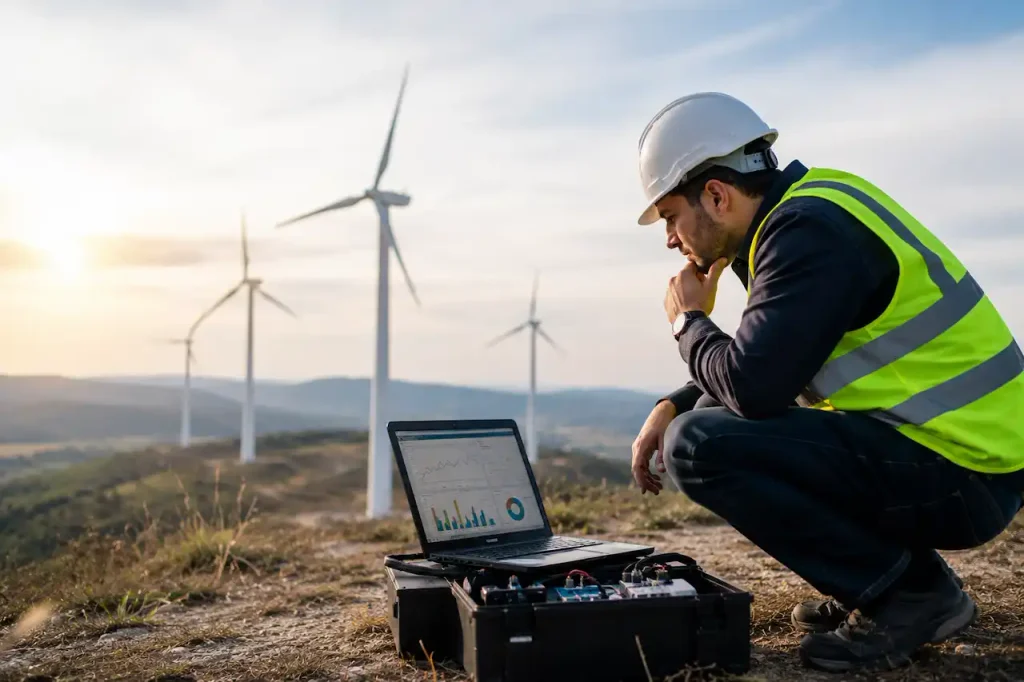
A renewable energy asset can continue operating while losing significant performance. The visible problem may be low production, reduced availability, repeated trips, or failure to meet a performance target. The underlying cause may exist in equipment, controls, protection, SCADA, electrical infrastructure, the grid connection, environmental conditions, or the performance data itself.
The strongest investigations begin with evidence. Engineers should establish what the plant should be producing, verify that the measurements are correct, identify when and where losses occur, and review equipment and system behaviour before using targeted testing to confirm the root cause.
Renewable energy asset underperformance should be treated as a system-level engineering problem rather than simply a search for one failed component, particularly for projects requiring coordinated renewable energy engineering support. A structured investigation can help identify the real source of losses and prioritise the corrective actions most likely to recover performance.
Need Support with Renewable Energy Asset Performance?
Grid Engineering Group provides asset performance engineering, protection and relay engineering, SCADA and controls support, power quality assessment, testing, commissioning, and technical troubleshooting through its wider engineering services.
Whether the issue involves low solar production, repeated inverter trips, wind turbine performance losses, BESS limitations, unexplained curtailment, or an asset that has never achieved its expected output, our engineering team can help identify where losses occur and determine the appropriate corrective action.
Contact Grid Engineering Group to discuss your renewable energy asset performance requirements.
Frequently Asked Questions
What is renewable energy asset underperformance?
Renewable energy asset underperformance occurs when a solar, wind, battery, or hybrid facility performs below its expected level of generation, availability, efficiency, or operational performance.
What causes renewable energy assets to underperform?
Common causes include equipment faults, degradation, soiling, control settings, inverter limitations, protection events, SCADA errors, grid curtailment, communication problems, environmental conditions, and electrical losses.
How do you identify the root cause of low renewable energy production?
Start by comparing actual and expected performance, validating the underlying data, identifying affected equipment, reviewing alarms and grid constraints, and then completing targeted testing to confirm the cause.
Can SCADA errors make a plant appear to be underperforming?
Yes. Incorrect scaling, missing data, sensor errors, communication problems, or incorrect point mapping can create misleading performance information.
Why is root cause analysis important before replacing equipment?
The equipment showing the symptom may not be causing the problem. Confirming the root cause helps avoid unnecessary costs and improves the likelihood that corrective action will restore performance.
Work With American Power Engineers
Expert engineering support for power system studies, substation design, renewable energy projects, BESS engineering, NERC compliance, MEP engineering, and POI interconnection services.
Explore All Engineering Services