
OT Cybersecurity for Modern Power Systems: Engineering Considerations
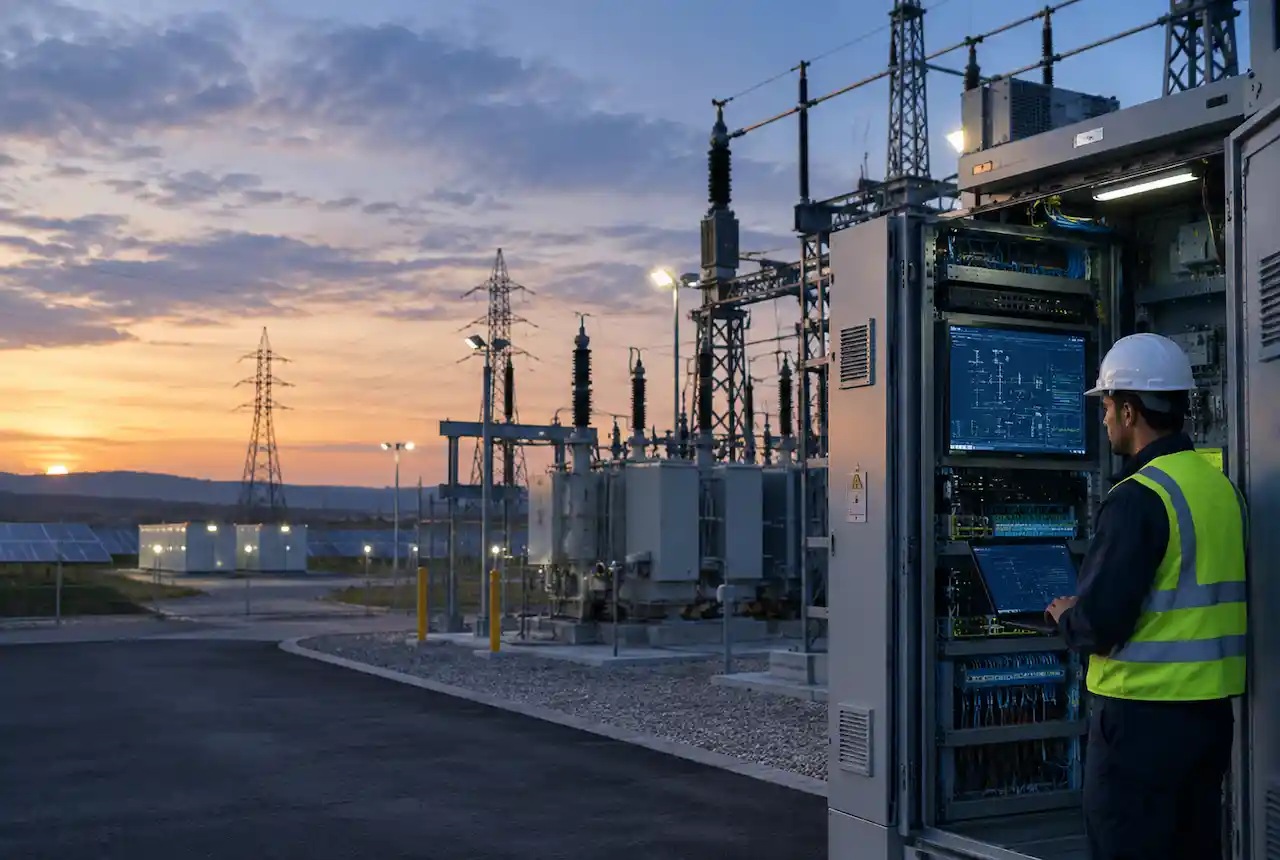
Operational technology (OT) cybersecurity has become an important engineering consideration for modern power systems. Electrical infrastructure that once operated through relatively isolated control systems is now increasingly connected through SCADA, remote access, digital relays, plant controllers, communication networks, and cloud-connected platforms.
These technologies improve visibility, automation, and operational efficiency, but they also introduce additional cybersecurity considerations for facilities involved in grid interconnection engineering. A compromised OT system can affect more than data confidentiality. It can potentially influence equipment operation, protection functions, generation availability, system stability, and personnel safety.
For power system owners, operators, and engineering teams, OT cybersecurity should therefore be considered as part of the overall power systems engineering design rather than treated only as an IT responsibility.
What Is OT Cybersecurity in Power Systems?
OT cybersecurity refers to the protection of systems and devices that monitor, control, and operate physical infrastructure. In power systems, these technologies can include SCADA systems, protection relays, remote terminal units, PLCs, HMIs, plant controllers, communication equipment, and other industrial control devices.
Unlike conventional IT environments, OT systems directly interact with physical equipment. A command sent through a control network may change a breaker state, adjust generation output, modify a protection setting, or affect how a facility responds to grid conditions.
Need Engineering Support for Your Power Project?
American Power Engineers delivers power system studies, substation design, renewable energy engineering, BESS projects, NERC compliance, MEP engineering, and POI interconnection services.
Explore Our Engineering ServicesThis creates a different set of engineering priorities.
Cybersecurity measures must protect the system while maintaining availability, predictable operation, and safe control of electrical equipment. Security changes also need to consider existing equipment, communication protocols, system dependencies, and operational requirements.
Why OT Cybersecurity Matters for Modern Power Systems
Power systems are becoming increasingly digital and interconnected. Renewable energy facilities, substations, battery energy storage systems, and large industrial facilities may contain equipment from multiple manufacturers communicating across shared or interconnected networks.
Remote monitoring and control can provide significant operational benefits. Engineers and operators can access equipment information without being physically present, while utilities can receive real-time measurements and control signals.
However, greater connectivity can also increase the potential attack surface.
A cybersecurity incident affecting an OT environment could interfere with monitoring, disrupt communication, compromise control functions, or prevent operators from receiving accurate system information. In a power system, even a temporary loss of visibility or control can complicate fault response and restoration activities.
Planning a Solar, Wind, BESS, or Grid Interconnection Project?
Our engineering team helps project owners, developers, utilities, and facility teams move from technical planning to reliable project execution.
View Engineering ServicesThe objective of OT cybersecurity is therefore not simply to prevent unauthorised access. It is to help maintain the availability, integrity, and safe operation of critical electrical systems.
Understanding the Difference Between IT and OT Security

IT and OT cybersecurity share many principles, but their priorities can be different. Traditional IT security often focuses heavily on protecting information, user accounts, applications, and data. OT environments must also protect physical processes and equipment.
For example, restarting an IT server may be inconvenient but relatively straightforward. Restarting an industrial controller or protection-related device without understanding its role could have much more serious consequences.
OT cybersecurity should therefore consider:
- Equipment availability and operational continuity
- Safe operation of electrical systems
- Communication dependencies
- Protection and control functions
- Remote access requirements
- Equipment lifecycle and vendor support
- Recovery procedures following an incident
Security controls should be implemented without creating unintended effects on the electrical system.
OT Networks Need Clear Architecture and Segmentation
Network architecture is one of the most important engineering considerations for OT cybersecurity. Power facilities may contain multiple network zones supporting protection, control, SCADA, plant monitoring, corporate systems, and remote access. Connecting these environments without appropriate separation can increase cybersecurity risk.
Network segmentation can help limit communication between systems and reduce the potential impact of a compromised device.
For example, a plant control network should not necessarily have unrestricted access to corporate IT systems or external networks. Communication between zones should be carefully defined based on operational requirements.
A well-designed architecture can help establish:
- Clearly defined network zones
- Controlled communication paths
- Restricted remote access
- Appropriate firewall boundaries
- Separation between critical and less-critical systems
The engineering objective is to balance cybersecurity controls with the communication requirements of the facility.
Protection Systems Require Special Attention
Protection systems are particularly important because they are responsible for detecting abnormal electrical conditions and initiating protective actions.
Digital protection relays can communicate with SCADA systems, substation networks, other relays, and utility control systems. They may also provide event records, measurements, alarms, and remote configuration capabilities.
Cybersecurity considerations should therefore extend beyond the network itself. Engineering teams should understand which devices can be accessed remotely, which communication paths are required for protection functions, and how the system behaves if communications become unavailable.
Protection settings and configuration files should also be controlled carefully. Unauthorised or inappropriate changes could affect protection coordination and fault-clearing behaviour.
Cybersecurity and protection engineering should work together so that security measures do not unintentionally compromise protection performance in systems such as renewable generation and battery storage engineering projects.
Remote Access Creates Additional Risk
Remote access is increasingly common in modern power systems. It allows engineers, operators, vendors, and maintenance teams to troubleshoot equipment without travelling to the site. While remote access can reduce response times and operating costs, it also creates another pathway into the OT environment.
Remote access should be designed around the actual operational requirement. Access should be limited to authorised users and systems, with appropriate authentication, permissions, monitoring, and session controls. Vendor access deserves particular attention. Equipment manufacturers and service providers may require remote connectivity for troubleshooting or maintenance, but those connections should be controlled and reviewed.
A remote connection that remains permanently available when it is no longer required can create unnecessary exposure.
Asset Inventory Is a Foundation for OT Security
It is difficult to protect systems that are not properly identified. An OT cybersecurity programme should begin with an understanding of the equipment and communication infrastructure within the facility. The inventory may include protection relays, PLCs, RTUs, HMIs, servers, network switches, firewalls, plant controllers, meters, gateways, and other connected devices.
The inventory should ideally identify the function and importance of each device, along with relevant communication relationships. This information helps engineering and cybersecurity teams understand which systems are critical and where security controls should be prioritised.
Asset inventories should also be maintained as the facility changes. New equipment, firmware upgrades, network modifications, and system expansions can change the cybersecurity profile of an installation.
Monitoring and Event Analysis Support Detection
Prevention alone is not enough for a resilient OT cybersecurity programme. Operators should also have appropriate visibility into system activity. Monitoring can help identify unusual communication, unexpected configuration changes, failed access attempts, or other abnormal behaviour. Event records from protection relays, SCADA systems, network equipment, and control devices can also provide useful information when investigating an incident.
For power system engineers, this information can be especially valuable because cybersecurity events and electrical events may sometimes occur together. A communication failure, unexpected control action, or abnormal equipment response may require investigation from both cybersecurity and electrical perspectives.
Maintaining accurate time synchronisation across relevant systems can further improve the ability to reconstruct events and understand their sequence.
System Changes Should Include Cybersecurity Considerations
Power facilities rarely remain unchanged throughout their operating life. Equipment may be replaced, renewable generation may be expanded, battery storage may be added, and communication systems may be modernised. Each modification can introduce new cybersecurity considerations.
For example, replacing a legacy relay with a modern digital relay may introduce additional network connectivity. Expanding a facility through solar farm engineering may create new controllers, gateways, and communication interfaces. Connecting a facility to a new monitoring platform may introduce additional remote access requirements.
Engineering change management should therefore consider both electrical and cybersecurity impacts. Before implementing a modification, teams should understand how the change affects network architecture, device access, communication paths, system dependencies, and operational risk.
OT Cybersecurity and Grid Reliability
Cybersecurity is closely connected to overall grid reliability. Modern power systems depend on accurate measurements, reliable communication, protection functions, and coordinated control. If a cyber incident disrupts one of these functions, operators may have reduced visibility or control during an electrical disturbance.
This is particularly important for renewable energy facilities, including projects supported by wind energy engineering, where plant controllers, SCADA systems, communication networks, and digital protection equipment can influence operating behaviour.
Cybersecurity planning should therefore be integrated into broader power system reliability and operational planning.
Designing an Effective OT Cybersecurity Approach
There is no single cybersecurity architecture that fits every power facility. A utility substation, solar farm, wind project, battery facility, and large industrial plant may have very different requirements, particularly when substation design engineering and digital control systems are involved.
A practical approach should begin by understanding the facility’s electrical and control architecture. From there, engineering teams can identify critical assets, communication dependencies, remote access pathways, and potential operational consequences.
The programme should also address incident response and recovery. If a cybersecurity event occurs, operators need to know how to maintain safe operation, isolate affected systems where appropriate, restore communications, and return equipment to normal operation.
Cybersecurity planning should therefore extend throughout the asset lifecycle, from design and commissioning through upgrades, maintenance, and eventual replacement.
The Role of Power Systems and OT Engineering
OT cybersecurity is most effective when cybersecurity specialists and electrical engineers understand each other’s requirements.
Power systems engineers bring knowledge of protection, control, grid behaviour, equipment operation, and electrical consequences. Cybersecurity professionals bring expertise in network security, access control, monitoring, threat detection, and incident response.
Working together can help ensure that security controls support rather than interfere with the electrical system.
Engineering support may be particularly valuable during:
- New facility design
- Substation and SCADA upgrades
- Renewable energy integration
- Protection system modernisation
- Network architecture changes
- Remote access implementation
- Major equipment replacement
Engineering support may be particularly valuable for owners and operators during new facility design, system upgrades, renewable energy integration, and other projects where owners technical advisory services can support engineering decisions.
This integrated approach helps address cybersecurity as an engineering risk rather than treating it as an isolated IT function.
Building OT Cybersecurity Into the Asset Lifecycle
OT cybersecurity should not be considered only after a facility is commissioned. Security requirements are easier to address when they are incorporated during design. During the design stage, teams can establish appropriate network architecture, access requirements, communication boundaries, monitoring capabilities, and equipment requirements.
During commissioning, configuration and communication paths can be verified. During operations, access rights, system changes, vulnerabilities, and event records can be reviewed periodically.As equipment ages, cybersecurity considerations should also form part of modernisation planning. Unsupported devices or obsolete communication technologies can create operational and security challenges.
A lifecycle approach helps ensure that cybersecurity remains aligned with the actual condition and configuration of the power system.
Conclusion
OT cybersecurity is becoming an essential consideration for modern power systems as electrical infrastructure becomes more connected, automated, and digitally controlled.
Protecting SCADA systems, digital relays, plant controllers, communication networks, and other OT assets requires more than conventional IT security measures. The approach must account for electrical protection, system availability, operational safety, remote access, network architecture, equipment changes, and grid reliability.
The strongest programmes bring cybersecurity and power systems engineering together. By understanding how digital systems interact with physical electrical infrastructure, owners and operators can improve resilience while maintaining reliable and safe system operation.
Need Support With OT Cybersecurity and Power Systems Engineering?
Grid Engineering Group supports power system owners, developers, and operators with engineering services for modern electrical infrastructure, including power systems engineering, grid interconnection, protection, control, and renewable energy systems.
Our engineering team can help evaluate electrical and control system requirements, review system changes, assess protection and communication interfaces, and support engineering decisions for increasingly connected power facilities.
For projects involving renewable generation, substations, battery storage, or complex grid connections, an integrated engineering approach can help improve reliability, operational performance, and long-term system resilience.
Contact Grid Engineering Group
If you are planning a new power facility, upgrading an existing control system, integrating renewable generation, or evaluating OT risks within an electrical system, contact Grid Engineering Group to discuss your engineering requirements.
Our team can support the technical assessment and engineering coordination needed to build reliable, secure, and resilient power infrastructure.
Frequently Asked Questions
What is OT cybersecurity in the power industry?
OT cybersecurity protects the operational systems and devices used to monitor and control physical electrical infrastructure, including SCADA systems, protection relays, PLCs, RTUs, HMIs, and communication networks.
Why is OT cybersecurity important for power systems?
A cybersecurity incident can affect monitoring, communication, control, and potentially the operation of electrical equipment. OT security helps reduce these risks while supporting safe and reliable system operation.
How is OT security different from IT security?
OT security must consider physical processes, equipment availability, protection functions, operational safety, and system continuity in addition to conventional cybersecurity concerns such as access control and data protection.
Do protection relays need cybersecurity controls?
Yes. Modern digital protection relays may have network connectivity, remote access, communication interfaces, and configurable settings. These capabilities should be appropriately protected without interfering with required protection functions.
Does remote access increase OT cybersecurity risk?
Remote access can create an additional pathway into an OT environment. It should therefore be limited to legitimate operational requirements and protected through appropriate authentication, permissions, monitoring, and access controls.
When should OT cybersecurity be considered?
It should be considered throughout the asset lifecycle, beginning during system design and continuing through commissioning, operation, maintenance, upgrades, and equipment replacement.
Work With American Power Engineers
Expert engineering support for power system studies, substation design, renewable energy projects, BESS engineering, NERC compliance, MEP engineering, and POI interconnection services.
Explore All Engineering Services