
Power Engineering Case Studies
Real engineering work behind real utility-scale projects. Below is a look at how American Power Engineers supports developers, EPCs, and utilities through interconnection, substation design, and grid integration challenges — from initial study through energization.
Why American Power Engineers
Why Clients Choose Us
Technical Depth
Engineering team experienced in load flow, fault, arc flash, and protection coordination work.
Utility-Scale Experience
Studies supporting renewable interconnection, BESS, and industrial facilities.
Standards-Aware Documentation
Aligned with IEEE, ANSI, NEC, and applicable NERC requirements.
Clear Communication
Reports written for engineers and decision-makers — not just modelers.
North America Coverage
Project support across U.S. and Canadian jurisdictions.
Case Study 1: Utility-Scale Solar Interconnection Study & POI Design
Client: Utility-Scale Solar Developer
Location: West Texas, ERCOT
Voltage Class: 138 kV POI / 34.5 kV collector
Service Area: POI Interconnection Engineering, Power System Studies
The Challenge
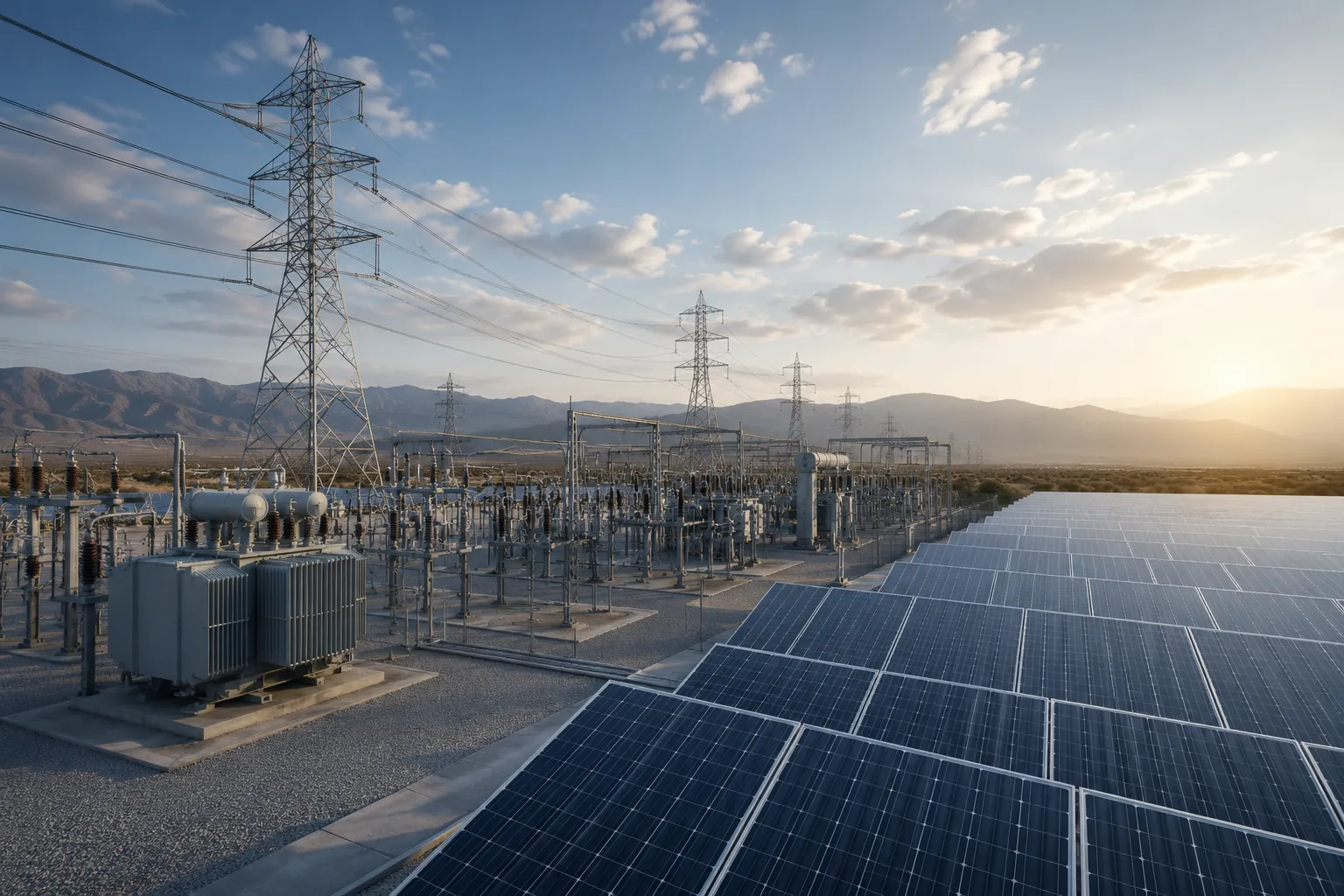
The client was developing a utility-scale photovoltaic project and needed technical support to move through the utility’s interconnection queue without delay. The project required a system impact study response, reactive capability demonstration across the full inverter operating range, and a point-of-interconnection (POI) design package that would satisfy both the transmission owner’s technical requirements and the developer’s construction timeline.
Our Approach
American Power Engineers provided direct technical support through the interconnection process, including:
- Review and response to the utility’s system impact and facility study findings
- Short-circuit contribution modeling for the inverter-based resource
- POI single-line diagram development and equipment specification support
- Coordination with the transmission owner through each review cycle to minimize back-and-forth delays
The Result
The project moved through interconnection review without a major redesign cycle, and the POI design package was accepted with [minimal / no] revision requests. the developer proceeded to notice-to-proceed 2 weeks ahead of schedule.
Read the related guide: EMT Analysis for Inverter-Based Resources →
Case Study 2: Wind Farm Collector System Design & Protection Coordination
Client: Utility-Scale Wind Developer
Location: Panhandle, Texas
Capacity: 10 MW
Voltage Class: 34.5 kV collector system / 230 kV POI
Service Area: Utility-Scale Wind Farm Engineering, Substation Design

The Challenge
The project required a medium-voltage (MV) collector system design capable of aggregating power from 34 wind turbine generators (WTGs) and delivering it reliably to the project substation, along with a protection coordination scheme that would isolate faults without unnecessarily tripping healthy sections of the collector system.
Our Approach
- Collector system electrical design, including cable sizing and routing coordination
- Turbine electrical interconnection coordination with the OEM
- Protection coordination study across the full collector system and substation interface
- SCADA integration support for plant-level monitoring and control
The Result
The collector system design was delivered as a constructible package aligned with the project’s construction schedule, with protection settings validated to isolate faults at the section level. reduced potential outage scope from full-feeder to single-section.
Case Study 3: BESS Grid Integration & Protection Support
Client: Transmission-Connected BESS Owner
Location:, Kansas
Capacity: 100 MW / 400 MWh, 4-hour duration
Voltage Class: 115 kV POI
Service Area: Utility-Scale BESS Engineering, Power System Studies
The Challenge
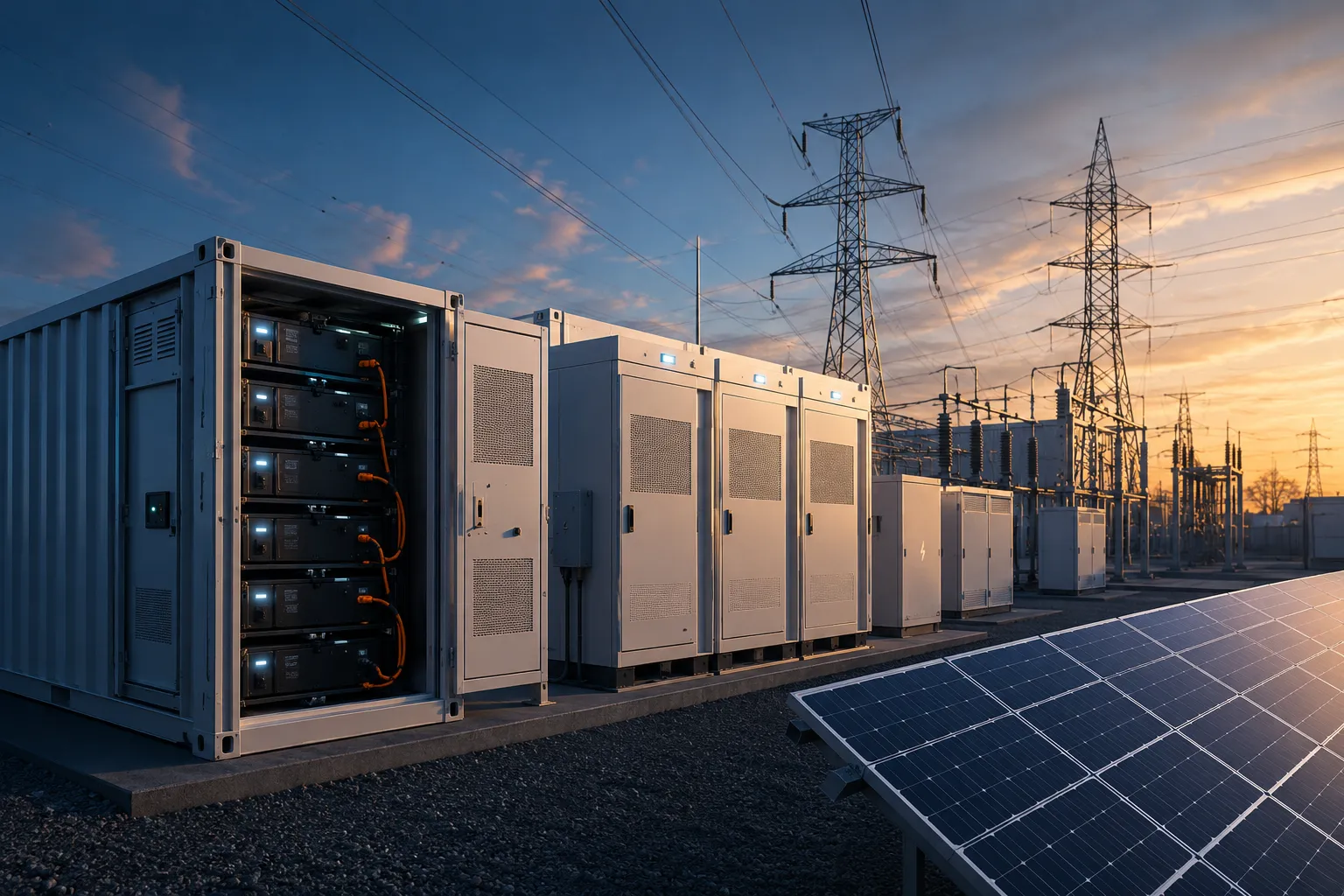
This transmission-connected battery energy storage project needed grid integration studies that accounted for the bidirectional nature of BESS operation — charging and discharging reactive capability, inverter-limited fault current contribution, and a protection philosophy covering both AC-side and DC-side fault conditions inside the battery enclosures.
Our Approach
- Reactive capability (Q-P) curve development for both charging and discharging modes
- Short-circuit and protection coordination studies reflecting inverter-limited fault current behavior
- DC bus protection review for the battery enclosure architecture
- Coordination support through utility interconnection review
The Result
The project’s grid integration studies were accepted through the interconnection review process, with protection coordination validated across both AC and DC fault scenarios. Supported commercial operation date without a facility study resubmission.
Read the related guide: Utility-Scale BESS Engineering Guide →
Case Study 4: HV/MV Substation Design Package
Client: EPC Contractor
Location: Montana
Voltage Class: 230 kV / 34.5 kV
Service Area: Substation Design, Owner’s Engineer Services
The Challenge
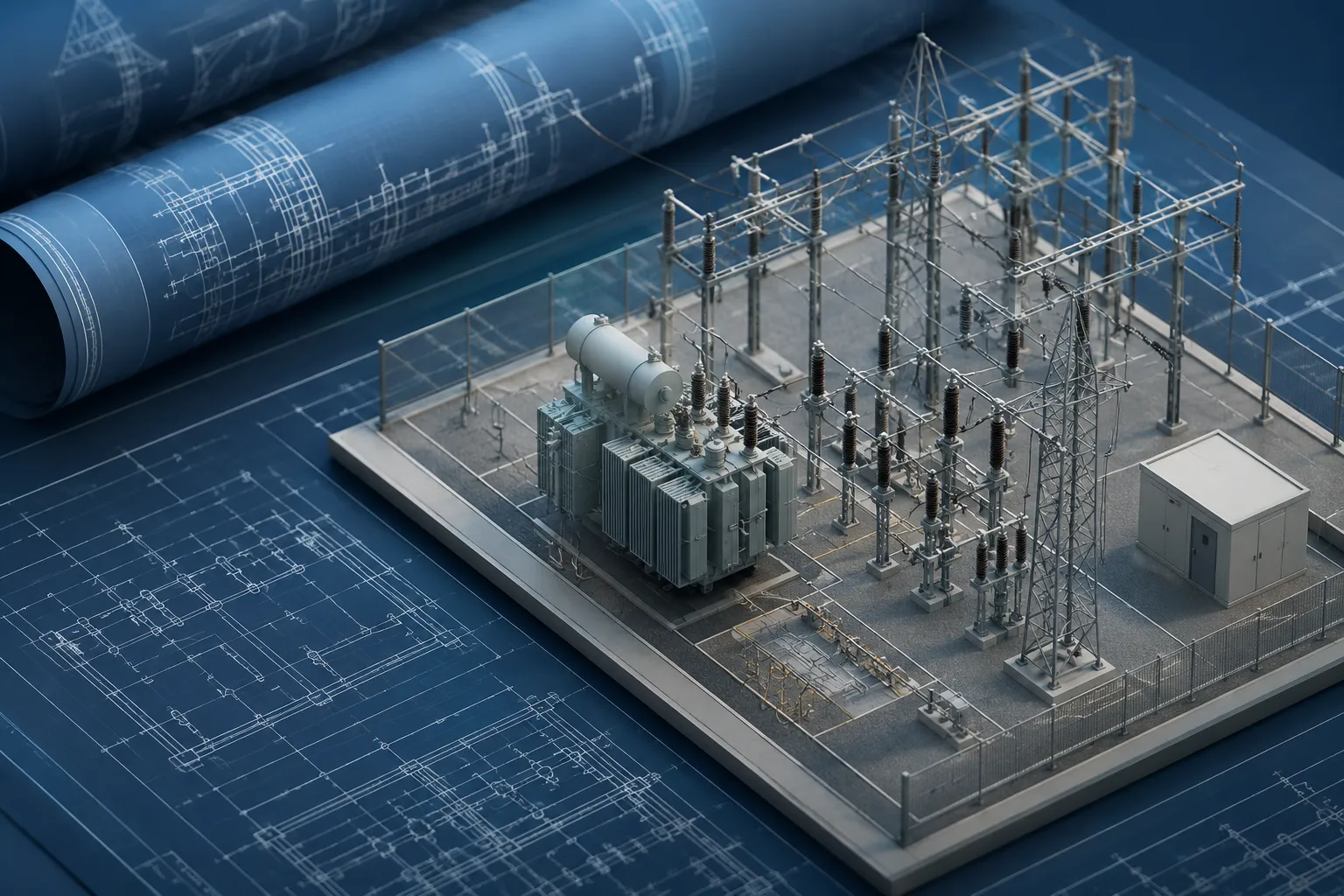
The EPC contractor needed an integrated substation design package — spanning electrical, protection, and civil coordination — delivered on a schedule that supported procurement and construction without slipping the overall project timeline.
Our Approach
- Substation electrical design, including single-line and three-line diagrams
- Protection and control schematic development
- Equipment specification support (transformers, breakers, relays)
- Civil and structural coordination to keep the design constructible as issued
The Result
The design package was delivered as a coordinated, constructible set with equipment specifications aligned to procurement lead times. Supported the EPC’s procurement schedule with zero design-driven delays.
Why These Outcomes Matter
Every project above shares the same underlying goal: reduce technical risk before it becomes a schedule or cost problem. Interconnection resubmissions, protection miscoordination, and design rework are expensive precisely because they surface late, often after procurement has already started.
American Power Engineers is structured to catch these issues at the study and design stage, where they’re fastest and cheapest to fix, with direct engineer-to-owner communication throughout.
Let's discuss your project requirements.
Share a few details and our team will follow up to scope your Power Engineering project. Qualified inquiries only — we respond to developers, utilities, EPCs, and industrial owners.
Need a technical checklist before starting your project?
Download our placeholder Power System Studies kickoff checklist to align data and scope early.
Engineering in action
Representative engagements illustrating typical scope and approach.
project Type
Utility-Scale Solar Interconnection Study
Challenge
Evolving utility interconnection requirements created scope pressure on the POI study.
Solution
Reviewed utility study results and refined the POI single-line and protection coordination.
Result
Design aligned with utility requirements and supported schedule milestones.
View Case Study →
project Type
Industrial Facility Arc Flash & Coordination Review
Challenge
Outdated study data and missing labeling created safety concerns at an industrial site.
Solution
Updated the facility model and produced revised arc flash labeling and protection recommendations.
Result
Refined labeling and selective protection settings aligned with IEEE 1584.
View Case Study →
project Type
BESS Grid Integration Study
Challenge
A transmission-connected BESS required careful protection and grid integration analysis.
Solution
Performed grid integration studies and supported protection and POI design work.
Result
Standards-aligned interconnection package supporting next-phase engineering.
View Case Study →
Trusted across the power sector
Developers
Utilities
EPC Contractors
Industrial Owners
Grid Operators
Ready to discuss your Power System Studies requirements?
Our team supports developers, utilities, EPCs, and industrial clients with precise, standards-aware engineering services across North America.